

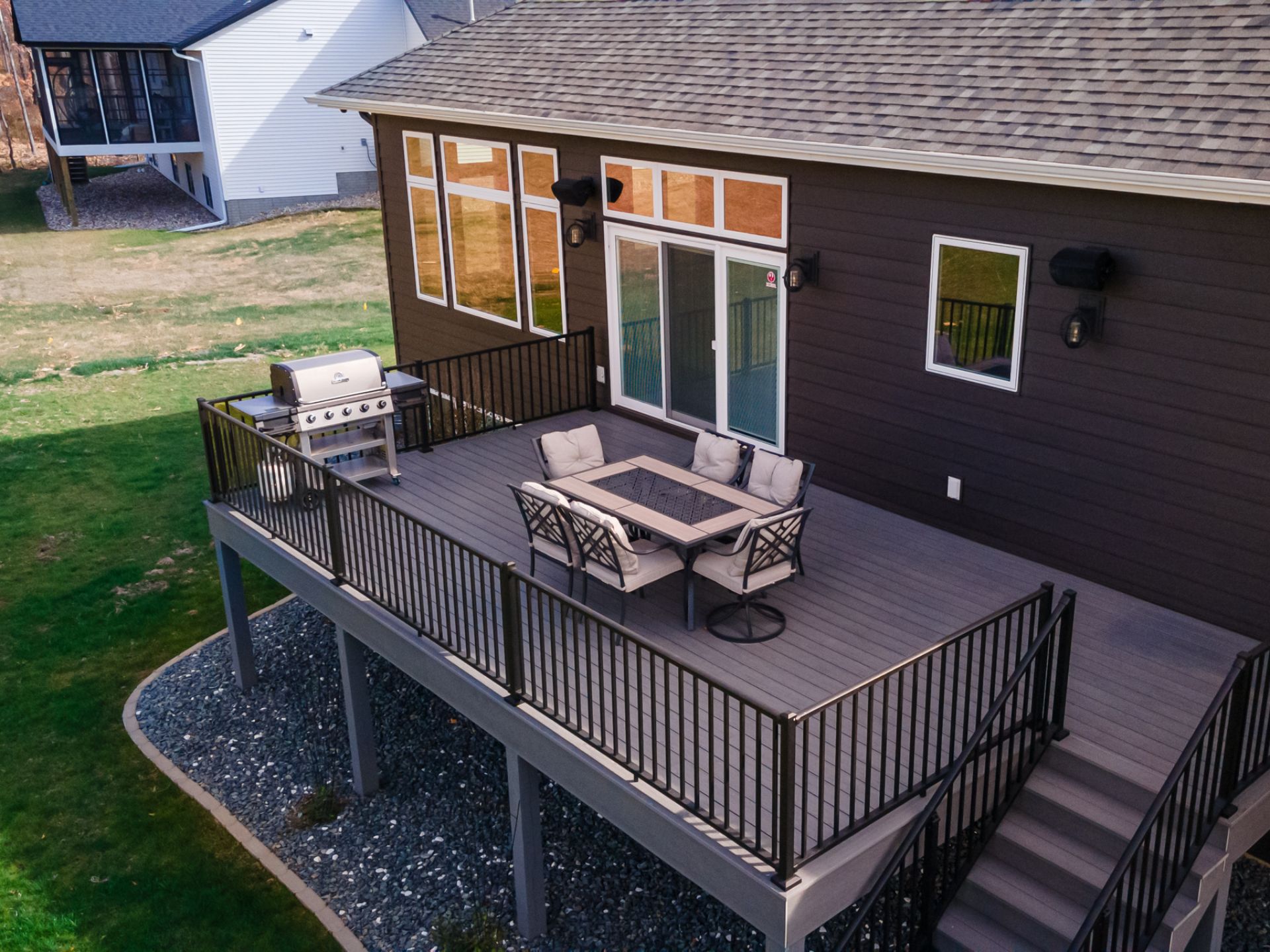
When the weather finally starts warming up in Eastern Iowa, many homeowners begin looking at their deck a little differently.
Maybe the boards are faded. Maybe the space feels outdated. Or maybe you simply wish you could use the area more often throughout the year.
For some homeowners, the immediate assumption is that the entire deck needs to be torn out and rebuilt. But in many cases, that’s not actually necessary.
There are often more efficient ways to upgrade an existing deck that improve its appearance, functionality, and long-term durability without starting from scratch.
At Hometown Restyling, we talk with homeowners across Cedar Rapids, Iowa City, and the surrounding Eastern Iowa communities every year who want to improve their outdoor space but aren’t sure where to start. Many deck improvements can be made through targeted upgrades, such as new decking materials, resurfacing the existing structure, or even converting the space into something entirely new.
In this week’s StraightTALK, we’re answering five questions homeowners commonly ask when they want to make the most of their deck without committing to a full rebuild.
How far in advance should I plan a spring or summer deck project?
If you want to enjoy your deck this summer, early spring is the ideal time to start planning your project. Beginning the process in March gives enough time for design, scheduling, materials, and installation before peak outdoor season.
Once the temperatures begin to rise in Eastern Iowa, demand for outdoor remodeling projects increases quickly. Deck upgrades, sunrooms, patio covers, and screen rooms are all popular spring and summer improvements, and contractor schedules tend to fill up early.
Why Early Planning Makes a Difference for Your Deck
Many homeowners wait until late spring or early summer to begin thinking about upgrading their deck. The challenge is that by that point, credible, high-quality contractors may already have several weeks (or even months) of work scheduled.
Starting earlier allows time for important steps like:
- Initial consultations
- Design discussions
- Material selections
- Permit approvals if required
- Scheduling construction
When homeowners begin planning in early to mid-March, there is usually enough time to complete projects in April, May, or early June. That timeline allows you to enjoy the upgraded space throughout the entire summer.
Outdoor Deck Projects Often Move Quickly Once Scheduled
The good news is that many deck upgrades can be completed much faster than building an entirely new structure.
Projects such as:
- Replacing deck boards
- Installing composite decking, and
- Updating railings…
can often be completed within a relatively short installation window.
The key is making sure the project is scheduled early enough in the season.
StraightTALK Remodeling Tip
If you want to enjoy your upgraded deck this summer, start planning now rather than waiting until the weather is perfect. Outdoor remodeling schedules tend to fill quickly in Eastern Iowa, and early planning gives you the best chance of having your project completed and ready for outdoor living by peak summer season.
Do dark deck boards get hotter than lighter deck boards?
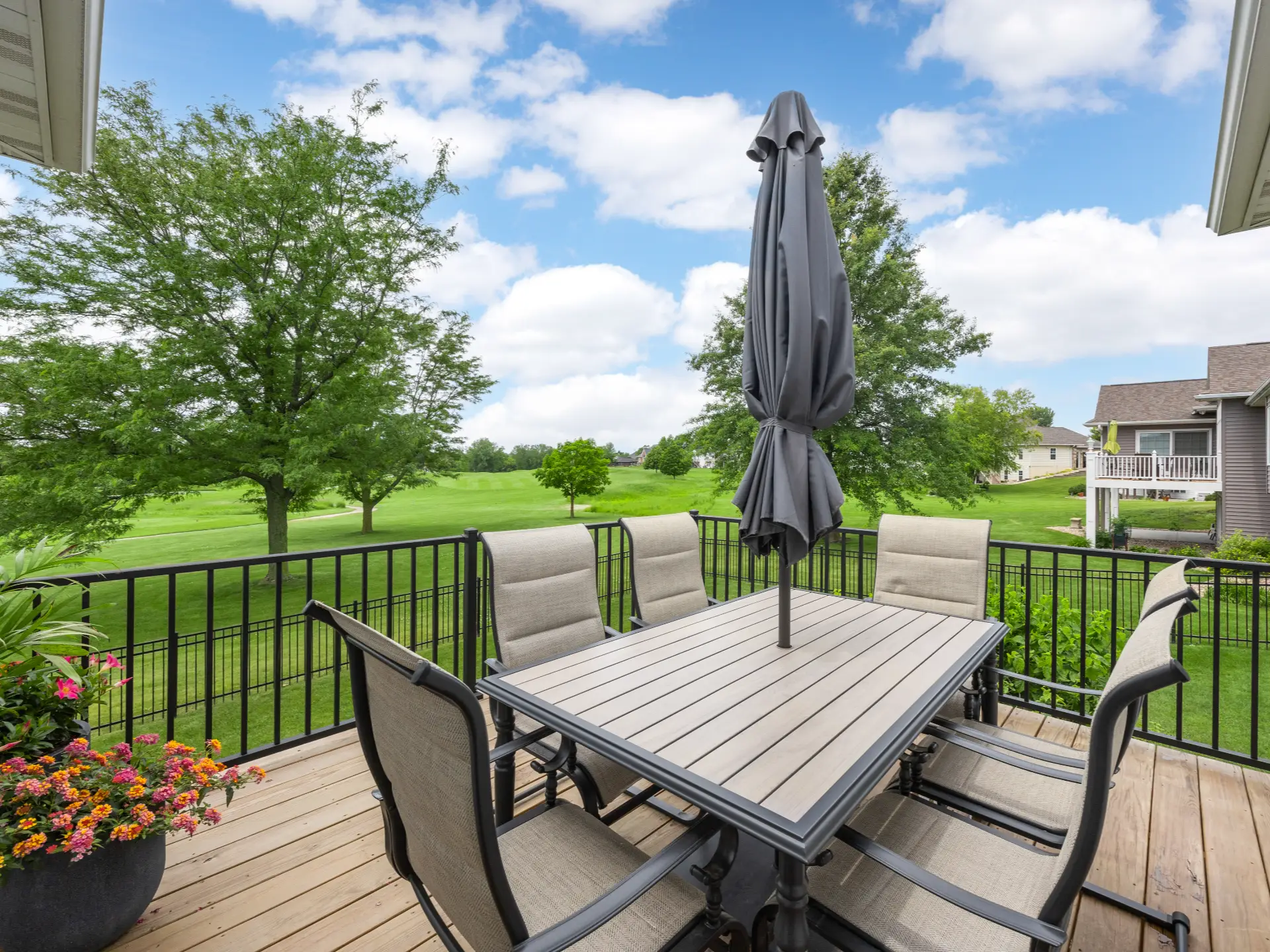
Yes. Darker deck boards typically absorb more heat from sunlight than lighter colors, so that they can feel warmer underfoot on hot summer days.
This is true for both wood decking and composite decking, although the exact temperature difference can vary depending on the product, color, and amount of direct sunlight the deck receives. For many homeowners, heat is an important consideration when choosing deck materials and colors.
Why Color Affects Deck Temperature
Darker surfaces naturally absorb more solar energy. That’s why dark clothing feels warmer in the sun, and lighter colors stay cooler.
The same concept applies to decking materials.
A deck with deep brown, charcoal, or dark gray boards will generally absorb more heat than one with lighter shades, such as:
- Light gray
- Sand tones
- Weathered wood finishes
This doesn’t mean darker colors should be avoided entirely. Many homeowners prefer their appearance because they provide a rich, modern look that complements a home’s exterior. However, it’s helpful to understand how sun exposure affects the deck’s surface temperature.
Sun Exposure Often Matters More Than Deck Color
One important factor many homeowners overlook is shade. A deck that receives direct sunlight throughout the day will naturally become warmer than one that benefits from shade from trees, a pergola, a patio cover, or even a sunroom or screened-in porch.
In fact, the amount of shade a deck receives can often have a larger impact on comfort than the color of the boards themselves.
Composite Decking and Heat
Composite decking materials have improved significantly in recent years. Many of the latest products are designed with heat-resistant technology and textured finishes that help reduce heat absorption. Still, the same rule generally applies:
Lighter colors tend to stay cooler in the sun.
That’s why many homeowners choose lighter or medium-tone composite boards when building decks that receive full sun exposure.
StraightTALK Remodeling Tip
If your deck receives strong afternoon sun, consider pairing lighter deck colors with shade features like pergolas or patio covers. This combination can dramatically improve comfort and make the space more enjoyable during the hottest months of summer.
Composite vs wood decking: which is better?
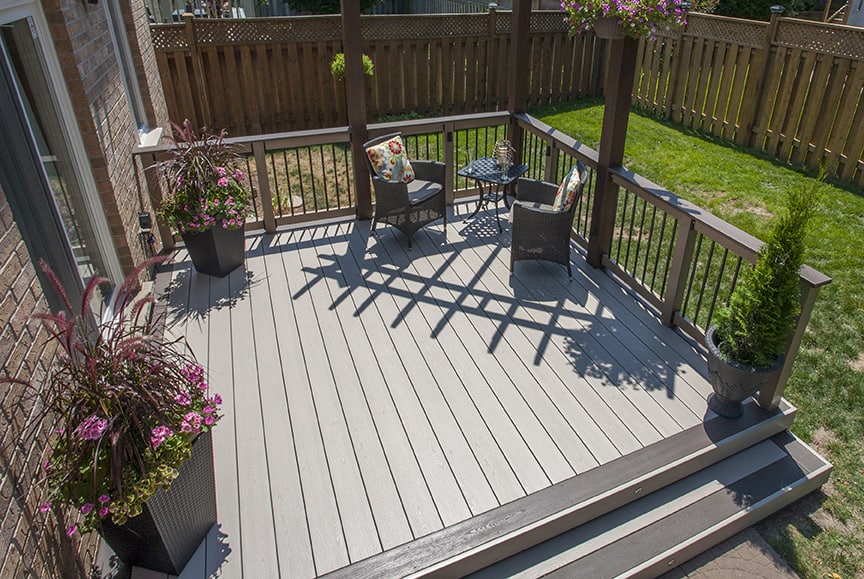
Both wood and composite decking can create beautiful outdoor spaces, but composite decking generally requires far less maintenance and typically lasts longer than traditional wood.
The best material for your deck depends on your priorities, budget, and how much maintenance you’re willing to perform over time.
Wood Decking: Traditional Appearance
Wood decks have been a popular choice for decades because they offer a classic, natural appearance. Many homeowners appreciate the authentic look of wood grain and the warmth it brings to an outdoor space.
When a wood deck is first built and properly finished, it can look fantastic.
Pros of Wood Decking
Wood decking offers several advantages:
- Lower upfront material cost
- Natural appearance
- Traditional aesthetic
- Easily customizable during installation
For homeowners who enjoy DIY projects and are willing to perform or outsource regular maintenance, wood can be a viable option.
Cons of Wood Decking
The biggest challenge with wood decking is ongoing maintenance.
To keep a wood deck looking its best, homeowners typically need to:
- Clean it regularly
- Apply stain or sealant every couple of years
- Replace boards that crack or warp
Without consistent upkeep, wood can begin to show signs of wear relatively quickly.
Another factor to consider is the nature of modern lumber. Much of the wood used today is fast-grown, which means it can be more prone to warping, twisting, bowing, and cracking over time. This doesn’t mean wood decks can’t last, but it does mean they require regular attention to maintain their appearance and structural integrity.
Composite Decking: Built for Low Maintenance
Composite decking has grown significantly in popularity over the past two decades.
These boards are typically made from a blend of wood fibers and recycled plastics, creating a durable material that resists many of the problems that affect traditional wood.
Pros of Composite Decking
Composite decking offers several advantages:
- Minimal maintenance
- No staining or sealing required
- Resistance to moisture and rot
- Long lifespan
- Consistent color retention
For most homeowners, composite decks require little more than occasional cleaning with soap and water.
Cons of Composite Decking
Composite decking does come with a few trade-offs:
- Higher upfront cost
- Some colors can become warm in direct sunlight
- Slightly different appearance than natural wood
However, modern composite products have improved dramatically in appearance, with textures and finishes that closely resemble natural wood grain.
Why Many Homeowners Choose Composite
While wood decks can look beautiful initially, many homeowners find that the long-term maintenance requirements become a challenge over time.
Composite decking helps eliminate that cycle. Instead of spending weekends staining or replacing boards, homeowners can focus on using and enjoying their outdoor space.
That’s why many deck upgrades today involve replacing aging wood boards with composite materials designed to perform well for many years.
StraightTALK Remodeling Tip
If you want a deck that continues looking good without constant upkeep, composite decking is usually the better long-term investment. It reduces maintenance, holds its appearance longer, and helps homeowners spend more time enjoying their deck instead of maintaining it.
Should I replace my deck or just replace the deck boards?
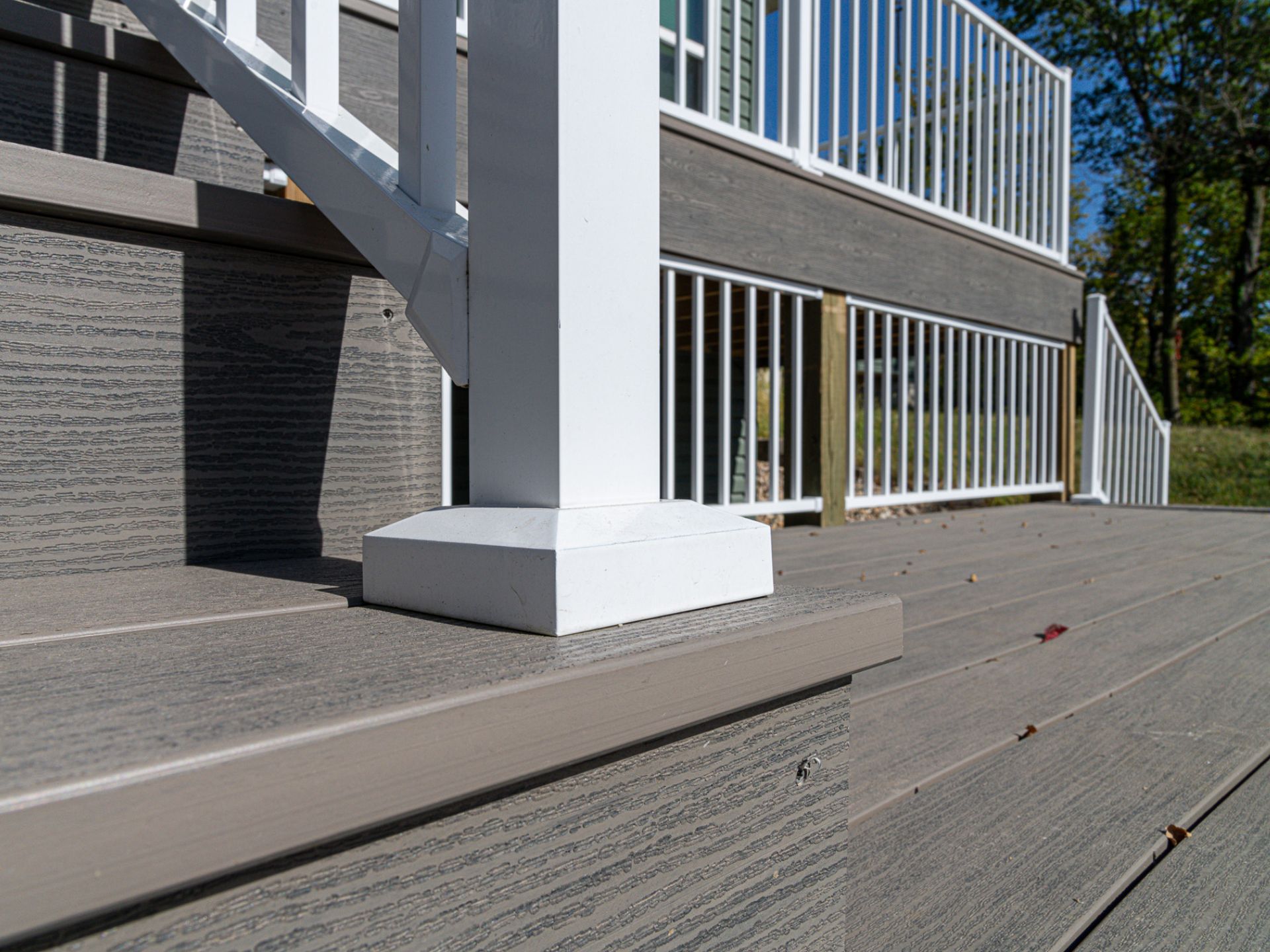
If the structural frame of your deck is still in good condition, you may be able to replace just the deck boards instead of rebuilding the entire structure. This process is often referred to as deck resurfacing or a deck overlay.
For many homeowners, it can be an efficient way to refresh an aging deck while preserving the existing frame.
What a Deck Overlay Involves
A deck overlay involves removing the old deck boards and installing new boards on the existing frame.
The process typically includes:
- Removing existing decking boards
- Inspecting the frame and joists
- Reinforcing structural components if needed
- Installing new decking materials, often composite
Because the underlying structure remains in place, this approach can reduce both construction time and project cost.
When a Deck Overlay Works Well
Deck resurfacing works best when the underlying structure is still solid. Key factors include: structurally sound joists, stable footings, proper framing spacing, and no significant rot or structural damage. If these conditions are met, replacing the deck boards can significantly improve the space’s appearance and durability.
When a Full Deck Replacement Is Necessary
In some cases, however, replacing the entire deck may be the better solution. Common reasons include:
- Structural deterioration
- Rotting support beams
- Outdated or undersized framing
- Footing issues caused by soil movement or frost
If the deck’s structural components are compromised, simply replacing the boards will not solve the underlying problem. A professional inspection can determine whether resurfacing or full replacement is the better long-term solution.
StraightTALK Remodeling Tip
If your deck frame is still structurally sound, a deck overlay can be one of the most cost-effective ways to upgrade your outdoor space. Replacing worn boards with modern composite decking can dramatically improve both appearance and longevity without rebuilding the entire structure.
Can you build a sunroom on an existing deck or patio?
A sunroom can sometimes be built on an existing deck or patio, but only if the structure underneath is engineered to support the additional weight of walls, windows, and a roof system. If you already have a deck or patio, it seems logical to build on top of that existing structure.
Sometimes that works.
Often, it doesn’t.
Sunrooms Are Much Heavier Than Decks
A sunroom isn’t simply a screened enclosure. It is a fully framed structure that includes walls and framing, windows and glass panels, roofing materials, and structural support components. All of which creates significant weight that must be supported by the foundation below.
In addition to the weight of the structure itself, the room must also withstand snow loads, wind forces, and seasonal temperature changes.
Most Decks Are Built for Outdoor Use
Typical decks are designed to support the weight of people, outdoor furniture, grills, and patio equipment. They are generally built to meet minimum residential deck codes, which focus on open-air use and temporary loads. Once walls and a roof are added, the structure must support continuous weight year-round, which is a much different structural requirement.
Foundations Are Often the Limiting Factor
In many cases, the biggest challenge is the foundation. For a sunroom to remain stable over time (especially in wild weather climates like Eastern Iowa where freeze-thaw cycles are common) the structure must have properly engineered footings.
Many decks simply weren’t designed with those requirements in mind. Because of that, converting a deck into a sunroom often involves:
- Removing the existing deck
- Installing new frost-protected footings
- Building a foundation designed specifically for the room
Although this may sound like a larger project, it ensures the new space will remain stable and durable for decades.
StraightTALK Remodeling Tip
If you’re considering adding a sunroom to your deck or patio, the most important first step is evaluating the foundation and structural support. A properly engineered base ensures your new living space will remain safe, comfortable, and structurally sound for years to come.
StraightTALK Wrap-Up
Upgrading your deck doesn’t always require starting from scratch.
In many cases, thoughtful improvements can transform an existing deck into a space that looks better, performs better, and gets used more often.
Homeowners across Cedar Rapids, Iowa City, and the Eastern Iowa area often explore upgrades such as:
- Planning deck improvements earlier in the season
- Choosing decking colors that stay comfortable in the sun
- Upgrading from wood to low-maintenance composite materials
- Resurfacing a structurally sound deck with new decking boards
- Converting an outdoor space into a sunroom or enclosed living area
Each of these improvements can dramatically enhance how your deck looks and functions, without necessarily requiring a complete rebuild.
If you’re considering upgrading your deck or exploring ways to improve your outdoor living space, the team at Hometown Restyling would be happy to help you evaluate your options.
Our team works with homeowners throughout Eastern Iowa to design deck upgrades, composite decking installations, and sunroom additions that make outdoor spaces more comfortable and enjoyable.
If you’re ready to start planning, reach out to schedule a consultation and explore what’s possible for your home.
And if you’re curious about expanding your outdoor space even further, be sure to check out our related article about sunrooms and how they can transform an existing deck or patio into a year-round living space.