

Most homeowners don’t think much about their patio door until something goes wrong.
Maybe it sticks every time you try to open it. Maybe you can feel cold air creeping in during the winter. Or maybe it just looks outdated compared to the rest of your home.
And then comes the replacement process, and the questions start piling up.
- What kind of patio door should I get?
- Why are some so much more expensive than others?
- Do I have to stick with the same size?
At Hometown Restyling, these are the exact questions we hear every week. So, we’re going to give you straight answers.
In this guide, we’ll walk through the different types of patio doors, the difference between sliding and French doors, available sizes, patio door costs, and how to choose the best option for your home.
Homeowners across Eastern Iowa, from Cedar Rapids and Iowa City to Davenport, Waterloo, and Cedar Falls, often deal with the same patio door challenges: drafts in the winter, humidity in the summer, and doors that just don’t hold up over time. Choosing the right patio door in this region is all about performance in a four-season climate.
What are the different types of patio doors?
The main types of patio doors are sliding patio doors, French patio doors (hinged), and multi-panel or folding doors. Each option offers different benefits in terms of space, ventilation, style, and cost, making the best choice dependent on your home layout and goals.
Sliding Patio Doors
Sliding doors are one of the most popular options, especially in Eastern Iowa homes.
They operate on a track, with one panel sliding past the other. That means they don’t require extra space to open, making them ideal for tighter layouts or areas with furniture nearby. They also tend to feature large glass panels, giving you a wide, uninterrupted view of your backyard and letting in abundant natural light.
Sliding doors have come a long way in terms of performance, too. High-quality options now include:
Advanced Weather Stripping to Reduce Air Leaks
High-quality sliding patio doors use advanced weather stripping systems designed to seal tightly along every edge of the frame. This helps prevent outside air from leaking into your home, which is especially important during our more extreme Eastern Iowa temperature swings. Better sealing not only improves comfort but can also reduce heating and cooling costs over time.
Strong Composite Frames That Resist Moisture
Unlike traditional wood or lower-grade vinyl, composite frames are built to handle moisture without warping, cracking, or rotting. This added durability is especially valuable in areas exposed to rain, humidity, and seasonal changes. A stronger frame also helps maintain the structural integrity of the door, ensuring long-term performance.
Smooth Rolling Systems That Prevent Sticking Over Time
A well-built (and installed) sliding patio door should open and close effortlessly. Premium doors use oversized tandem steel rollers that glide smoothly along the track, reducing friction and wear. This prevents the frustrating sticking or dragging that often develops in lower-quality doors after just a few years of use.
What to Look for in a High-Quality Sliding Patio Door
At Hometown Restyling, one of the most common upgrades homeowners choose is a sliding patio door with a composite frame and an advanced sealing system, like The Essentials by Sunrise.
These doors are designed specifically for long-term performance in climates like Eastern Iowa, where temperature swings, moisture, and seasonal changes can wear down lower-quality materials.
Key features homeowners tend to notice right away include:
- A composite frame that won’t absorb moisture or warp over time
- Quad-seal weather stripping systems that help eliminate drafts
- A fiberglass-reinforced core for added strength and insulation
- Smooth-gliding rollers that continue to perform year after year
French Patio Doors
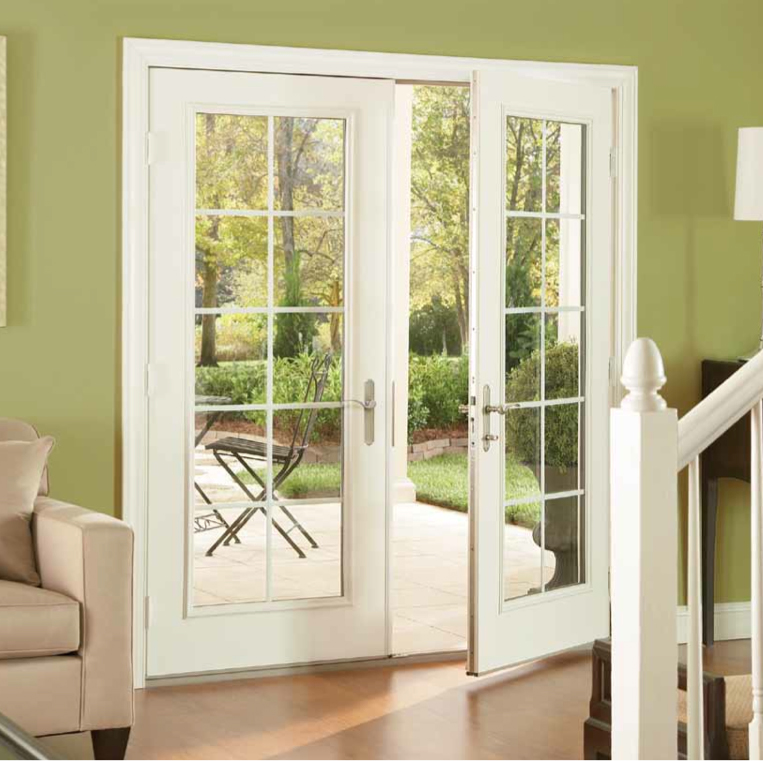
French doors take a different approach. Instead of sliding, they swing open on hinges, either inward or outward.
They’re often chosen for their traditional, elegant appearance and their ability to create a wide, open entryway. If you like the idea of opening up your home to your patio or deck, French doors can deliver that “open air” feel.
They’re also a great fit for homeowners who want the patio door to feel more like a design feature rather than just a functional element.
What makes a durable French patio door?
With French doors, durability comes down to how well the door holds up to daily use and the elements.
At Hometown Restyling, our French patio doors are built with heavy-gauge steel construction, which helps prevent warping, cracking, and long-term wear, which is especially important with Iowa’s changing seasons.
They’re also designed with:
- Compression weather stripping for a tighter seal
- Reinforced lock systems for added security
- Adjustable heavy-duty hinges to maintain alignment over time
French doors are often chosen for their appearance, but the construction and installation behind them determine how well they’ll perform over the long term.
Multi-Panel or Large Opening Doors
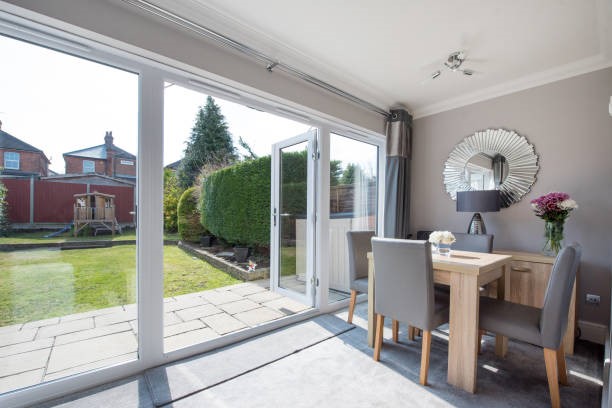
These are less common but worth mentioning. Multi-panel systems (sometimes called folding or stacking doors) are designed to open up entire walls.
They create a dramatic indoor-outdoor connection, but they also come with a higher price tag and more complex installation requirements.
For most Eastern Iowa homeowners, the decision comes down to sliding vs. French doors to create the best combination of function and beauty.
StraightTALK Remodeling Tip
If your current patio door is in a tight space or near furniture, a sliding door is usually the most practical upgrade. It improves function without forcing you to redesign your layout.
What’s the difference between sliding patio doors and French doors?
Sliding patio doors open by gliding horizontally along a track, while French doors swing open on hinges. Sliding doors save space and offer easy operation, whereas French doors provide a wider opening and a more traditional, elegant appearance.
Here are a few things to think about when considering French doors:
Space Requirements
Sliding doors don’t take up any extra room to operate. They move side to side, so they’re perfect for areas where space is limited.
French doors, on the other hand, need clearance to swing open. That can be a challenge if you have furniture, traffic flow, or tight interior layouts to consider.
Ease of Use
A quality, well-installed sliding door should glide smoothly with very little effort. That’s especially important for everyday use.
French doors can feel heavier, and depending on the setup, you may be opening one active panel most of the time while the other stays closed.
Aesthetic Style
This is where French doors really shine.
They offer a classic, symmetrical look that can elevate your home’s style, especially if you’re going for a more traditional or upscale feel.
Sliding doors tend to be minimal, with larger glass areas and slimmer frames.
Opening Width & Ventilation
French doors can open fully, giving you a wider entryway. That’s great for entertaining, moving furniture, or just enjoying a breeze.
Sliding doors typically open only halfway, since one panel remains fixed.
Maintenance & Durability
Both options can perform well, but quality matters.
Sliding doors rely on rollers and tracks, so higher-end systems with steel rollers and strong frames tend to last longer and operate better.
French doors rely on hinges and alignment, so proper installation is key to avoiding sagging or air leaks over time.
What about screens for patio doors?
One detail that often gets overlooked when choosing between sliding and French patio doors is the screen. And in Eastern Iowa, that’s something you don’t want to ignore.
Sliding patio doors almost always come with a sliding screen panel. It moves along its own track, just like the glass door, making it easy to open your door for fresh air while keeping bugs out. It’s a simple, built-in solution that works well for everyday use, especially during those warm months when you want airflow without inviting in mosquitoes.
French doors are a little different.
Because they swing open (often creating a wide, unobstructed opening), they don’t always include a traditional screen. That doesn’t mean you’re out of options, though. It just means you need to think a bit more intentionally about how you’ll use the space.
Here are a few common scenarios to consider:
- If your French doors lead to a screened-in porch or sunroom: You likely don’t need a screen on the doors themselves. The space beyond the door is already protected, so you can enjoy the wide opening without worrying about bugs.
- If you want occasional airflow without a permanent screen: A pull-down (retractable) screen can be a great solution. These screens stay hidden when not in use, preserving the clean look and full opening of your French doors, but can be pulled down when you want fresh air without the bugs.
- If you want a more traditional setup: Hinged or sliding screen options can sometimes be added, but they may interfere with the full functionality or aesthetic of the door.
StraightTALK Remodeling Tip
At the end of the day, the right choice comes down to how you plan to use your patio door. If ventilation is a big priority, a sliding door with a built-in screen might be the easier solution. If you love the look and function of French doors, you just need to plan ahead for how you’ll handle airflow during those buggy Iowa summers.
Do patio doors come in sizes larger than 6 feet?
Yes, patio doors come in a variety of sizes beyond the standard 6-foot width. Common options include 5-foot, 6-foot, and 9-foot configurations, with multi-panel systems offering even larger openings depending on the design and manufacturer.
A lot of homeowners assume they’re stuck with whatever size their current door is, but that’s not always the case.
Standard Patio Door Sizes
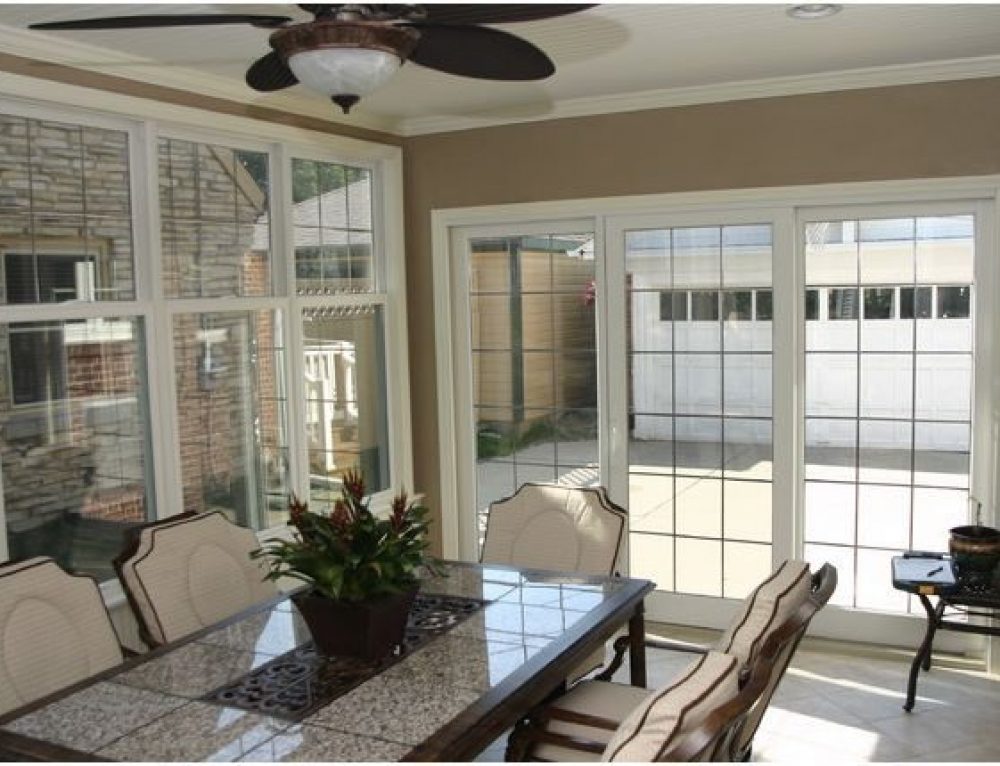
Most replacement projects fall within standard widths, such as 5 feet or 6 feet. These are common because they fit typical home openings and simplify installation.
Larger Patio Door Options
If you’re looking to create a bigger opening, there are definitely options. French doors, for example, are often available in 6-foot (two-panel) or 9-foot (three-panel) configurations.
That extra width can make a big difference in how open your space feels.
Can You Go Bigger Than Your Current Opening?
Yes, but it depends. Expanding your patio door opening may require structural modifications, header adjustments, or additional cost. It’s doable, but it’s not the same as a standard replacement.
Custom Sizing
Not every home fits perfectly into standard sizes, so you may want to consider custom-fit doors for your home. The most important thing to do (or have a contractor do during a consultation) is to ensure accurate measurements so that you can have an effective installation. Even the best door won’t perform well if it’s not installed correctly.
StraightTALK Remodeling Tip
If you’re already investing in a new patio door, it’s worth asking if a larger opening is possible. The added natural light and accessibility can completely change how your space feels.
How much do patio doors cost in Eastern Iowa? (Real pricing breakdown for homeowners)
Patio doors typically cost between $2,000 and $10,000 or more, depending on the type, size, materials, glass options, and installation complexity. Sliding doors are generally more affordable, while French and large multi-panel doors tend to cost more.
Let’s talk about the question everyone is really thinking about: cost.
The truth is, patio door pricing can vary quite a bit, and with good reason.
Entry-Level Patio Doors ($2,000–$4,000 Installed)
Entry-level patio doors are typically the most budget-friendly option, usually falling between $2,000 and $4,000 installed. These doors are often made with basic vinyl construction, minimal insulation, and simpler hardware. While they may look fine initially, they tend to show wear more quickly, especially in weather like Eastern Iowa, where temperature swings can take a toll on performance and durability.
Mid-Range Patio Doors ($4,000–$7,000 Installed)
Mid-range patio doors generally cost between $4,000 and $7,000 installed and offer noticeable performance upgrades. This is where you start to see better energy efficiency, stronger frame materials, and smoother operation. For many homeowners, this category provides the best balance between upfront cost and long-term reliability.
Premium Patio Doors ($7,000–$10,000+ Installed)
Premium patio doors typically range from $7,000 to $10,000 or more, depending on size and customization. These doors are built for long-term performance and often include composite frames that resist moisture and warping, advanced weather sealing to reduce air leaks, strong multi-point locking systems, and smooth, heavy-duty roller systems. While the upfront cost is higher, these doors are designed to last. This is where homeowners tend to see the greatest value over time.
What impacts the price of my patio door the most?
Several factors influence the final cost:
- Door size (larger = more expensive)
- Glass packages (energy-efficient upgrades)
- Installation complexity
- Structural modifications
The biggest mistake homeowners make is focusing only on the upfront price rather than on what they’re getting for it.
StraightTALK Remodeling Tip
If two patio doors have a big price difference, ask why. Cheaper doors usually cut corners on materials, insulation, or hardware—and that shows up later in performance.
What is the best patio door for my Eastern Iowa home?
The best patio door depends on your space, budget, style preferences, and performance needs. Sliding doors are ideal for space efficiency and ease of use, while French doors are better for wider openings and traditional design. Energy efficiency and long-term durability should also factor into your decision.
This is where everything comes together.
There’s no one-size-fits-all answer, but there is a right answer for your home.
Choose Sliding Doors If You Want:
- A space-saving design
- Easy, everyday operation
- Large glass views with minimal obstruction
Sliding doors are a great fit for homeowners who prioritize function, simplicity, and efficiency.
Choose French Doors If You Want:
- A wide, open entryway
- A more traditional or upscale look
- A door that makes a visual statement
French doors are ideal if style and openness are high priorities.
Choose Based on Performance If You Care About:
- Energy efficiency: Look for strong weather sealing and insulated frames
- Durability: Materials matter and composite frames outperform basic vinyl
- Security: Multi-point locking systems add peace of mind
The reality is, the “best” patio door isn’t just about how it looks today, but how it performs over the next 10, 20, even 30 years.
What to Expect from Patio Doors in Eastern Iowa’s Climate
Patio doors in Eastern Iowa need to handle freezing winters, humid summers, and everything in between. In areas like Cedar Rapids, Iowa City, and the Quad Cities, homeowners often deal with:
- Air leaks during cold winters
- Expansion and contraction from temperature swings
- Moisture exposure that can affect lower-quality materials
That’s why choosing a patio door built for durability and energy efficiency is essential for long-term performance.
StraightTALK Remodeling Tip
Don’t choose your patio door based on what looks best in a showroom. Choose the one that will still operate smoothly, seal tightly, and hold up to the elements for years to come.
StraightTALK Wrap-Up
At the end of the day, choosing a patio door is all about finding the right fit for your home and how you live in it.
The right patio door should do more than just look good. It should:
- Open smoothly every time
- Keep your home comfortable in every season
- Stand up to years of use without constant issues
If you’re starting to explore your options, take the time to ask questions, compare materials, and understand what’s behind the product, and how it will fit in your home.
And if you’re interested in more about choosing the best doors for your home, check out: What Every Homeowner Should Know About Replacing Doors and Windows in Eastern Iowa.