

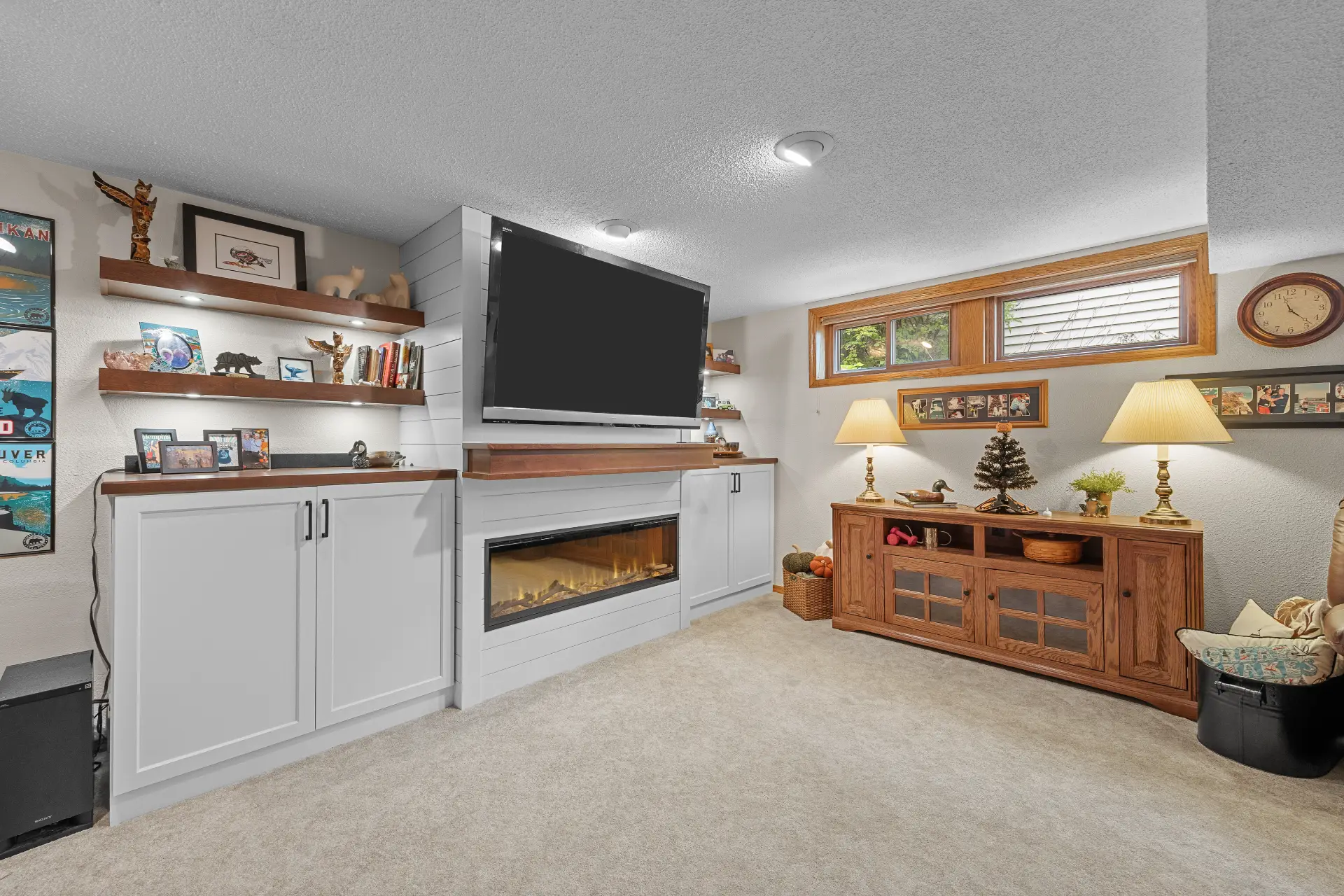
How amazing would it feel to turn your underused, unfinished basement into a fully finished living space?
Basement remodels are one of the most impactful ways to add livable square footage to your home, but there’s a lot more to it than paint and carpet.
Finish a Basement | Basement Bathroom | Basement Bedroom | Cost Drivers | Considerations
One of the biggest challenges we see? Budget expectations that aren’t aligned with delivering the quality homeowners desire. What you may have gotten built for $50,000 might run $80,000–$100,000 or more in today’s market, and with the quality that aligns with your expectations. If you’re considering adding a bathroom or bedroom in the basement, costs increase further.
This StraightTALK article lays it all out clearly for you. Five of the most common questions homeowners ask about basement remodeling, answered.
How much does it cost to finish an unfinished basement?
To remodel an unfinished basement, you can expect to spend $80,000–$100,000 or more to make it a finished part of your home. That range depends on square footage, finishes, and layout complexity, but it’s a fair starting point for a code-compliant basement remodel.
This budget range may be a surprise and feel much higher than what you expected a decade ago. The increase is driven by rising material and labor costs, stricter code requirements, and (primarily) the fact that most homeowners want more than just basic walls and carpet. More than likely, you want a basement that features luxury vinyl plank flooring, recessed lighting, entertainment areas, built-ins, and perhaps a wet bar or custom storage.
A typical full basement finish includes:
- Framing new walls and insulation
- Drywall and paint on the walls
- Electrical and lighting upgrades
- Flooring
- HVAC integration
- Bathroom
- Egress windows (if required)
StraightTALK Remodeling Tip
If your mental budget is $50,000, you’ll want to talk to a contractor about what you can accomplish within this amount. The good news? Done right, a finished basement can add serious value and functionality to your home.
Specialty basement projects: how much more should you budget?
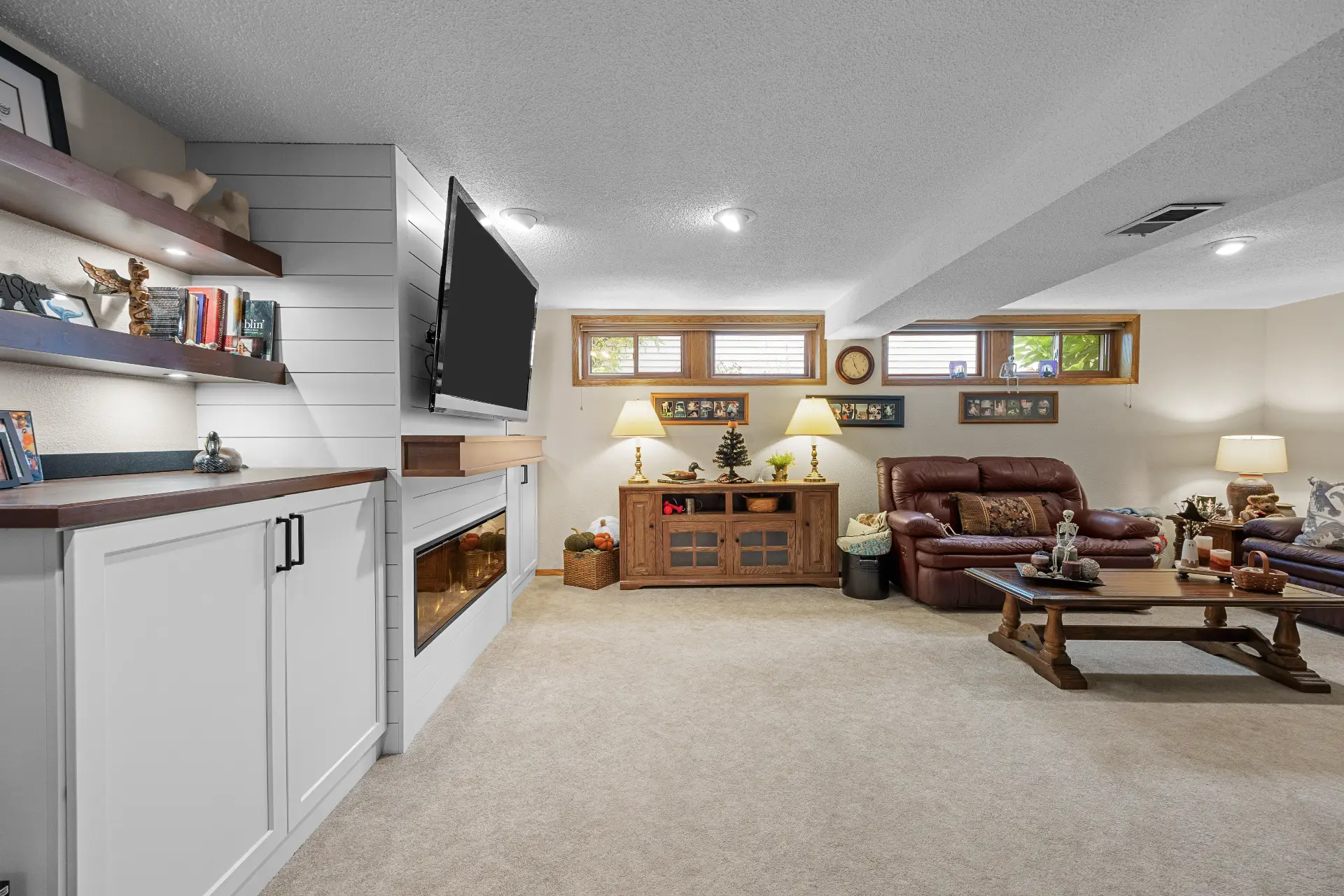
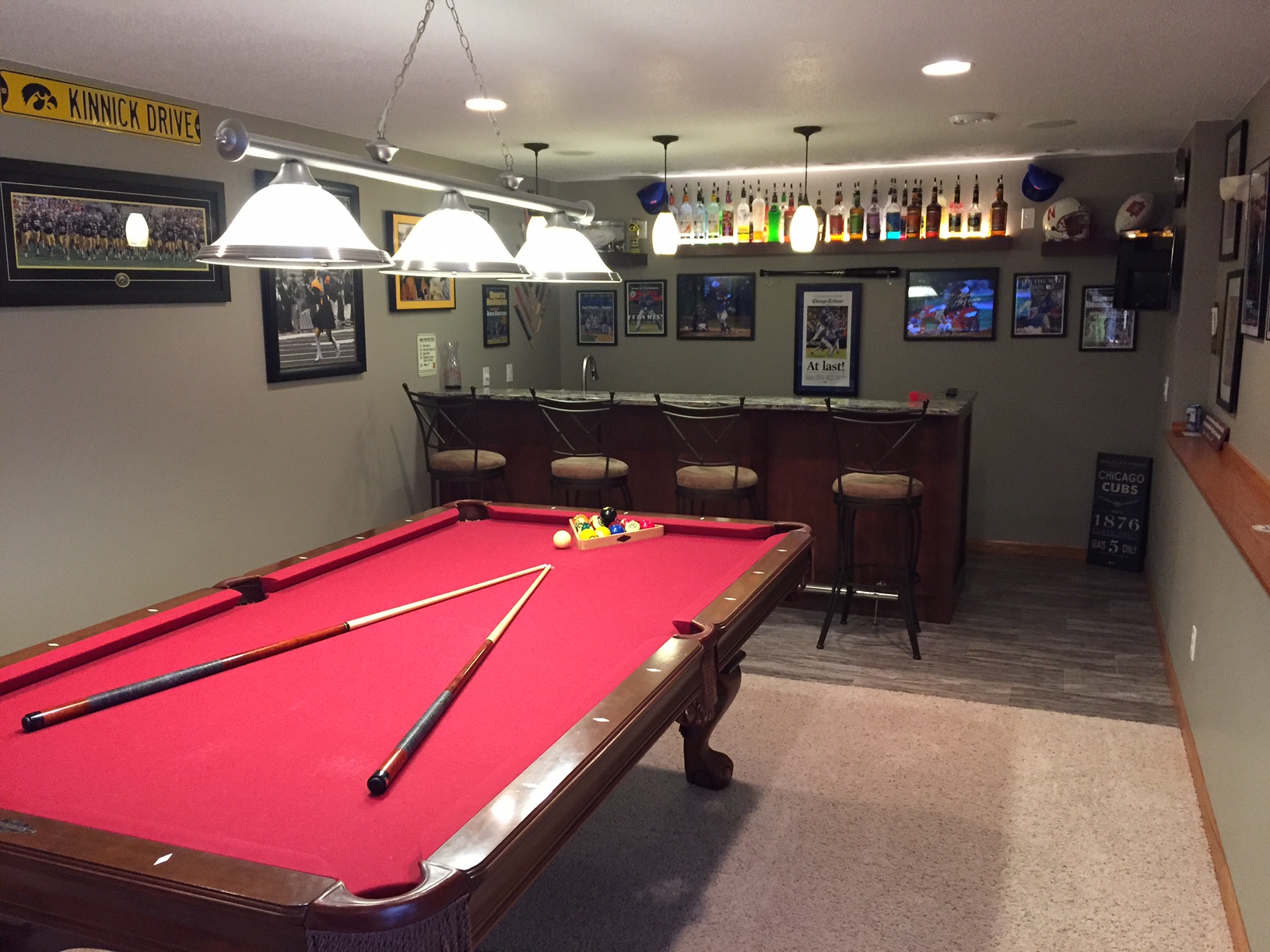
If you’re dreaming beyond a simple rec room and into something more customized, like a full bar, man cave, theater space, or home gym, be prepared for the budget to climb accordingly. These specialty basement projects typically require additional electrical and plumbing work, built-ins, soundproofing, or high-end finishes that go well beyond standard finishes.
For example:
- A custom basement bar with cabinetry, countertops, plumbing, beverage fridges, and lighting can add $25,000–$35,000+ to your total budget.
- A theater room with built-in speakers, tiered seating, acoustic treatments, and projection systems may cost $20,000–$40,000+, depending on your equipment and design choices.
- A man cave or entertainment lounge with accent walls, integrated lighting, smart home technology, or a gaming setup can add $10,000–$20,000+ in cost, depending on the features.
While these upgrades are entirely optional, they can seriously enhance how you use the space, and how much enjoyment you get from your investment. Just be sure your budget reflects those choices upfront.
Is soundproofing your basement worth the investment?
One upgrade often overlooked until it’s too late: soundproofing. Whether you’re building a home theater, music room, gym, or office, managing sound is key to creating a functional and enjoyable space, especially in a multi-level home where noise can travel easily.
Adding soundproofing can include:
- Insulating interior walls and ceilings with sound-rated insulation
- Installing resilient channels or sound isolation clips to reduce vibration transfer
- Using sound-dampening drywall or mass-loaded vinyl barriers
- Sealing gaps around outlets, light fixtures, and ductwork
While basic soundproofing upgrades may add $4,000–$8,000 to a project, more extensive treatments (especially for theater rooms or music studios) can exceed $10,000.
StraightTALK Remodeling Tip
It’s much easier and more affordable to integrate soundproofing during the initial finish of your basement than to retrofit it later. If peace and quiet are part of your basement vision, plan for it early.
Inspections are required when finishing a basement in Linn County
One thing that is easy for homeowners to overlook when budgeting for a basement finish is the required inspections. In Linn County (including Cedar Rapids), basement finishing projects typically require multiple inspections at different stages of construction, not just a final walkthrough.
Common inspections include:
- Framing rough-in
- Electrical rough-in
- Gas piping rough-in
- Plumbing rough-in
- Mechanical/HVAC inspection
- Final inspection
These inspections are conducted to ensure safety, code compliance, and long-term durability. And they’re especially important in below-ground spaces, where moisture, egress, and fire safety are critical.
StraightTALK Remodeling Tip
Inspections may feel like red tape, but in reality, they protect you as a homeowner. Skipping permits or inspections can create major issues during resale, insurance claims, or future repairs and renovations.
Now that you know what a full basement finish typically costs, let’s drill down into one of the most common additions: a bathroom. Even with plumbing nearby, this upgrade has its own unique cost considerations.
What should I expect to pay to add a bathroom in my basement if plumbing is already roughed-in?
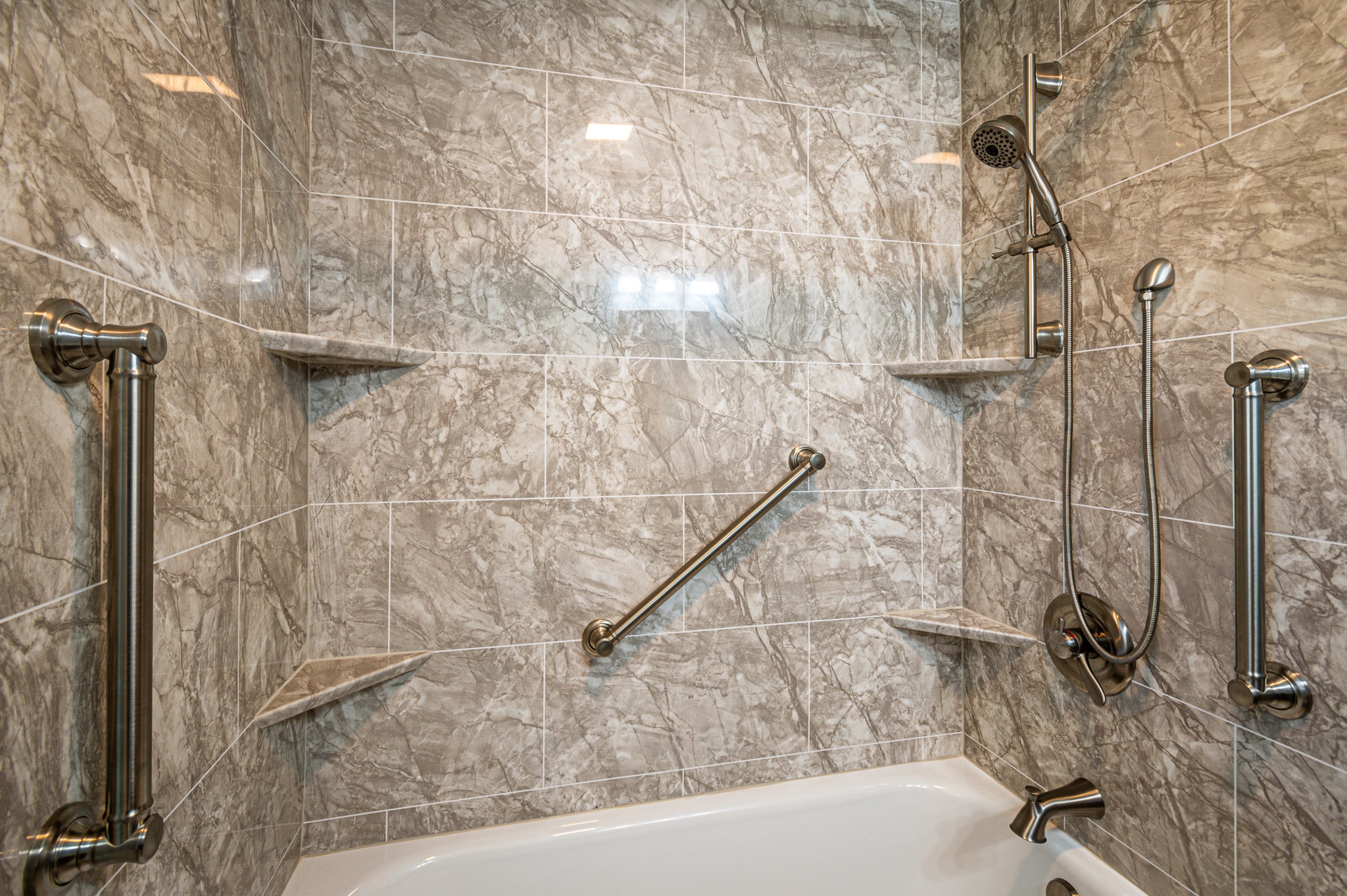
Even when plumbing is already in place, a full basement bathroom typically starts at $30,000 and can go up from there.
That price includes:
- Framing and waterproofing
- Plumbing connections and fixtures
- Tile or other water-resistant finishes
- Ventilation
- Permits and inspections
When you’re working below ground, you’re dealing with moisture, concrete, and the need for proper drainage. Even with roughed-in plumbing, the finish work can be substantial.
⭐⭐⭐⭐⭐
“Hometown Restyling installed a basement half bath. It took only a week, between final framing, drywall, plumbing, electrical, etc. The crew here was professional, efficient and the final product is exactly what we wanted! It was great working with Hometown on the entire process from sales to execution.” ~Dan K.
Can I add a bathroom to my basement where there isn’t already plumbing run to it?
Yes, but expect to pay more, often $50,000 or more, depending on where you want it and how far it is from existing plumbing lines. If your desired bathroom location is across the basement from your main sewer line, that likely means trenching into the slab, adding a sewage pump, and rerouting utilities.
It’s doable, but not a small job. Plumbing access is a significant cost driver in basement remodels, especially for bathrooms.
StraightTALK Remodeling Tip
If the plumbing isn’t already in place, your budget needs to cover more than tile and fixtures.
Bathrooms are great for convenience, but if you want to create a bedroom in your basement is often the next significant consideration.
What’s the cost to add a legal bedroom in my basement, and what makes it “legal”?
Adding a bedroom in your basement can range from $15,000 to $30,000, because it isn’t just about putting up a wall and a door. Many homeowners assume that once they carpet the floor and throw in a bed, they’ve got a bedroom, but building codes don’t see it that way.
A “legal” basement bedroom must meet safety and habitability standards, including adequate lighting, ventilation, and emergency escape provisions. These requirements protect the people who live there and ensure the space is insurable, salable, and compliant with local building standards.
What makes a basement bedroom “legal” in Cedar Rapids, Iowa?
To be considered a legal bedroom, your basement room must typically meet all of the following (based on IRC standards):
Minimum Ceiling Height
Basement living spaces typically require a minimum 7-foot ceiling height to qualify as habitable space.
Egress (Emergency Escape & Rescue Opening)
Every sleeping room (including basement bedrooms) must have at least one emergency escape and rescue opening that meets size and placement requirements. That typically includes:
- A net clear opening area of at least 5.7 sq ft (for basement rooms).
- The minimum opening height is 24 inches, and the minimum opening width is 20 inches.
- The sill height is no more than 44 inches above the finished floor.
- Window wells are required whenever a window opening is below grade and provides sufficient space to exit easily.
Adequate Heating, Ventilation & Lighting
Bedrooms must be properly heated and ventilated, meaning connected to your home’s HVAC system and compliant with code lighting/ventilation standards.
Smoke Alarms
Smoke detectors are required in every sleeping room and in common areas outside bedrooms (including basements).
Why this matters for cost:
Adding or upgrading an egress window, installing window wells, and ensuring all systems comply with code can increase your basement finishing budget, often on top of the room build‑out costs you already expect (framing, flooring, HVAC, lighting). For example, a compliant egress window installation alone can range from $3,000–$6,000, and costs may be higher if excavation, well drainage, or foundation cutting are required.
StraightTALK Remodeling Tip
Before you finalize the design and pricing, it’s best to confirm specific requirements with Cedar Rapids Building Services, the Linn County Building Division, or your local building services department, especially since codes can change and interpretations can vary slightly by inspector or neighborhood.
What factors drive the cost of a basement remodel higher (or help keep it under control)?
Basement remodels can vary widely in cost based on several factors, some outside your control and others tied to the choices you make during planning and design.
Costs tend to rise quickly when a remodel uncovers foundation cracks, moisture issues, or mold. These are common in older homes or basements that haven’t been used as living spaces. Addressing water intrusion properly often means adding sump pumps, sealing cracks, installing drainage systems, or applying waterproofing membranes, all of which add cost, but are non-negotiable for the safe, lasting result that you want for your livable basement.
Relocating or adding plumbing or HVAC systems is another major expense. For example, if you want a bathroom or wet bar on the opposite end of the basement from your existing utility lines, you’re looking at trenching through concrete, rerouting pipes or ductwork, and possibly adding pumps. Similarly, moving load-bearing walls or altering your home’s structure incurs engineering fees, materials, and labor, all of which add up quickly.
But these factors also demonstrate why it is critical to work with an expert craftsman when remodeling your basement. If you get these foundational things wrong, it could cost you much, much more in the long run.
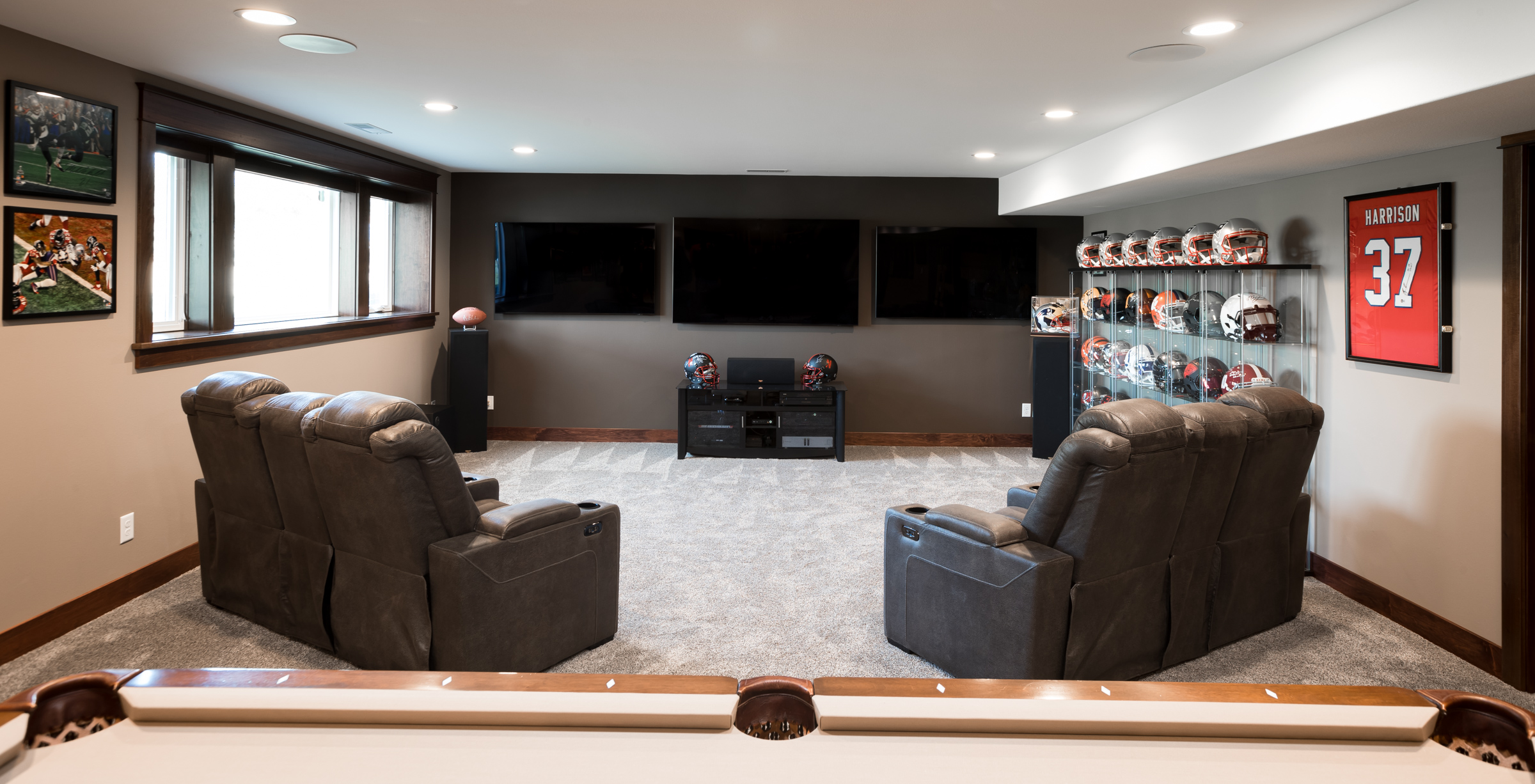
Then there are the finish choices. High-end tile, custom cabinetry, upgraded lighting, and luxury flooring can quickly turn a modest basement remodel into a six-figure project. Want a full kitchenette or theater room? It will be amazing, so make sure you’re talking with your contractor through your budget early and often so there are no surprises.
On the flip side, you can help manage your budget by keeping plumbing, HVAC, and layout changes to a minimum. Using existing framed walls, working within the current footprint, and reusing some utility access points can reduce your renovation cost. Choosing durable materials, like waterproof vinyl flooring or Mantra Select cabinets, can deliver great looks without top-shelf costs.
A helpful, expert contractor can show you where your dollars matter most, and where you might be overspending without much payoff.
StraightTALK Remodeling Tip
The cheapest route isn’t always the best value. Cutting corners in basements, especially in waterproofing, electrical, or egress, can lead to significant problems down the road. Determine what your “must-haves” are and work your budget from there.
Understanding cost drivers is only part of the equation. Let’s look at critical decisions you shouldn’t overlook before starting a basement remodel.
What should I consider before remodeling or finishing my basement?
Before you even pick up the phone to call a contractor, it’s important to think through the big-picture questions that will shape your entire basement remodeling project. This isn’t like painting a bedroom or replacing a kitchen backsplash, it’s a full-blown construction project occurring below ground, with unique structural, moisture, and code considerations.
A successful basement remodel starts with a solid plan, realistic goals, and an assessment of your home’s current condition. Jumping in without understanding the challenges can lead to costly mid-project changes, delays, or, worse, a finished space that isn’t functional or up to code. The good news? A well-thought-out plan can save you time and frustration while delivering a basement that you will love to live in.
Questions to ask yourself and your contractor before remodeling a basement:
- Is the space dry and structurally sound? Water issues have to be resolved before anything else.
- What do I want this space to be? Be clear about whether you’re building a guest suite, a family hangout space, a rental unit, or something else.
- Are there existing plumbing and HVAC connections? This can save you thousands.
- Am I aware of local building codes and permit requirements? Don’t skip this.
- Who’s doing the work? You need a contractor with basement remodeling experience.
Basements come with unique challenges. Everything from ceiling height to emergency exits needs to be carefully planned.
Can my finished basement be a legal rental or accessory dwelling unit (ADU)?
Many homeowners ask whether their finished basement can serve as a separate living unit, either for rental income, an in‑law suite, or long‑term guests. The short answer is: yes, but it must meet specific zoning and building requirements.
In Linn County, a basement apartment that functions as an Accessory Dwelling Unit (ADU) or rental unit must satisfy additional criteria beyond basic finish and egress code checks:
- It must provide independent living facilities: a kitchen, bathroom, and sleeping area that meet dwelling standards, rather than simply a bedroom.
- A basement ADU typically requires separate access, appropriate fire insulation, and independent plumbing and ventilation for each zone.
- In Cedar Rapids, a Rental Unit Registration may be required if the space is rented out, including compliance with housing and maintenance codes under the local property‑maintenance regulations.
These go beyond the typical “finished basement” checklist. If you’re planning to use the space as a rental or a standalone unit, bring it up with your contractor early and confirm zoning and registration requirements with the city.
StraightTALK Wrap-Up
Remodeling or finishing your basement can add valuable square footage, improve your home’s function, and even boost resale value, but only if you go into it with realistic expectations.
We’ve seen the disconnect firsthand: many homeowners still think in terms of 2015 budgets. The reality today is that a high-quality basement remodel is a serious investment (one that is well worth it). It just means you need the right plan, the right team, and a clear understanding of where your money is going.
And if you’re meeting with a contractor, here are some great questions to ask them during your initial meeting: What Questions Should I Ask a Contractor Before Remodeling?