

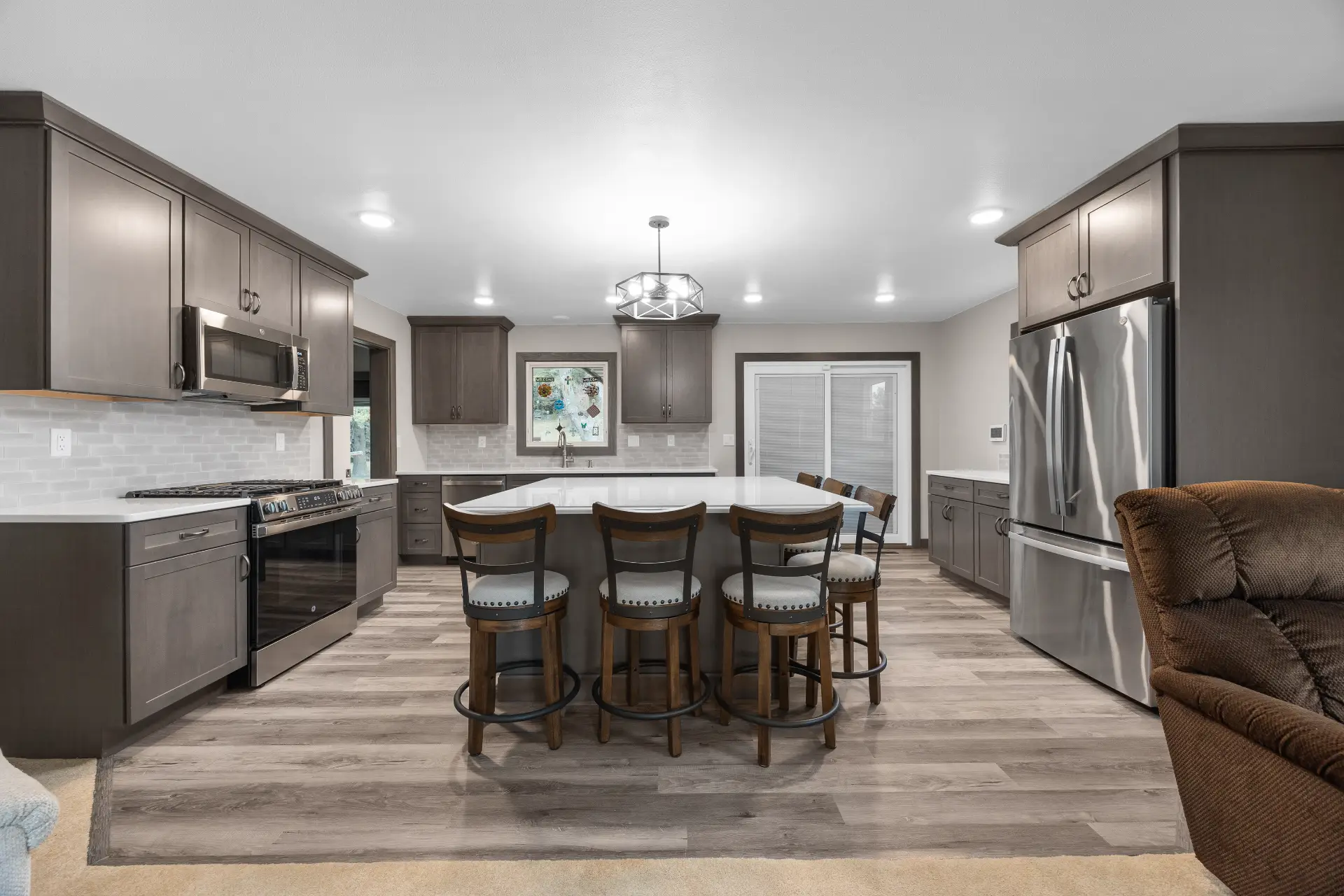
When you start planning a kitchen remodel, one of the first questions you ask is almost always:
“How long does a kitchen remodel take?”
Timeline | Cabinets & Countertops | Plus Flooring | Moving Walls | Delays
It’s a perfectly logical question. Of course, you want to know how long you may be living without the heart of your home. Timeline expectations matter. Yet one of the biggest frustrations homeowners face is not knowing what to expect, because each project is truly unique.
In this StraightTALK guide, we’re going to walk you through real timelines for kitchen remodels of different sizes and capacities, explain why kitchen renovation projects take as long as they do, help you understand where delays commonly happen, and give you practical tips you can use to plan your remodel.
If you’re remodeling in Eastern Iowa, including Cedar Rapids, Iowa City, Marion, Hiawatha, or Cedar Falls, this guide will help you set realistic expectations for your kitchen remodel timeline from start to finish, but we’ll continue to caveat that each remodel is unique and therefore has its own specific timeline.
The most important thing to remember is to ensure your kitchen is exactly what you want it to be when it is all said and done. A short delay in the kitchen remodel process now may well be worth the years of joy to come.
What are the steps in a kitchen remodel timeline?
The steps in a kitchen remodel timeline include pre-construction design and planning, demolition, rough-in work (plumbing/electrical/framing), cabinet installation, countertop templating, flooring, countertop installation, and final finishing work.
Understanding the order of operations helps you see why kitchens take weeks, not days, to complete. If you’re hiring a contractor in Cedar Rapids or the surrounding areas, having a clear timeline helps everyone stay aligned.
Step 0: Design & Planning (2–8 Weeks)
Before a hammer ever hits the wall, there’s Step 0: design and planning.
This phase is one of the most critical parts of your kitchen remodel timeline, and yet it’s often underestimated. Design and planning include:
- Determining your budget
- Choosing layouts and material selections
- Finalizing cabinet styles, countertop materials, appliances, lighting, fixtures, and flooring
- Ordering materials (more on that later)
- Pulling permits if needed
This phase can take anywhere from 2 to 8 weeks or more, depending on how quickly you make decisions about materials and styles for your home remodel, as well as how long it takes for ordered products to be delivered. A high-quality contractor won’t leave you hanging with a demolished kitchen without having ordered (and in many cases received) the replacement materials.
Keep in mind that this design and planning phase is often left out of remodel timelines because the length is incredibly variable based on each homeowner’s decision-making process.
StraightTALK Remodeling Tip
Start the planning phase as early as possible. The more decisions you make up front, especially for long‑lead items like cabinets and countertops, the smoother your timeline will be.
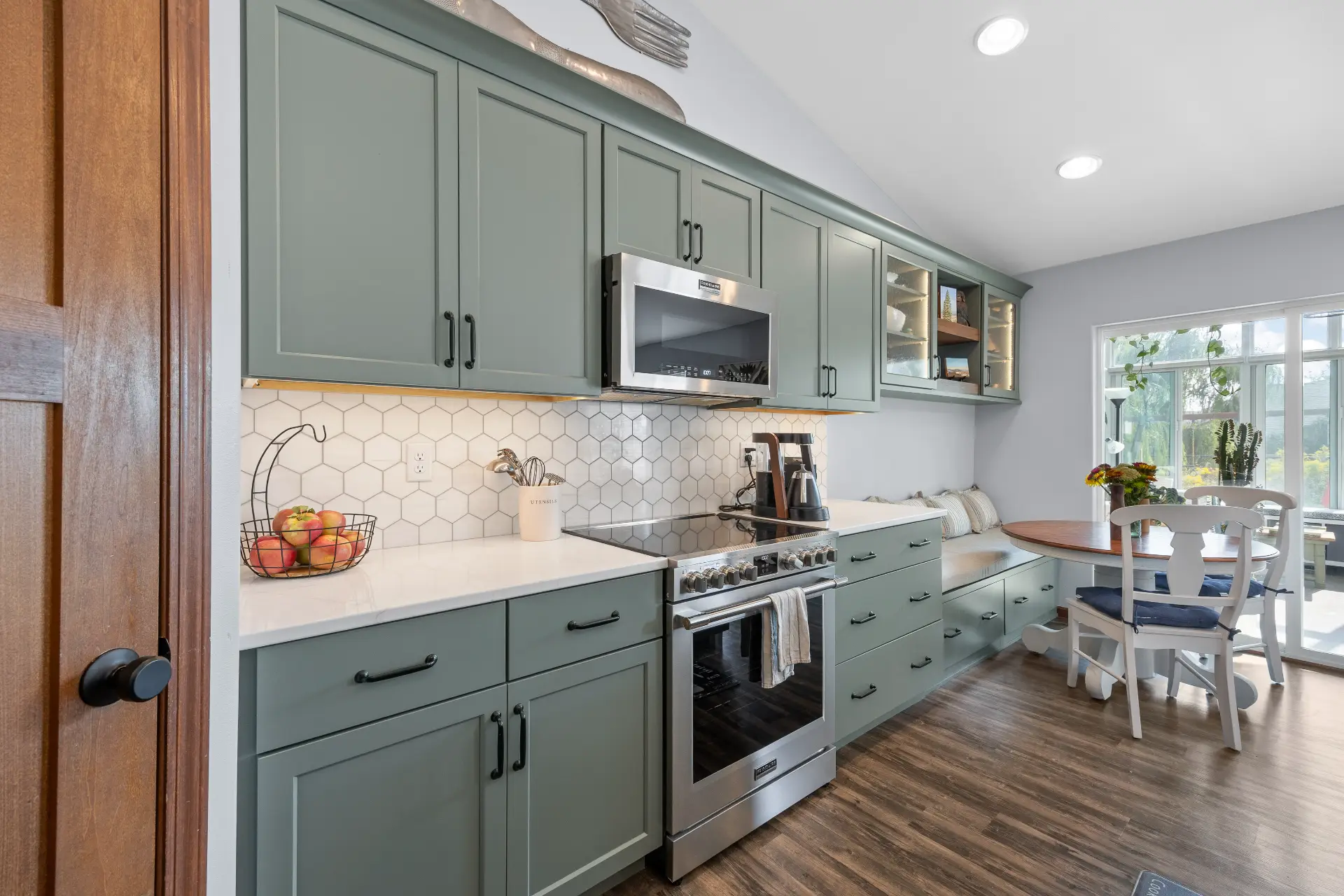
Step 1: Demolition & Framing (1–2 Weeks)
Once materials are ordered and permits are in hand, the kitchen remodel construction timeline begins with demolition and framing.
Demolition includes tearing out old cabinets, flooring, and fixtures. If your remodel involves moving walls or changing the layout, framing also happens now.
This step is exciting because you can see progress quickly, but it can also reveal things behind the scenes that you didn’t expect.
Step 2: Kitchen Rough‑In Work (1–2 Weeks)
After the demolition comes the rough‑in phase, where all the behind‑the‑scenes systems get updated and prepared for your new kitchen layout.
- Plumbing work involves rerouting or updating water and drain lines to accommodate your new sink, dishwasher, or refrigerator, ensuring compliance with current code.
- New electrical circuits are often required to safely support new appliances, lighting, and additional outlets, especially in older homes that don’t meet today’s electrical standards.
- HVAC adjustments may include moving vents or ductwork so that airflow works correctly with your new kitchen layout and cabinetry design.
- Drywall repair and painting happen once all the rough‑in work is inspected and finalized, sealing everything back up and providing a clean, finished surface for the next stages of the remodel.
Rough‑in work is essential and time-consuming because it occurs behind the walls. During this phase, your contractor is making sure everything is ready for new cabinets and finishes.
Step 3: Cabinet Installation (3–5 Days)
Once the walls are prepped and painted, it’s time to install the cabinets.
If your cabinets were custom‑ordered (very common in kitchen remodels), they may have taken several weeks already to be built before they arrive at your home.
Cabinet installation usually takes 3–5 days, depending on complexity, size, and whether the cabinets are stock, semi‑custom, or custom.
Step 4: Countertop Templating & Flooring (2-3 Weeks)
Here’s where timing gets interesting:
Countertop templating cannot begin until the cabinets are installed. That’s because countertops are measured precisely to fit the installed cabinet footprint, and quartz or granite countertops can only be cut once.
Once templating is complete, countertops are typically cut and fabricated off-site, which can take another 7–14 days, depending on the material.
Flooring is often installed at this stage, either before or after cabinets, depending on your project details.
Step 5: Countertop Installation (1–2 Days)
After fabrication, countertops are delivered and installed. This usually happens within a day or two, but only after your cabinets are fully in place and the floors are complete (if that’s the sequence you choose).
Step 6: Final Installs & Punch List (3–5 Days)
The final phase of your kitchen remodel is all about finishing touches and making sure everything works exactly as it should.
- The plumber connects sinks, faucets, and any remaining appliances, such as the dishwasher or garbage disposal, ensuring all water lines and drains are properly sealed and functioning.
- The electrician installs lighting fixtures, outlets, and any smart controls that were part of your design, completing the electrical system so the kitchen is fully powered and code-compliant.
- The trim carpenter handles final details, including crown molding, cabinet hardware, and any custom woodwork, bringing a cohesive look to your new space.
- Final adjustments and cleanup ensure your kitchen is not just complete, but also spotless and ready for use, with protective coverings removed and surfaces cleaned.
- Punch list items (small fixes or touch-ups identified during the final walkthrough) are resolved, leaving you with a finished kitchen that meets your expectations down to the last detail.
This final phase is where everything comes together, and your kitchen feels like the heart of your home again.
Kitchen Remodel Timeline by Project Phase
| Phase | Typical Duration |
| Design & Planning | 2–8+ weeks |
| Demo & Framing | 1–2 weeks |
| Rough‑In Work | 1–2 weeks |
| Cabinet Install | 3–5 days |
| Countertop Templating & Flooring | 2-3 weeks |
| Countertop Install | 1–2 days |
| Final Finishes & Punch List | 3–5 days |
Most standard kitchen remodels take 8–10 weeks from demolition to completion, with design and planning occurring before that. Anything more complex usually adds 2–3 additional weeks. Homeowners in Cedar Rapids, Iowa City, Marion, and other parts of Eastern Iowa can expect similar timelines when working with experienced local contractors.
StraightTALK Remodeling Tip
The best way to understand your specific timeline is to schedule a consultation at your home with a contractor. Contact our team at Hometown Restyling to receive a personalized estimate aligned with your goals.
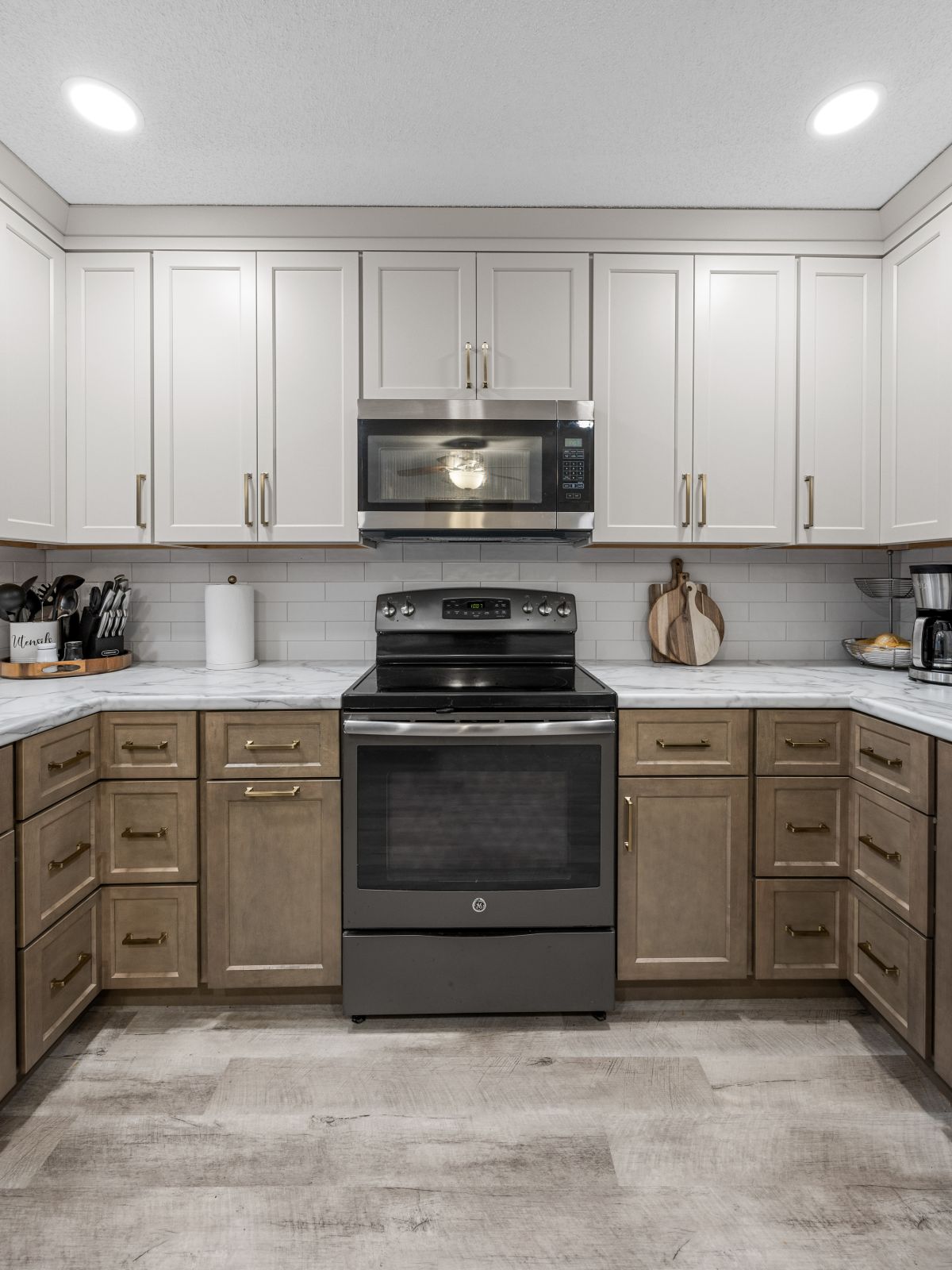
How long does it take to update cabinets and countertops during a kitchen remodel?
If you’re not doing a full gut renovation, but you still want a big visual impact, updating your cabinets and countertops is one of the most popular kitchen upgrades homeowners choose. But how long does it actually take?
Average Time to Install New Cabinets and Countertops: 3 to 4 Weeks
Before updating your cabinets and countertops, you’ll have to choose which ones to install and your contractor will place orders for them. This upfront lead time can be up to 8 weeks.
After that, installation typically takes 3 to 4 weeks from removing old cabinets to finishing touches, depending on cabinet type, material lead times, and installation sequencing.
Countertops can’t be templated until after cabinets are installed. Once cabinets are installed, countertop templating is completed, and fabrication follows. Depending on the material you choose:
- Laminate: Shorter lead time
- Granite/quartz: 7–14 days for fabrication
Once the countertops are installed (usually within a day or two), the plumber and electrician can return to connect fixtures and appliances.
By focusing just on cabinets and countertops, your kitchen remodel timeline becomes shorter and more predictable, but it still pays to plan ahead.
How long does it take to remodel a kitchen, including flooring?
Updating your kitchen, including new flooring along with cabinetry and countertops will add a couple weeks to your total kitchen remodel timeline. Flooring is a key design element, but it also adds complexity to scheduling. As with any kitchen remodel, there will be an early design and planning phase that precedes demolition. The planning phase can take up to 8 weeks and includes ordering the materials for your kitchen remodel.
Average Kitchen Remodel with Flooring Update Installation Time: 4 to 6 Weeks
A kitchen remodel that includes flooring installation typically takes about 4 to 6 weeks from demolition to finishing touches. The timeline depends on the flooring type, the installation sequence, and how everything coordinates with the rest of the remodel. Homeowners in Cedar Rapids, Iowa City, and nearby Eastern Iowa towns often find that flooring choices can either streamline or stretch the timeline.
Kitchen Flooring Installed Before Cabinets
Installing flooring before cabinets is a popular choice when you want a continuous, seamless look.
One major advantage of this approach is that it creates a uniform floor line under all cabinetry and appliances. This is ideal if you ever plan to rearrange cabinets or upgrade appliances later, and it results in a cleaner finish without the need for shoe molding or trim pieces.
However, there are a couple of trade-offs. Installing flooring first typically requires more material, since you’re covering areas that will eventually be hidden. That adds cost. Also, this method requires precise scheduling, because flooring must be fully installed and cured before cabinet installation can begin. Any delay in flooring can ripple into other phases of the remodel.
Kitchen Flooring Installed After Cabinets
Installing flooring after cabinet installation is also common, especially when you’re trying to conserve budget or minimize material waste.
This approach saves money by installing flooring only in visible areas and can be faster, depending on the product used. It also reduces the risk of damage during cabinet installation.
The downside is that it requires careful coordination between trades. Flooring installers must work around cabinet bases and ensure clean transitions, especially near toe kicks. This can be more challenging with some flooring materials.
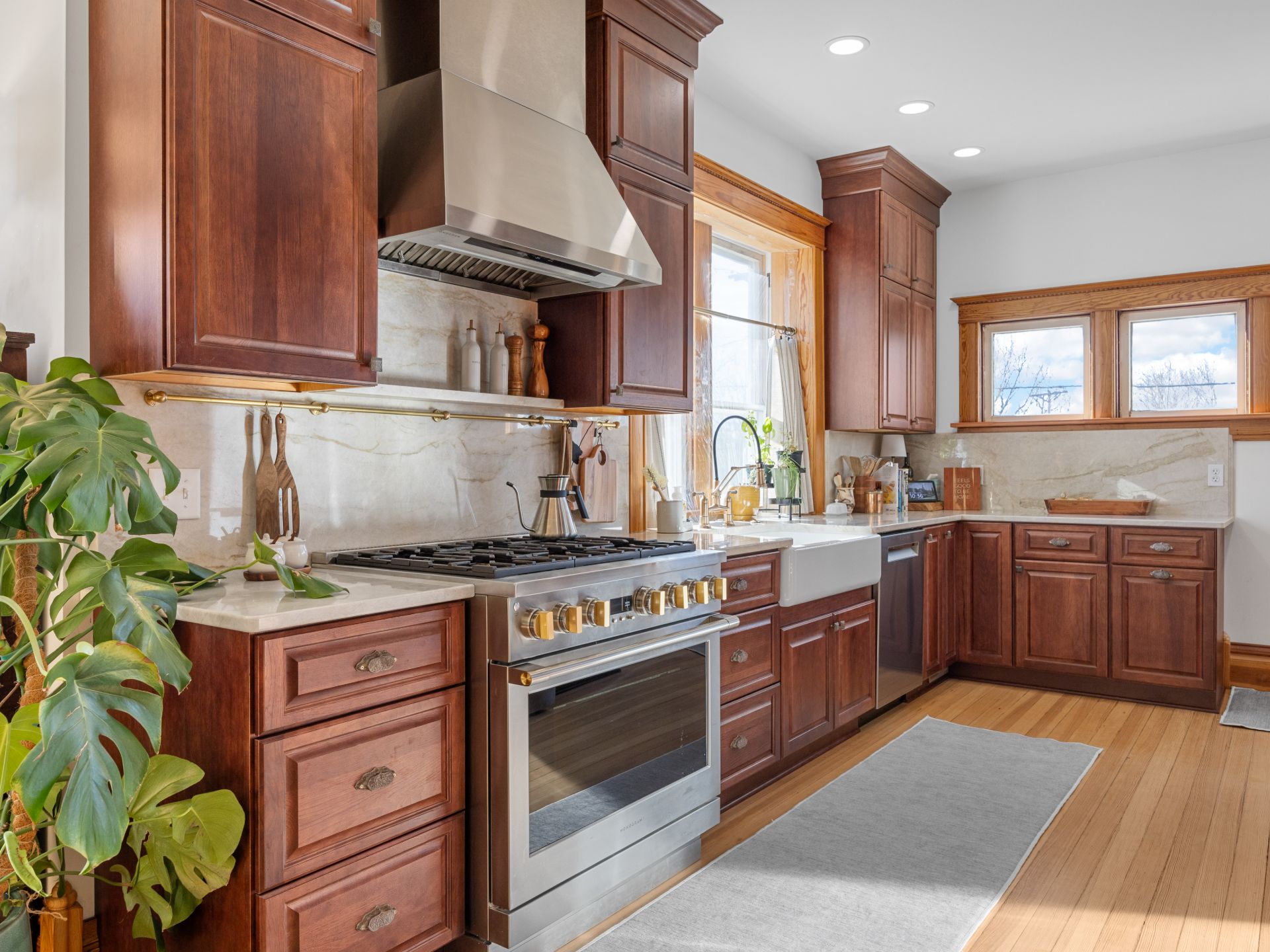
How long does a full gut kitchen remodel take, including adding or removing walls?
Planning a full gut kitchen remodel requires a longer timeline, especially when structural changes such as removing or adding walls are involved. These types of remodels take longer because they often require permits, inspections, and additional coordination with trades. But how long does a full kitchen renovation take when everything is being reimagined?
Average Full Gut Kitchen Remodel Installation Timeframe: 8 to 12 Weeks (or More)
A full gut kitchen remodel that includes structural work typically takes 8 to 12 weeks from demolition to finish, because of the added steps listed below.
Structural Changes & Permits
When a remodel involves changing the footprint of your kitchen by removing or relocating walls, it often requires a few additional steps:
- An engineering review may be needed to confirm whether a wall is load-bearing and to specify the required structural supports (e.g., beams or posts).
- Permits must be pulled from your local municipality before any structural or major mechanical work begins.
- Inspections are conducted throughout the process to ensure the work meets building codes and safety standards.
- Framing work is complete to accommodate your new kitchen layout. This may include building new walls, reinforcing joists, or rerouting doorways.
Permit approval timelines can vary, adding 1 to 3 weeks to the overall schedule.
Rough‑In Complexity
When your kitchen remodel includes moving or removing walls, it affects not only the layout but also the mechanical systems behind them.
The plumbing may need to be rerouted to accommodate the new configuration. If you’re moving a sink, adding a prep sink, or relocating a refrigerator with a water line, new pipes must be installed to meet the updated layout. This often involves opening up additional walls or subfloors.
Electrical circuits often require upgrading or repositioning. Today’s kitchens demand more power for appliances, task lighting, and code-required outlet spacing, so your remodel might include a panel upgrade or new dedicated circuits.
HVAC vents may also need to be relocated if you’re reworking the space’s flow. Supply and return vents must be properly placed to maintain even heating and cooling, which may require extending ductwork or relocating them entirely.
All of this requires more coordination among trades and extra time on your remodel timeline to ensure everything is completed safely, legally, and efficiently.
Unseen Issues
Behind every wall lies the unknown. In older homes, especially, surprises are almost guaranteed once demolition begins.
One of the most common hidden problems is wet or damaged framing, often caused by slow leaks from old plumbing. These issues must be addressed before any new materials can be installed, which will add time and cost.
Another common finding is outdated wiring that doesn’t meet current electrical codes. Old systems may not be able to safely handle the power demands of an updated kitchen, requiring upgrades to ensure safety and compliance.
You might also run into broader code compliance issues, like improper venting, insufficient outlets, or previous DIY work that wasn’t done to standard. These must be corrected during the remodel, which can delay progress.
All of these unexpected findings can stretch your remodel timeline, so it’s important to build in a buffer when planning, just in case what’s behind the walls turns out to be more than you bargained for.
StraightTALK Remodeling Tip
If you’re planning a full gut kitchen remodel in Cedar Rapids or beyond, add at least a 10–20% buffer to your timeline. It’s the best way to account for surprises without derailing your project.
What are common delays in a kitchen remodel?
Even the most well-planned kitchen remodel can hit a few bumps in the road. Understanding the most common causes of delays in advance helps you anticipate what to expect and avoid surprises along the way.
Top Causes of Kitchen Remodel Delays
1. Permit & Inspection Delays
Structural changes, electrical upgrades, and plumbing reroutes often require permits. In places like Cedar Rapids or Iowa City, approval timelines vary and may add days or even weeks. Required inspections throughout the project can also delay progress if scheduling is tight.
2. Backordered Materials
Cabinets, countertops, appliances, and fixtures can be backordered, especially if you’re selecting custom items or trending styles. Material delays are among the most common reasons for a remodel delay in Eastern Iowa.
3. Hidden Conditions
Older homes in Eastern Iowa may hide surprises behind the walls: water damage, outdated plumbing or wiring, or improper DIY work. These must be addressed to keep your remodel safe and code-compliant.
4. Trade Coordination Issues
Kitchen remodels involve multiple trades, including carpenters, plumbers, electricians, countertop fabricators, flooring installers, and more. If one phase runs late, it can throw off the entire schedule.
How does Hometown Restyling minimize kitchen remodel delays in Eastern Iowa?
Delays can happen, but at Hometown Restyling, we’ve built our entire process around proactively avoiding them whenever possible and handling them quickly when they do arise.
It all starts with early design and planning. Our dedicated, in-house designers begin working with you right from the start to finalize your layout, product selections, and design details. Such assistance helps prevent last-minute decisions that can slow things down midway.
Once selections are made, we order materials as early in the process as possible. We work closely with our vendors to understand lead times, identify any potential backorder issues, and track shipments closely. Most importantly, we won’t begin demolition until we’ve received materials such as cabinets, flooring, and fixtures, so your project doesn’t stall midway waiting on deliveries.
Because we use primarily in-house staff for installation, carpentry, and project management, we have tighter control over scheduling and fewer variables to manage. Our crews are experienced, reliable, and familiar with our systems, which helps keep things running smoothly from one phase to the next.
When we do need to bring in subcontractors (for tasks like plumbing, electrical, or HVAC), we coordinate directly with them as the primary contractor. That means you don’t have to chase people down or manage a messy schedule. We only work with trusted local subcontractors who meet our standards for professionalism and quality.
If unforeseen issues arise during construction, like structural surprises behind a wall or outdated wiring, we won’t leave you guessing. Our team will walk you through the situation, clearly explain your options, and work with you to find a fast, cost-effective solution that keeps your remodel on track.
We don’t just build kitchens, we build trust. And part of that is making sure your kitchen remodel stays on schedule, on budget, and as stress-free as possible.
StraightTALK Wrap‑Up
The bottom line is this: Most kitchen remodels take about 8–10 weeks from demolition to finish when the project is a standard remodel with cabinet and countertop updates, flooring, and finishes.
More extensive projects (or those involving structural changes or hidden issues) often take 10–12 weeks or more.
No two kitchens are exactly alike, and every timeline varies based on:
- Scope of work
- Material lead times
- Permit requirements
- Contractor coordination
- Your decisions as the homeowner
If you want a smoother kitchen remodel experience, planning ahead and clear communication with your contractor are your best defenses against delays and surprises.
Want to know what it’s like to live through a kitchen remodel? Read our guide on how to survive a kitchen remodel.