

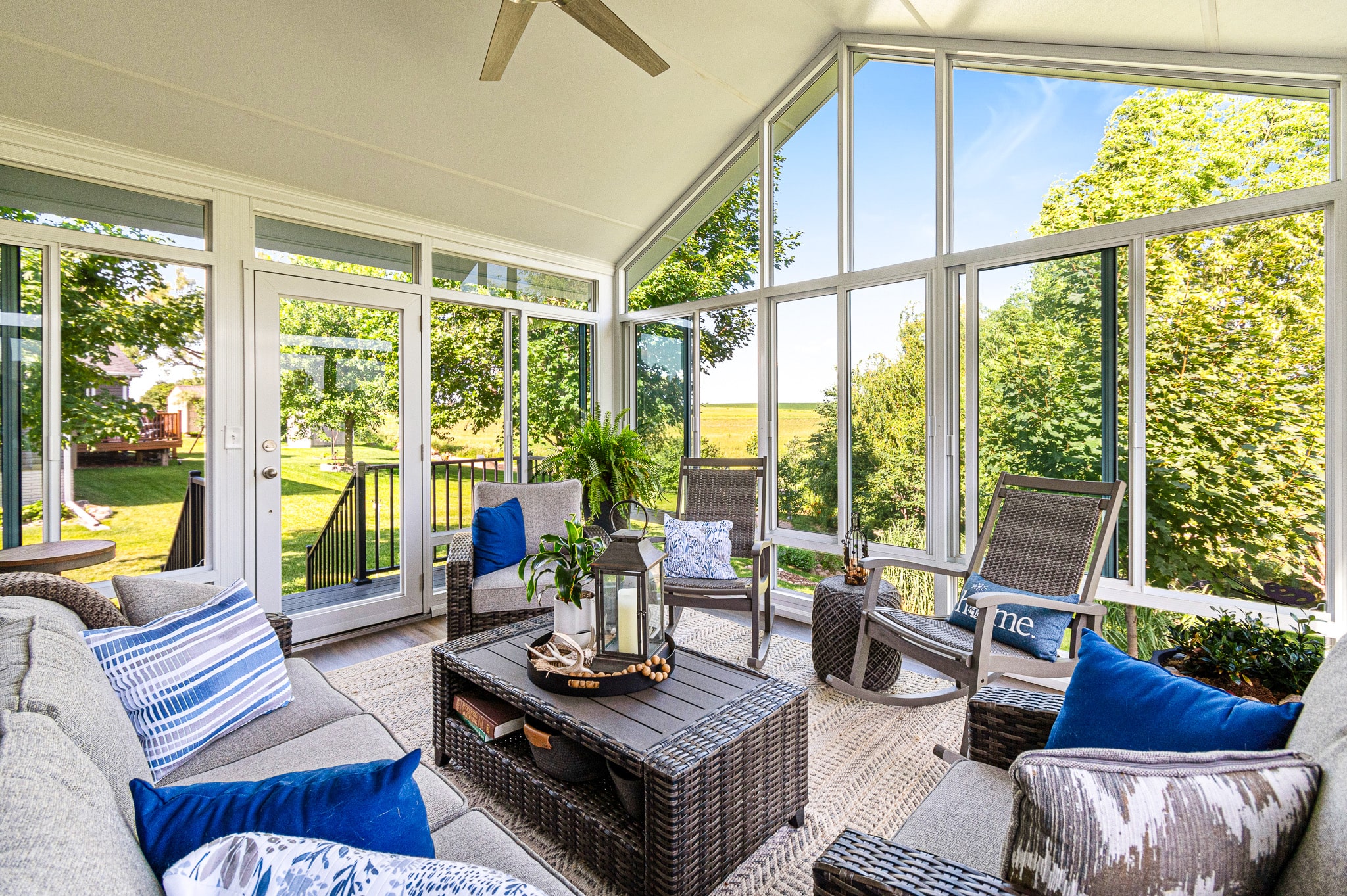
Adding a sunroom is one of the most popular ways homeowners expand their living space without building a full addition. A sunroom allows you to enjoy natural light, outdoor views, and additional square footage while staying protected from the weather.
But when homeowners start researching sunroom cost, the price ranges they find online can feel confusing. One article might say $15,000, while another suggests $80,000 or more.
The reason is simple: not all sunrooms are built the same way.
The type of sunroom you build, the structure it sits on, and whether it’s usable year-round all play major roles in determining the final cost.
In this StraightTALK article, we’ll break down five of the most common questions homeowners ask about sunroom pricing so you can better understand what to expect before starting your project.
How much does a 3-season sunroom cost?
A 3-season sunroom typically costs between $45,000 and $95,000, depending on the size of the room, window systems, and whether the structure is built on a new foundation or an existing patio or deck. These sunrooms are designed for spring, summer, and fall use but are usually not heated for winter.
What is included in a typical 3-season sunroom?
Most 3-season sunrooms are built with large windows or glass panels designed to maximize natural light and outdoor views. These rooms usually connect directly to the home through an existing wall opening or patio door.
Common features include:
- Aluminum or vinyl sunroom framing
- Large glass window panels
- Screen windows for airflow
- Insulated roof panels
- Electrical outlets and lighting
- Basic flooring or composite decking
Because these rooms are not fully insulated, they usually do not include permanent heating systems.
Example Pricing by 3-Season Room Size
While every project is different, here are some common size-based price examples.
- 10×12 sunroom: Approximately $40,000 – $55,000
- 12×16 sunroom: Approximately $55,000 – $80,000
- 14×20 sunroom: Approximately $60,000 – $95,000
Larger rooms or custom designs can exceed these ranges.
What drives the cost higher?
Some features can quickly increase the price of a 3-season sunroom. These include:
- Vaulted ceilings
- Custom rooflines
- Larger window walls
- Upgraded flooring
- Additional electrical work
- Custom trim or finishes
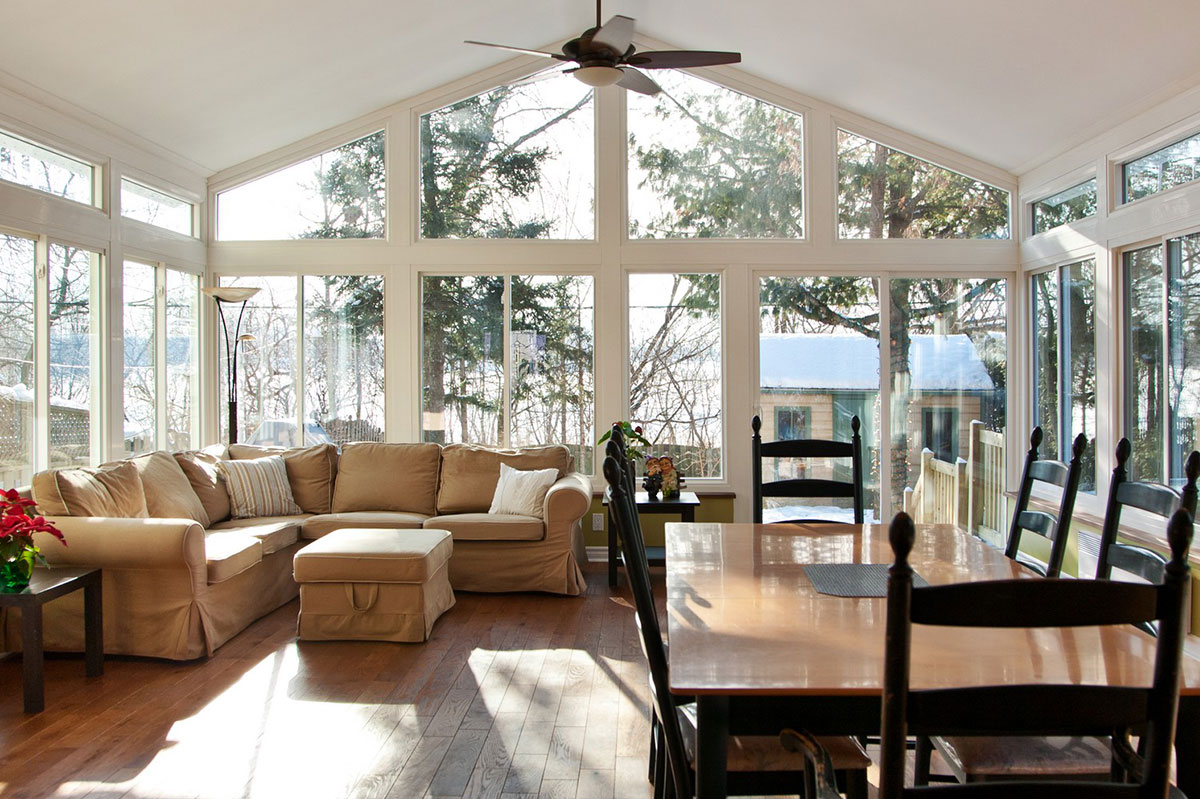
Is a sunroom cheaper than a traditional room addition?
Many homeowners consider a sunroom because they assume it will be significantly cheaper than building a standard room addition.
In most cases, that assumption is correct, but the difference may not always be as large as people expect. A traditional room addition often costs $80,000 – $200,000+. This higher price comes from the fact that traditional additions require:
- Full wall framing
- Extensive insulation
- Standard roofing systems
- Heating and cooling integration
- Larger foundations
Sunrooms can sometimes reduce costs because they use specialized window systems and lighter construction methods. However, when a sunroom is built as a 4-season room with full insulation and HVAC, the cost may begin to approach that of a traditional addition.
StraightTALK Remodeling Tip
3-season rooms are often the best value for homeowners who primarily want extra living space during warmer months. If you don’t plan to use the room in winter, the lower construction cost can make this option very attractive.
How much does a 4-season sunroom cost?
A 4-season sunroom usually costs between $80,000 and $150,000 or more, depending on the size of the addition, insulation levels, and whether heating and cooling are installed. Because these sunrooms are designed for year-round use, they require stronger construction, insulated walls, and energy-efficient windows.
Why 4-Season Sunrooms Cost More
4-season sunrooms function more like traditional home additions. Because they are designed for year-round comfort, they require stronger construction and additional insulation. Typical construction upgrades include:
- Insulated wall systems
- Energy-efficient windows
- Insulated roofing
- Full electrical installation
- HVAC connections
- Insulated flooring
These improvements allow the room to stay comfortable during both summer heat and winter cold.
Typical Size-Based Pricing
Here are some common price ranges homeowners see.
- Small 4-season sunroom (10×12): $80,000 – $95,000
- Medium 4-season sunroom (12×16): $110,000 – $145,000
- Large 4-season sunroom (14×20+): $125,000 – $160,000+
Custom designs with vaulted ceilings, fireplaces, or panoramic glass walls can exceed these ranges.
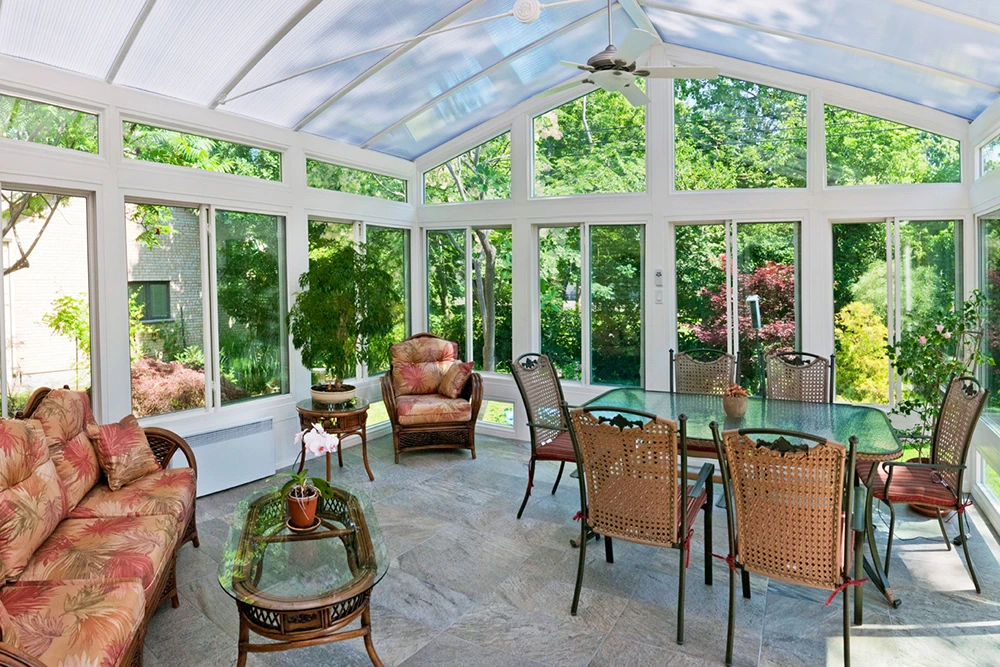
What factors have the biggest impact on sunroom costs?
Several variables can significantly affect the cost of a 4-season sunroom. While size is often the first thing homeowners think about, factors like structural requirements, window systems, and heating can have just as much impact on the final project price. Understanding these cost drivers can help you make more informed decisions when planning your sunroom.
Room Size
The overall size of a sunroom is one of the most obvious factors affecting cost. Larger rooms require more framing materials, windows, roofing, flooring, and structural support, all of which increase the total project price.
Foundation Requirements
The type of foundation needed for a sunroom can significantly affect the cost of the project. If the sunroom requires a brand-new foundation or additional concrete footings, that work adds to the price tag.
For example, building a sunroom on a new concrete foundation might add $5,000 to $15,000 to the project. But if you’re building on an existing patio that already meets structural requirements, it could reduce costs substantially. However, many older patios and decks were not designed to support enclosed structures, so we often have to reinforce the foundation.
Window Systems
Windows are among the most expensive parts of a sunroom because these rooms often feature large glass areas to maximize natural light and outdoor views. High-performance glass designed for year-round comfort costs more than standard windows but can greatly improve energy efficiency.
For example, upgrading from standard sunroom windows to energy-efficient double-pane or Low-E glass systems could add substantially to a project, depending on the room size. While this increases upfront cost, it can help reduce heating and cooling expenses over time.
Roof Design
The design of the sunroom roof can also influence project costs. Simple roof styles, such as a single-slope shed roof, are usually more affordable because they require less structural framing and fewer materials.
More complex roof designs, such as vaulted ceilings, gable roofs, or custom rooflines, can add both construction time and engineering requirements. For example, a vaulted ceiling with large glass panels might increase project costs by $5,000 to $20,000, depending on the design.
HVAC Installation
4-season sunrooms are designed for year-round comfort. Here in Eastern Iowa that means heating and cooling. Connecting the sunroom to your home’s existing HVAC system or installing a dedicated heating-and-cooling solution adds mechanical work to the project.
For example, extending ductwork from your home’s HVAC system might cost $3,000 to $8,000, while installing a ductless mini-split heating and cooling system could cost $6,000 to $12,000, depending on the equipment and installation requirements.
Interior Finishes
Interior finishes are often one of the final cost variables homeowners consider, but they can make a significant difference in the overall project budget (and the beauty the addition brings to your home). Flooring, ceiling materials, trim work, lighting fixtures, and paint all contribute to the final appearance of the sunroom, and likely the amount of time you spend there.
For example, basic vinyl flooring and standard ceiling panels may add only a few thousand dollars to the project, while upgrading to tile flooring, tongue-and-groove ceilings, or custom lighting fixtures could add $5,000 to $15,000 or more, depending on the level of customization. Talk to your contractor early about the design of your interior finishes so you can build a space you’ll love without being surprised by the price tag.
StraightTALK Budgeting Tip
4-season sunrooms are often priced closer to traditional room additions than homeowners expect. If you plan to use the space year-round, it’s worth comparing both options before committing to a design.
How much does it cost to build a sunroom over a deck or patio?
Building a sunroom over an existing deck or patio usually costs as much as adding a sunroom, because more often than not the existing patio or deck needs to be reinforced or completely excavated in order to make room for the new sunroom. While using an existing deck or patio can sometimes reduce construction costs, most structures require upgrades to meet structural requirements.
Can you build a sunroom on an existing deck?
Sometimes you can, but not always. Many decks are designed to support outdoor furniture and people, not the weight of enclosed walls, windows, and roofing systems. Before construction begins, contractors should inspect:
- Deck footings
- Structural beams
- Load capacity
- Attachment points to the home
If the structure is not strong enough, additional support posts or new footings will be required.
Patio foundation considerations
Concrete patios are sometimes better suited for sunrooms, but they must still be evaluated for:
- Thickness
- Drainage
- Cracking
- Frost protection
In colder climates like Eastern Iowa, contractors may recommend adding deeper footings to prevent future structural issues.
Typical Cost Breakdown
If the deck or patio structure is already suitable, it may save about $5,000 to $10,000 off of the full structure price.
StraightTALK Remodeling Tip
Just because a deck or patio already exists doesn’t mean it’s automatically ready for a sunroom. A structural inspection early in the planning process can help prevent unexpected costs later.
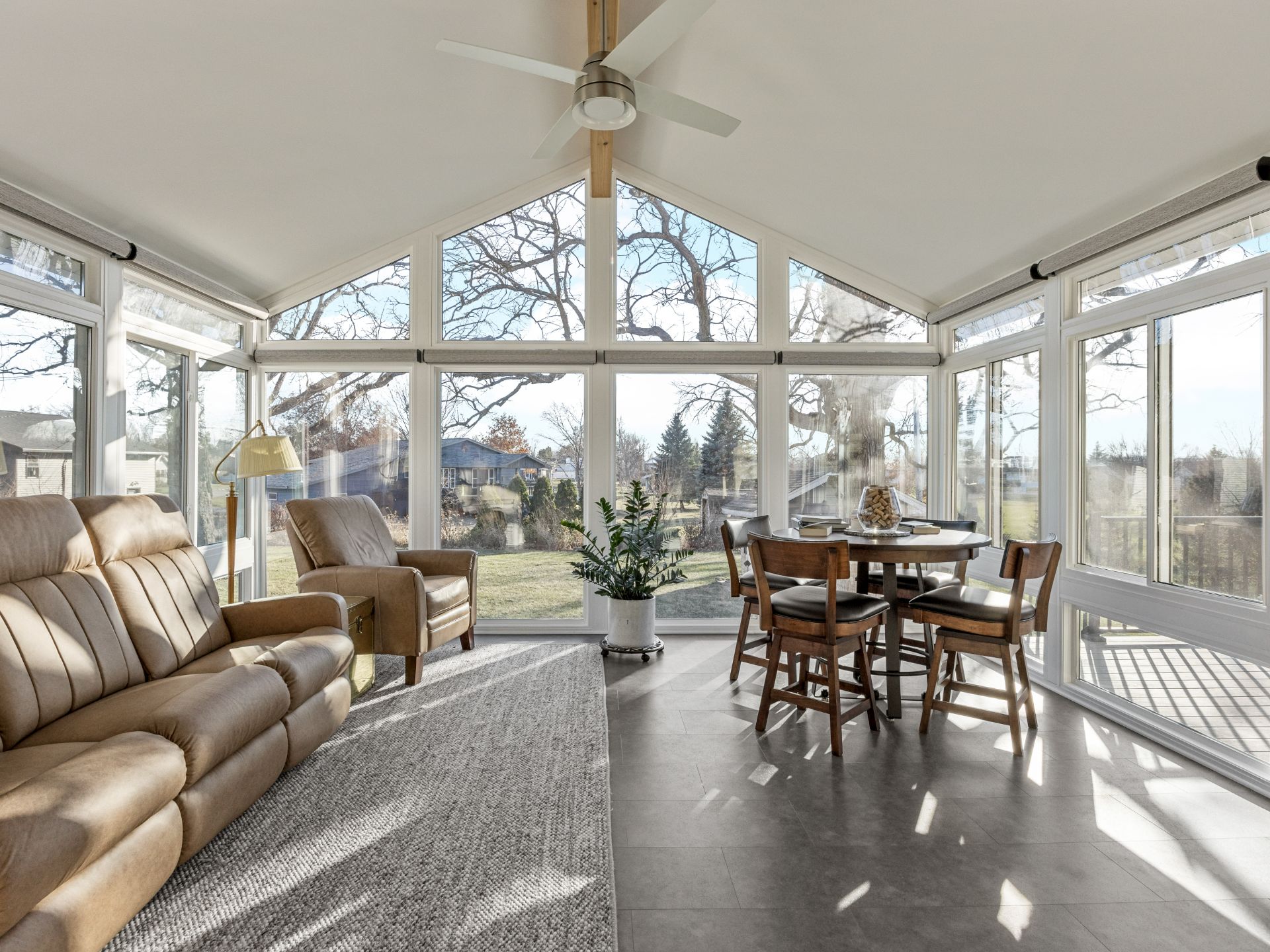
How much does it cost to enclose a screened porch?
If your home already has a screened porch, converting it into a sunroom can sometimes be one of the most affordable ways to create additional living space, with a price range between $20,000 and $45,000 for a 3-seasons room, and $45,000 to $100,000 for a 4-seasons room.
What is included in a porch enclosure?
Enclosing a screened porch usually involves replacing screen panels with windows and making upgrades to improve comfort. Common improvements include:
- Window installation
- Wall insulation
- Electrical outlets
- Ceiling fans or lighting
- Flooring upgrades
- Door replacements
Because the basic structure already exists, this type of project is often faster and more affordable than building a new sunroom from scratch.
What is the cheapest type of sunroom to build?
The most affordable sunroom projects often involve enclosing existing structures, such as screened porches, covered patios, and basic 3-season sunrooms.
Because the roof, posts, and foundation may already exist, the overall construction cost can be lower. However, the condition of the existing structure matters a lot. If the porch requires major structural changes, the cost may approach that of building a new sunroom.
StraightTALK Budgeting Tip
Even when a porch structure already exists, contractors may still need to reinforce framing or upgrade windows to meet current energy and structural standards.
How much does it cost to convert a 3-season room to a 4-season room?
Converting a 3-season room into a 4-season sunroom may cost between $25,000 and $55,000, depending on how the original room was built and what upgrades are required. Most conversions involve adding insulation, replacing windows, and installing heating to make the space comfortable year-round.
Why Homeowners Convert Sunrooms
Many homeowners build a 3-season sunroom first, only to later decide they want to use the space year-round. This often happens when the room becomes one of the most-used areas in your home. You love using the room most of the year, and want to enjoy it during our cold winter months as well.
But, converting the space typically requires several structural upgrades.
Common upgrades required to turn a 3-season room into a 4-season room
To make a sunroom comfortable during winter, contractors may need to add:
- Wall insulation
- Floor insulation
- Roof insulation
- Energy-efficient windows
- Heating systems
- Electrical upgrades
In some cases, the room may also need structural modifications to support additional insulation and drywall.
What drives up the cost of a conversion?
If the original room wasn’t designed for insulation or HVAC, the cost of upgrading it may approach the price of building a new sunroom.
This is why we at Hometown Restyling take the time upfront to understand your goals and desires as the homeowner. We always say that the cheapest remodel is the one you do once. So, we’ll have deep conversations with you early in our process to make sure you’re getting the most out of your project and your home.
StraightTALK Remodeling Tip
If you think you might eventually want a 4-season sunroom, it’s often more cost-effective to build it that way from the start rather than upgrading later.
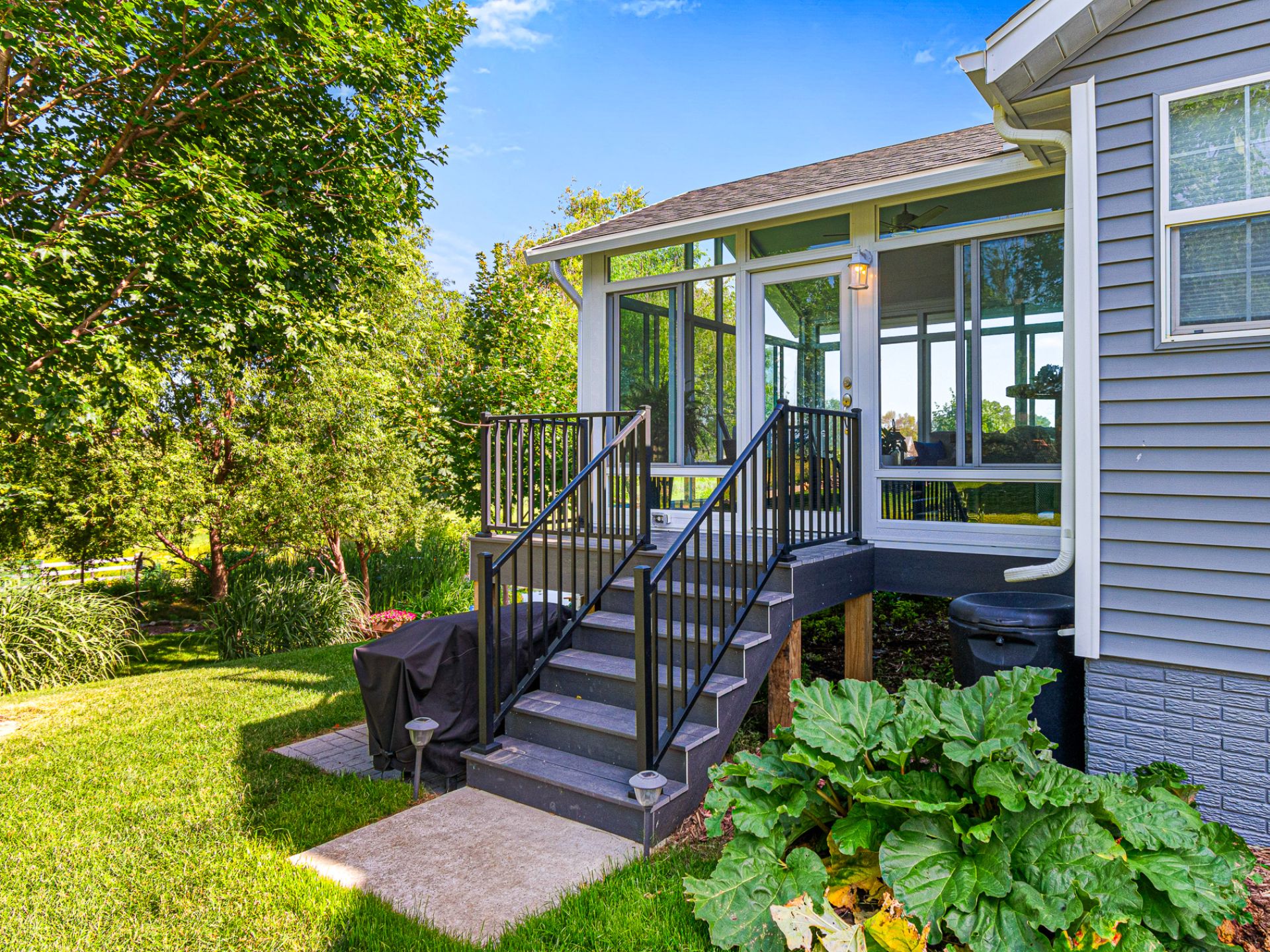
Sunroom Cost by Size
The size of a sunroom is one of the biggest factors affecting the total project cost. Larger rooms require more framing, roofing materials, windows, flooring, and structural support. Every project is different, so the range in cost by size for sunrooms really depends on the type of room being built, finishing choices, and where your starting point is.
3-season rooms typically fall on the lower end, while fully insulated 4-season sunrooms with heating and cooling fall toward the higher end.
Below are some common sunroom sizes and the price ranges homeowners often see when planning a project.
10×10 Sunroom Cost
A 10×10 sunroom (100 square feet) is one of the smallest sunroom options and is often used as a cozy sitting room, reading space, or breakfast nook. They typically cost between $20,000 and $50,000. 3-season rooms will usually fall closer to the lower end of this range, while insulated 4-season rooms may approach the higher end.
12×12 Sunroom Cost
A 12×12 sunroom (144 square feet) provides enough space for a small dining table, comfortable seating, or a lounge area. They typically cost between $40,000 and $85,000. This size is popular because it creates a noticeable expansion of living space without dramatically increasing construction costs.
12×16 Sunroom Cost
A 12×16 sunroom (192 square feet) is one of the most common sizes for homeowners adding a sunroom to their house. They typically cost between $45,000 and $110,000. At this size, homeowners often use the space as a casual family room, dining area, or entertaining space.
14×20 Sunroom Cost
A 14×20 sunroom (280 square feet) provides enough room for multiple seating areas and is often designed as a full living room extension. They typically cost between $60,000 and $150,000+. Large window walls and vaulted ceilings are common in sunrooms this size, which can increase the final cost.
16×20 Sunroom Cost
A 16×20 sunroom (320 square feet) is considered a large sunroom and often functions like a traditional room addition. They typically cost between $70,000 and $160,000 or more. These rooms are frequently designed as 4-season sunrooms with full insulation and heating.
StraightTALK Budgeting Tip
Many homeowners focus only on the square footage when estimating sunroom cost, but the type of sunroom often affects price more than size. A small 4-season sunroom with insulation and HVAC can cost more than a much larger 3-season room.
StraightTALK Wrap Up
Sunrooms can vary widely in price because they come in many different forms. A simple porch enclosure might cost around $20,000, while a large 4-season sunroom addition can exceed $100,000.
| Sunroom Type | Typical Cost Range |
| Porch enclosure | $20,000-$60,000 |
| 3-season sunroom | $45,000-$95,000 |
| Sunroom over deck | $40,000-$90,000 |
| 4-season sunroom | $80,000-$150,000+ |
| Convert 3-season to 4-season | $25,000-$55,000 |
For many homeowners, a sunroom becomes one of the most enjoyable spaces in their home. With the right design and planning, it can create a comfortable place to relax, entertain, and enjoy natural light throughout the year.
Understanding the cost factors ahead of time helps ensure the project fits both your home and your budget.
And if you’re interested in reading more about Eastern Iowa sunrooms, check out: Why Sunrooms Are a Great Choice for Eastern Iowa.