

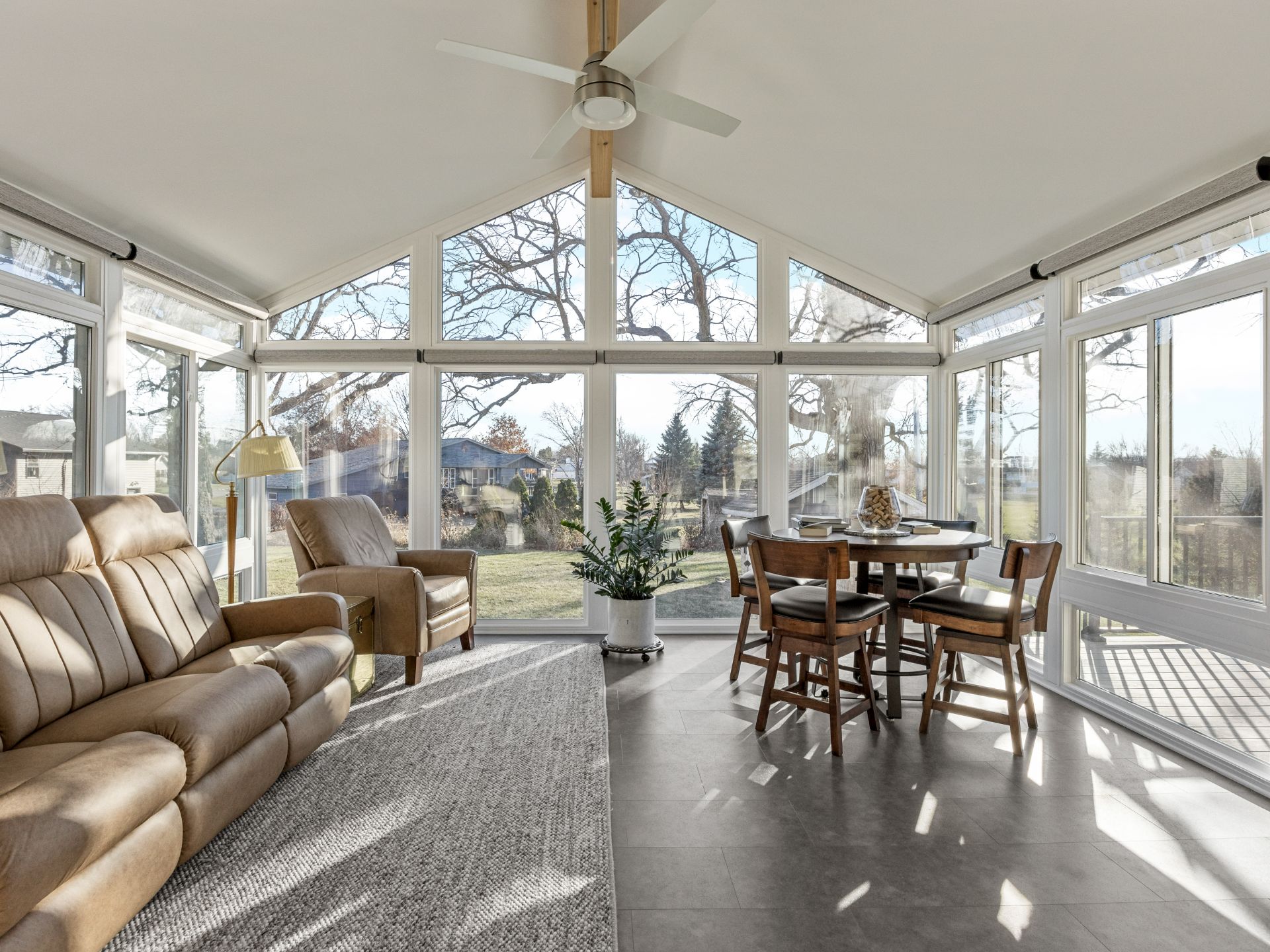
If you’ve lived through more than one winter in Eastern Iowa, you already know something: we don’t get nearly as much comfortable outdoor living time as we’d like.
We get humid summers. Windy springs. Gorgeous-but-short falls. And winters that can stretch on longer than we care to admit. It makes sense that more homeowners across Linn and Johnson Counties, and beyond, are asking about sunrooms in Eastern Iowa.
This week’s StraightTALK tackles the real questions homeowners ask about sunrooms.
Will adding a sunroom add value to my Eastern Iowa home?
Adding a sunroom to your Eastern Iowa home will add value; however, the ROI depends heavily on how it’s built, how it’s used, and how it’s perceived in your local market. In communities such as Cedar Rapids, Iowa City, and Marion, a well-designed sunroom can significantly increase buyer appeal and functional square footage. But if the space feels temporary, poorly integrated, or unusable in winter, that value can be limited.
Nationwide remodeling data support this nuanced view. According to the annual Cost vs. Value Report published by The Journal of Light Construction, major home additions, including upscale additions, often recoup a portion of their cost at resale, but rarely 100% of it. The report consistently shows that lifestyle-driven additions deliver strong enjoyment value, while financial ROI varies by region and execution.
A sunroom typically delivers lifestyle ROI first and financial ROI second.
You may not recoup every dollar of the project cost when you sell your home, but you gain years of daily use, expanded living space, and greater marketability when it does come time to sell.
If you build a high-quality 4-season room in Eastern Iowa, one that is:
- Fully insulated
- Built on a proper foundation with frost footings
- Integrated architecturally with your home
- Designed with energy-efficient windows
- Tied into HVAC or supported by a dedicated mini-split system
…it may be considered true livable square footage, which matters for both appraisal and buyer perception.
On the other hand, a basic 3-season room that isn’t insulated and isn’t climate-controlled may be seen more as a bonus space than as functional square footage. Buyers might love it, but they may not be willing to pay significantly more for it.
Why Sunrooms Are Valuable in Iowa
In colder climates like ours, usable indoor-outdoor space carries more weight than in warmer regions. Eastern Iowa winters can feel long and gray. A bright, light-filled sunroom offers what buyers crave: natural light, expansive outdoor views, and a space that feels separate yet connected to the home.
During resale, buyers walking through a home in January often respond strongly to a warm, sunny area that overlooks a snowy backyard.
Then there’s the practical factor. A 4-season room in Eastern Iowa provides homeowners with extra square footage for entertaining, working from home, hosting gatherings, or finding space for yourself during the winter months when everyone is inside. It makes your home feel larger, even if the official square footage increase is modest.
StraightTALK Remodeling Tip
Focus on quality construction, energy efficiency, and architectural integration. In Eastern Iowa, buyers can tell the difference between a thoughtfully designed 4-season room and an afterthought add-on, and that difference shows up in both everyday enjoyment and value.
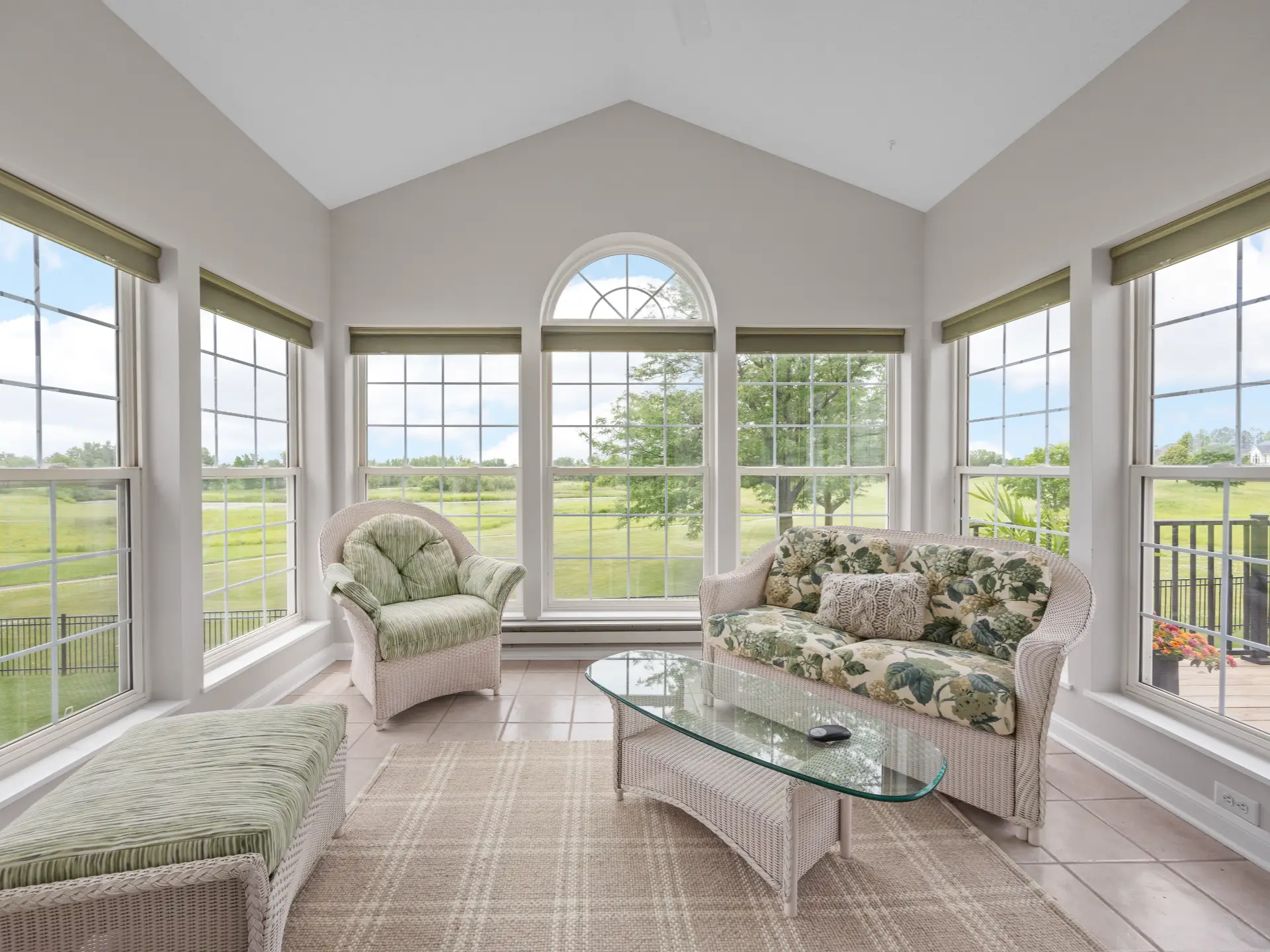
What’s the difference between a 3-season room and a 4-season room?
The difference between a 3-season room and a 4-season room is how they’re built, how they’re insulated, and how many months out of the year you can comfortably use them in Eastern Iowa. While both options fall under the umbrella of a sunroom addition, they serve very different purposes, especially in a climate that sees humid summers and sub-zero winters.
3-Season Room in Eastern Iowa
A 3-season room is designed to extend your use of the outdoors during spring, summer, and fall. It protects you from rain, wind, and insects while allowing plenty of natural light and ventilation. However, it is not engineered for prolonged winter use in Iowa’s cold climate.
Typically, a 3-season room features lighter framing, minimal insulation, and less energy-efficient windows than a 4-season room. These rooms are not usually connected to your home’s HVAC system. Instead, they rely on ambient temperatures and passive solar warmth to stay comfortable.
In practical terms, that means your 3-season room in Cedar Rapids or Iowa City might be perfect from April through October. You can enjoy cool fall evenings without mosquitoes and relax during summer storms while staying dry. But once temperatures consistently drop below freezing, you’ll be less comfortable.
If you’re looking for a bright sitting space for morning coffee, a bug-free entertaining area, or a protected transition between the house and the backyard, you’ll find that a 3-season room meets your needs at a lower upfront cost.
In Summary:
Pros of a 3-season room in Eastern Iowa:
- Lower upfront cost
- Faster installation
- Great for bug-free evenings
Limitations of a 3-season room in Eastern Iowa:
- Not comfortable in deep winter
- Not always counted as livable square footage
4-Season Room in Eastern Iowa
A 4-season room, on the other hand, is built as a true extension of the interior of your home. It’s engineered and insulated to perform in January just as well as it does in July.
A properly constructed 4-season room in Eastern Iowa includes insulated walls, roofing systems designed for snow loads, insulated flooring, and high-performance, energy-efficient windows. It is typically connected to your home’s HVAC system or equipped with a dedicated heating and cooling source.
Because of that, the space maintains stable interior temperatures regardless of outside conditions. It feels like any other room in your home, just with more glass and natural light.
This option is great if you want to:
- Watch snow fall in comfort
- Use the space as a home office year-round
- Create overflow seating during holidays
- Increase usable square footage
A 4-season room is a larger upfront investment, but it offers more indoor flexibility and year-round functionality in our cold Iowa climate.
Which sunroom is right for your Eastern Iowa home?
There isn’t a universal “better” option. The right choice depends on how you plan to make the most of your space, for your life.
If you picture occasional winter use and primarily want to enjoy shoulder seasons, a 3-season room may be exactly what you need.
If you want dependable comfort 12 months a year, especially during harsh Eastern Iowa winters, a 4-season room is the smarter investment.
The decision ultimately comes down to your lifestyle. Build for how you actually want to live in your home, not just for the upfront price tag or the potential resale value.
Will a sunroom withstand strong winds and storms in Iowa?
A well-built sunroom is built to withstand strong winds and storms in Iowa. The key phrase there is well-built. In Eastern Iowa, we don’t design for mild weather; we design for our reality. That means severe thunderstorms, straight-line winds, heavy spring rains, occasional hail, significant snow accumulation, and the occasional tornado warning. So when homeowners ask whether a sunroom can handle our Midwest weather, it’s a fair and important question.
The answer depends entirely on engineering and installation.
The Difference a Professional Sunroom Installation Makes
Not all sunrooms are built the same. A professionally installed, engineered sunroom system is designed to meet specific wind load ratings, snow load requirements, structural anchoring standards, and local building code requirements.
StraightTALK Definitions:
- Wind load ratings determine how much lateral pressure the structure can withstand during strong gusts.
- Snow load requirements account for the weight your roof must support during prolonged winter accumulation.
- Structural anchoring ensures the sunroom is securely tied into the foundation and existing home, preventing uplift or shifting.
Problems occur when shortcuts are taken. Underbuilt deck foundations, skipped permits, or improper anchoring can all compromise structural integrity. A sunroom attached to a structure that wasn’t designed to carry the added load (especially in high winds) can experience movement, leaks, or long-term settling issues.
Snow Load Matters Here in Eastern Iowa
Iowa winters aren’t light. Accumulated snow adds significant and sometimes sustained weight to any roof structure. A properly engineered sunroom roof system accounts for dead load, live snow load, and wind uplift.
StraightTALK Definitions:
- Dead load is the permanent weight of the structure itself.
- Live snow load is the variable weight of accumulated snow and ice,
- Wind uplift is the upward pressure created during strong wind events.
That’s why permits matter. That’s why inspections matter. There are safeguards that ensure your sunroom installation in Eastern Iowa is built to handle the full range of weather we experience each year.
StraightTALK Remodeling Tip
If a sunroom is built to code, anchored correctly, and engineered for Iowa’s climate, it will withstand typical Midwest storms. If it’s a shortcut build? That’s when problems happen.
Can I use a portable heater in my sunroom during winter?
You can use a portable heater in your sunroom during an Eastern Iowa winter if you understand its limitations and the room was designed to handle fluctuating temperatures, but it won’t transform a 3-season room into a true winter living space. That’s the part many homeowners don’t realize until January hits.
This question almost always comes up when someone is considering a 3-season room. The logic makes sense: “We’ll use it spring, summer, and fall, and if we want to sneak out there in the winter, we’ll just plug in a heater.”
And technically, yes, you can.
But here’s what’s really happening in your space.
A 3-season room is built with lighter insulation (if any), more temperature-sensitive framing systems, and windows that aren’t rated for prolonged sub-zero exposure. It’s designed to extend your comfortable months, not eliminate winter. So while you might enjoy a sunny 40-degree day out there with a small electric heater running, that’s very different from maintaining comfort when it’s below zero with wind chill.
For example, on a bright March afternoon in Cedar Rapids, when the sun is doing some of the warming work, a portable heater may take the edge off and make the space usable for a couple of hours. But in late January, when the ground is frozen, and overnight temps dip below zero, the heater is fighting cold air infiltration, cold glass surfaces, and heat loss through the floor and ceiling.
What Actually Happens
- The heater runs constantly
- Energy bills climb
- You still feel drafts
- Condensation builds on windows
- The room is uncomfortable
There’s also the electrical consideration. Portable heaters draw significant amperage. If the room’s outlets weren’t installed with heating loads in mind, you could trip breakers or create long-term strain on the circuit.
Why a 4-season room in Eastern Iowa is the better option for year-round use
If you want reliable winter comfort, the structure itself has to be designed for it. A properly built 4-season room includes insulated walls, roof, and flooring systems that reduce heat loss, along with high-performance energy-efficient windows designed to handle cold temperatures without excessive condensation. It also incorporates proper vapor barriers to control moisture (critical in freeze-thaw climates) and a dedicated heating solution, whether that’s an HVAC tie-in or a ductless mini-split system.
Those components work together as a system. They maintain consistent interior temperatures even in harsh outdoor conditions. That’s what turns a sunroom from an occasional winter retreat into true usable square footage, even in February.
StraightTALK Remodeling Tip
A portable heater might extend your 3-season room by a few weeks. It will not turn it into a true year-round space in Iowa winters. If winter use matters, plan for it upfront.
Can a sunroom be installed on my existing deck or patio?
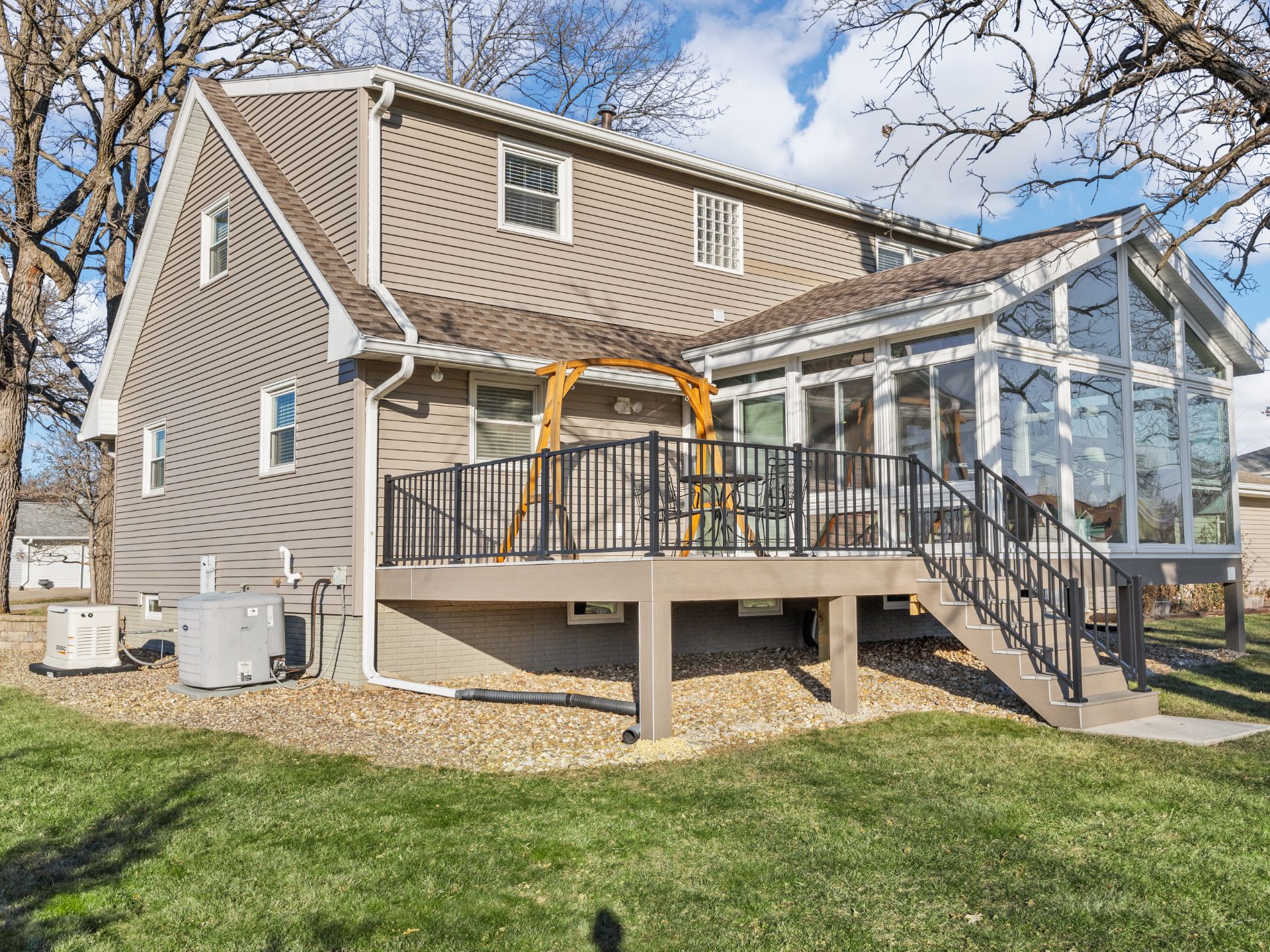
A sunroom can be installed over your existing deck or patio space, but only if that structure is properly engineered to handle the additional weight, load requirements, and Iowa’s freeze-thaw conditions. This is one of the most common questions homeowners ask when exploring a sunroom installation in Eastern Iowa, and it makes sense. If you already have a deck or concrete patio, it feels logical to build on what’s there.
Sometimes that works. Often, it doesn’t.
The difference comes down to structural capacity and foundation design. A sunroom isn’t just a screen enclosure; it’s a framed structure with walls, windows, a roof system, and significant weight that must remain stable through high winds, snow loads, and temperature swings.
Most Decks Are Not Built for a Sunroom
Here’s how most decks are designed:
Decks Are Built to Support People, Outdoor Furniture, and Grills
They’re built for loads associated with gatherings, movement, and standard outdoor use. The framing and footings are sized accordingly, often with spacing and post depths that meet minimum residential deck code, but not the demands of an enclosed structure.
They Are Not Usually Engineered to Support Framed Walls, Roof, Glass and Snow
That’s a completely different structural equation. The roof alone must carry both dead load (the weight of materials) and live load (snow, ice, and wind pressure). Most decks were never designed with those long-term loads in mind.
Even If Your Deck Feels Sturdy, It Likely Does Not Have Proper Frost Footings
It may not have the required load-bearing capacity for a fully enclosed room, and it likely wasn’t anchored with wind uplift resistance intended for an attached structure. In high-wind events (which we see more and more often in Cedar Rapids and surrounding communities), uplift and lateral forces matter.
Because of these factors, most deck-to-sunroom projects ultimately involve removing the existing deck and installing a new foundation system designed specifically for the addition.
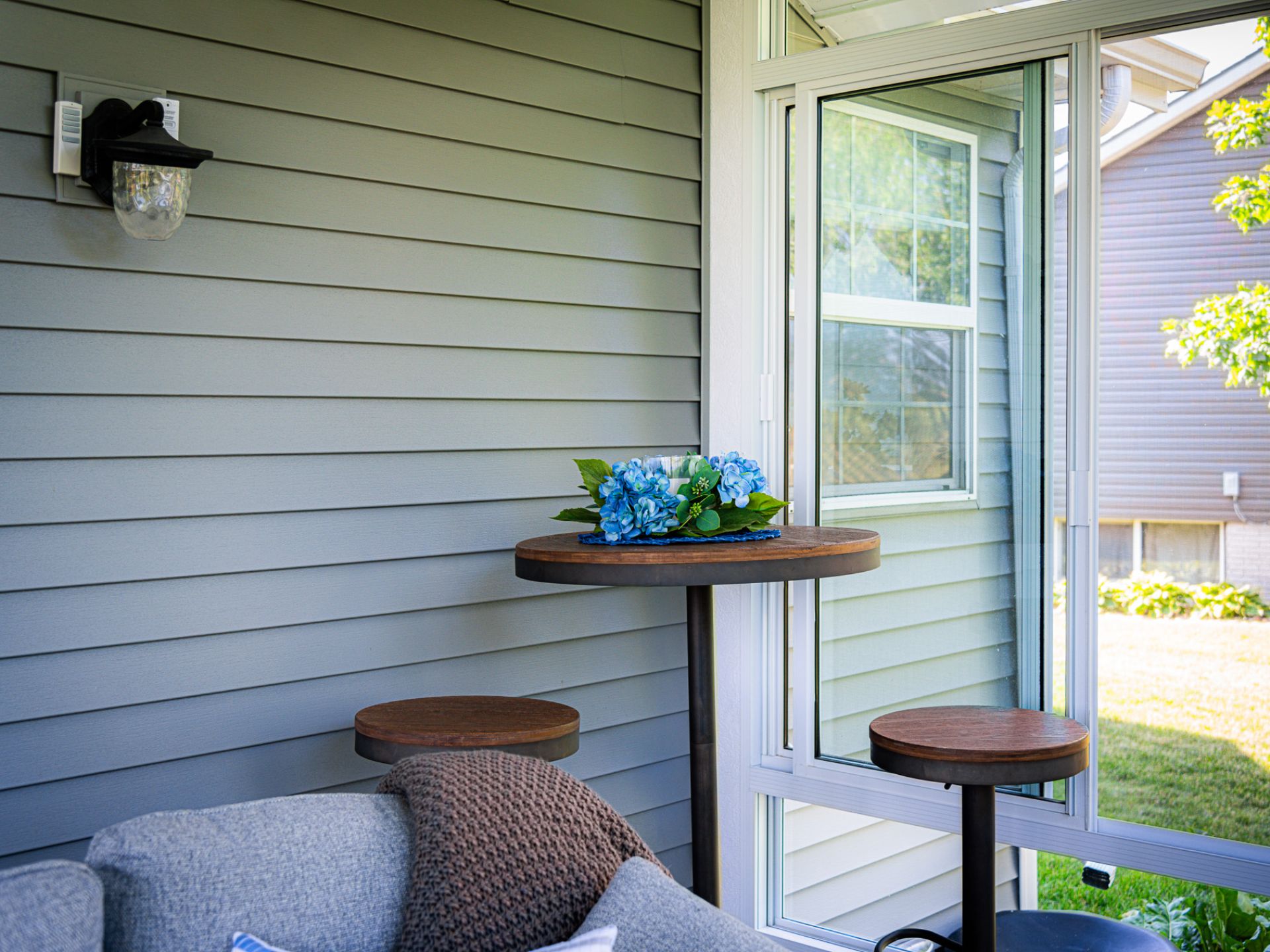
What about an existing patio?
Concrete patios sometimes work as a base for a sunroom addition, but only under the right conditions. The slab must be thick enough and reinforced appropriately to support wall framing and roof loads. It must also be stable and designed to resist movement caused by freeze-thaw cycles.
In Eastern Iowa, frost depth is a serious structural consideration. When soil freezes and thaws repeatedly, it expands and contracts. If a slab is poured without proper footings extending below the frost line, that movement can cause cracking, shifting, or settling over time. When a structure is built on a slab that moves, the sunroom may develop alignment issues, leaks, or cracks.
A contractor should assess slab thickness, reinforcement, soil conditions, and anchoring potential before determining whether it’s viable to build on the existing patio.
The Most Common Sunroom Build Process
In many cases, the process looks like this:
- Remove deck
- Pour a proper foundation with frost footings
- Build a sunroom correctly from the ground up
Yes, that’s more upfront investment. But it prevents structural issues down the road.
StraightTALK Remodeling Tip
Sometimes a deck or patio works. Often, it doesn’t. And reinforcing a structure after problems appear is far more expensive than building it right the first time.
StraightTALK Wrap Up
When you look at our climate here in Eastern Iowa: long winters, humid summers, short but beautiful shoulder seasons, it’s easy to see why sunrooms are such a smart investment.
A well-designed 3-season or 4-season room gives you more natural light during the darker months, protection from bugs and humidity in the summer, and a flexible living space that works almost year-round. A sunroom addition bridges the gap between indoors and outdoors in a way few other remodeling projects can. It’s so much more than expanded square footage; it’s extended living.
Now Is the Time to Plan for Your Summer Sunroom
If you want to enjoy your new sunroom this summer, now is the time to start planning. Design consultations, engineering, permitting, and scheduling all take time. Waiting until late spring often means pushing construction into late summer or fall. Planning ahead ensures your project is designed properly, permitted correctly, and built on a timeline that lets you enjoy it when you want it most.
At Hometown Restyling, we’re gearing up for summer, and you should be too. If you’ve been thinking about adding a sunroom to your Eastern Iowa home, let’s start the conversation now. Contact us for a free quote today and enjoy your new sunroom all summer long.
And if you’re curious about what to expect during the design and consultation process, check out our related StraightTALK article: What to Expect During My In-Home Consultation.