


July and August in Eastern Iowa have a particular quality. The corn’s transpiring, the dew point is doing something unholy, and stepping outside at 7 a.m. feels like opening a dishwasher mid-cycle.
Your air conditioner has been earning its keep since June. Next month, you’ll get the bill. And these days, that bill gets more attention than it used to. With groceries, insurance, and nearly every household expense climbing, most families are looking for places to save money without sacrificing comfort. Energy bills have become one of the few expenses homeowners can actually influence by finding ways to be energy efficient.
Here’s something worth understanding about that invoice. Alliant Energy, which serves Cedar Rapids and much of Eastern Iowa, uses a seasonal usage rate. The cost per kilowatt-hour goes up between June 1 and August 31, because the grid has to be more robust to handle summer demand. On top of that, Alliant’s own energy cost outlook forecasts that residential electric bills in 2026 will run higher than 2025, with natural gas bills up slightly as well.
You can’t negotiate that rate. What you can control is how much of the cool air you’re paying for actually stays inside your house.
That’s what we want to talk about. Not thermostats and ceiling fans. Those help, and your utility has good advice on them. We want to talk about the parts of your home that are supposed to be holding the line all summer: your siding, your doors, and your windows.
The Part That Isn’t on the Sticker
Every window, door, and siding system comes with numbers attached. U-factor, R-value, solar heat gain coefficient, air leakage ratings. Those numbers are real, and they matter. But they describe how a product performs under controlled conditions, tested as a sealed unit.
Your house is not a lab. In your house, that product has to be joined to a wall. And the joint is where the energy goes.
Air leakage can account for 30% or more of a home’s heating and cooling costs. Think about what that means for a moment. Before you’ve chosen a single product, nearly a third of what you spend cooling your house in July can be walking out through gaps you can’t see.
And leaks can also undercut the other upgrades you paid for. Insulation only works when air isn’t moving through it. A high-performance window only performs when it’s sealed to the wall around it.
Proper installation is critical to energy conservation. A poorly installed replacement window may not save energy at all. It could even use more than the window it replaced.
So here’s the idea we’d ask you to keep in mind for the rest of this article. The product you choose sets your ceiling. The installation determines how close to that ceiling you ever get.
Which leads to a question worth asking any salesperson who quotes you a performance number: is that the rated performance of the unit, or the performance I should expect once it’s installed in my wall?
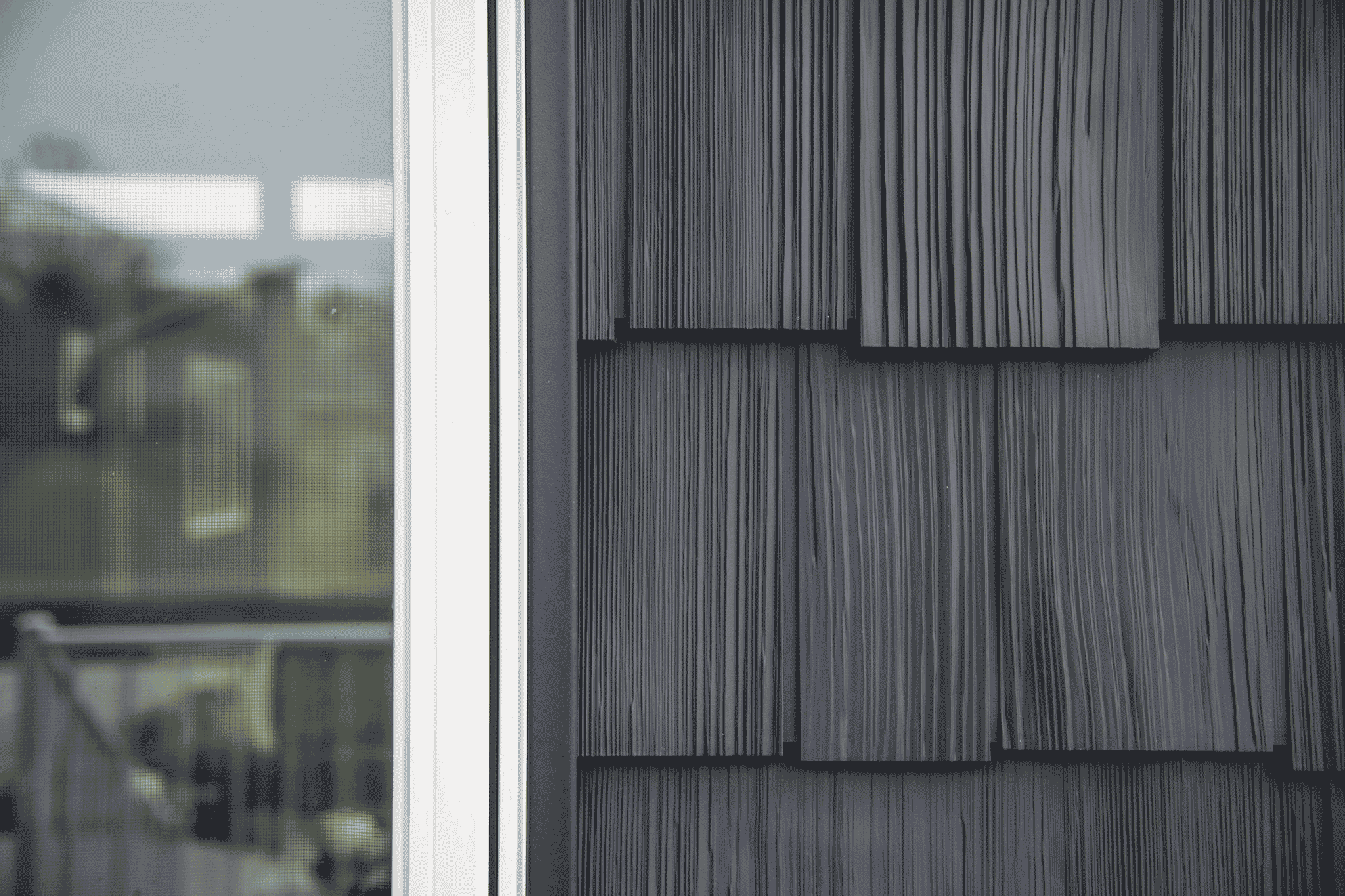
Siding: Wrapping Your Home in Efficiency
Most homeowners think of siding as a curb appeal decision. It is, and there’s nothing wrong with that. But siding is also the outermost layer of your wall assembly, and it has a real job to do in July.
What the Siding Product Does
The siding we install is insulation-backed, meaning each panel is molded with a layer of rigid foam behind it that fits the siding profile. That foam does two things. It adds insulating value across the face of your wall, and it helps interrupt thermal bridging, which is the path heat takes straight through your wall studs, bypassing the insulation sitting between them. On homes that need it, we can add another layer of insulation behind the siding for more.
For an Eastern Iowa summer, that continuous layer is doing unglamorous hard work. It slows the sun-baked heat sitting on your south and west walls from making its way into rooms your air conditioner is trying to cool.
What the Siding Installation Does
Nobody has ever posted a photo of their house wrap. There’s no before-and-after shot that makes a properly lapped seam look impressive, and no homeowner has ever invited friends over to admire the flashing. It’s the least photogenic part of your home, but one of the most consequential.
Underneath your siding is a weather-resistive barrier, better known as house wrap. It sheds water, it lets vapor escape, and when it’s installed correctly it also functions as an air barrier across the whole face of your home.
That last part is conditional, and the condition is the installer. House wrap only controls air if it’s continuous. Seams have to be lapped in the right direction and by the right amount. Penetrations for outdoor faucets, dryer vents, electrical, and light fixtures have to be sealed. And fasteners have to go in without tearing. Get any of that wrong and you’ve got a very expensive sheet of plastic that manages water reasonably well and controls air not at all.
The same is true for the siding itself. Panels need the right expansion gaps or they buckle in August heat. Corners, J-channel, and trim all have to be detailed so wind-driven rain drains out instead of sitting against your sheathing. None of that shows up on a product brochure. All of it shows up on your energy bill and, eventually, inside your wall.
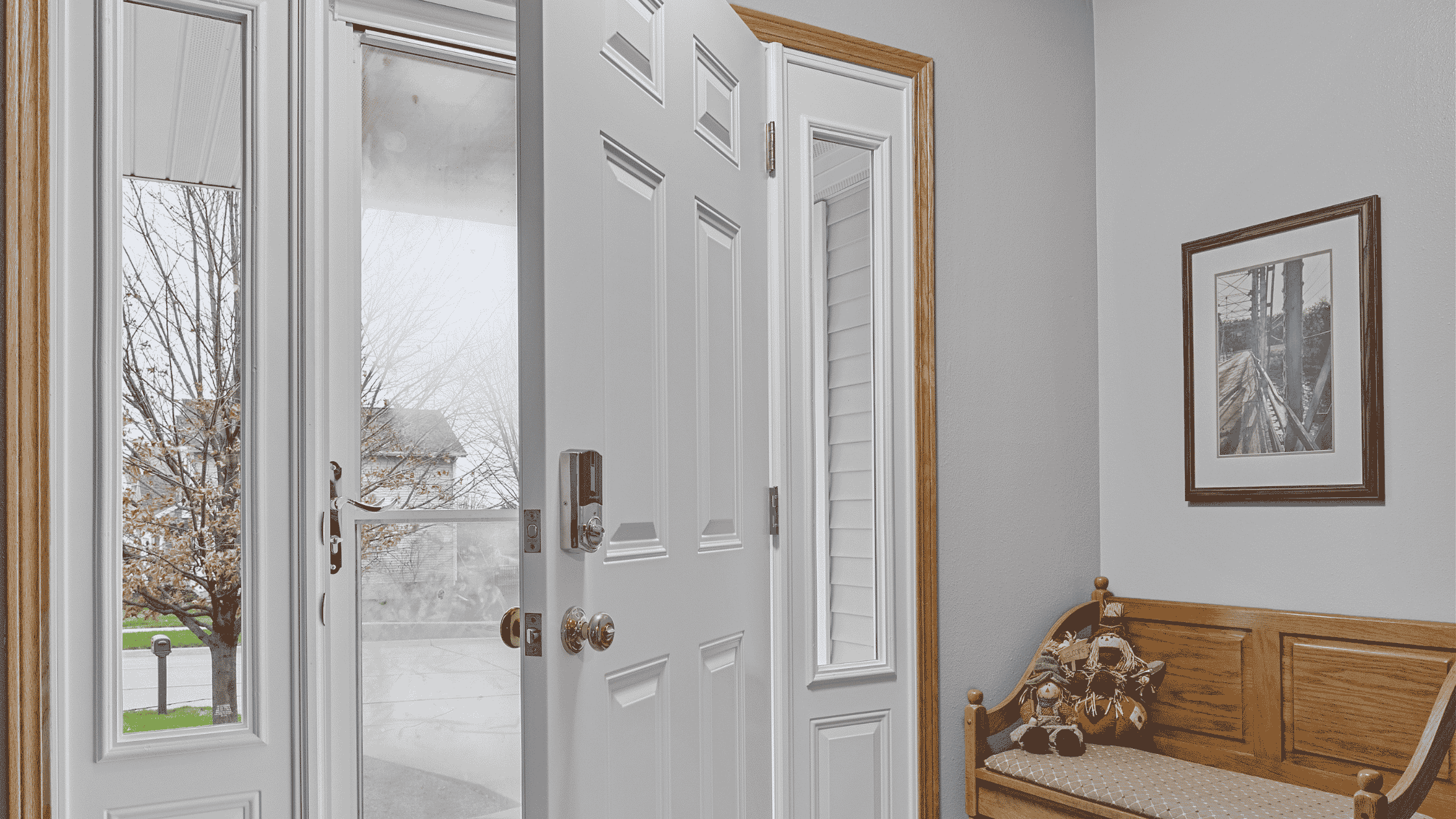
Doors: The Hardest-Working Hole in Your House
A door is an opening in your wall that has to swing several times a day, seal completely when it’s shut, and keep doing both through 100-degree Julys and 20-below Januarys. It’s one of the harder problems in your entire building envelope, and it’s the component homeowners are most likely to overlook.
What the Replacement Door Materials Do
Our insulated steel and fiberglass entry doors are built around a foam core rather than solid wood, which is why an insulated steel door insulates substantially better than a comparable wood slab. The frames matter as much as the door itself. Our steel entry systems come standard with poly fiber composite frames that resist rot, warping, and insect damage, so the opening stays true and the seal stays tight over time.
On sliding patio doors, every installation includes our exclusive Quad4+Plus™ weather stripping, which helps eliminate air leaks to reduce costly heating and cooling bills. Our French doors use compression weather stripping and an airtight bottom sweep, along with heavy-duty adjustable hinges so the door can be brought back into perfect contact with those seals years down the road.
That adjustability is the tell. A door is a moving part. Products designed by people who understand that are built to be re-tuned, not just installed and forgotten.
What the Replacement Door Installation Does
Weather stripping only works if the door closes against it evenly, and that comes down to the frame. If the jamb isn’t even, if the unit isn’t square, if the shims are in the wrong place or the frame gets racked when it’s fastened, the door will contact its seals on one edge and miss them on another. You’ll feel it as a draft at the top corner in January and see it as a bright line of daylight in July.
Then there’s the gap between the frame and the rough opening, which has to be insulated without being over-packed. Stuffing that cavity too full bows the jamb and creates the exact misalignment you were trying to avoid. After that, it has to be air sealed and flashed so water drains out and away from the framing below.
All of this is to say that a high-quality installation is just as important as high-quality materials when it comes to replacing an exterior door with a lot of hard work to do, year round.
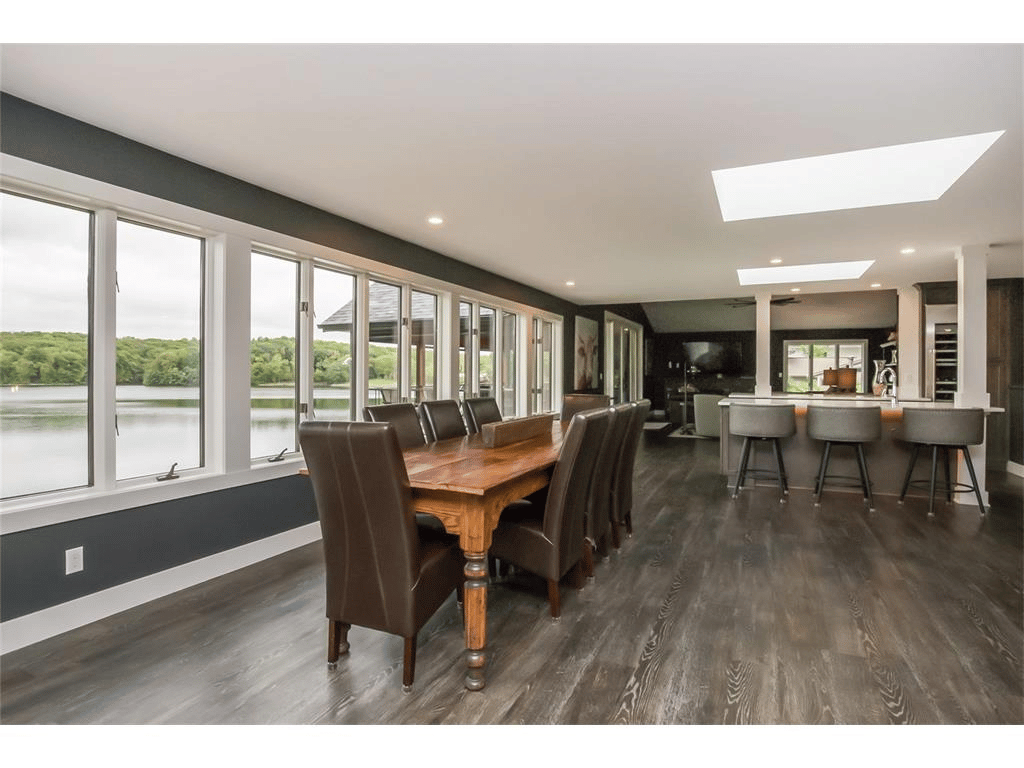
Windows: Where Summer Heat Sneaks In
We published a full breakdown of window energy efficiency: the four pillars, the ratings that actually matter for our climate, Low-E coatings, spacer systems, and what to expect in real savings. If windows are your priority this year, start there: Energy Efficient Windows in Eastern Iowa: What Homeowners Need to Know.
For the summer version of the story: in July, the number to watch is solar heat gain coefficient, or SHGC. It measures how much of the sun’s radiant heat comes through the glass. A lower SHGC keeps more summer heat outside, which is exactly what you want on the south and west facing windows that take the afternoon sun. ENERGY STAR certified windows are rated by climate zone, so the right target for Hiawatha isn’t the right target for Houston.
Low-E coatings do the heavy lifting here. They reflect radiant heat back toward its source, out in the summer and in during the winter, and block the UV that fades your floors and furniture along the way.
And the same theme applies. Air leakage is one of the four ratings on a window label, and it’s measured on the unit, not on the unit as installed in your wall. Whether you get a full-frame or an insert replacement, and how the rough opening is flashed, insulated, and sealed, is what turns a good rating into a lower bill. We broke that decision down here: What to Expect from Professional Window Installation Services.
Installation: The Part You Don’t See in a Product Brochure
Three different products, three different manufacturers, three different sets of engineering, and in all three cases the thing standing between the rated performance and your actual utility bill is the quality of the connection between the product and your house.
That connection isn’t a product. You can’t order it, compare it on a spec sheet, or find it on a label. It’s craftsmanship, and it’s the part of this business that’s hardest to shop for and easiest to cut corners on.
Forty years of Eastern Iowa summers will teach you a few things about where houses actually leak. The savings comes from someone taking the time to seal an opening properly on a 95-degree afternoon, when nobody’s watching and no one will ever see the work again.
So when you’re comparing quotes this summer, we suggest spending some of your decision-making time and energy figuring out who’s going to be standing in your driveway at 7 a.m, while comparing product literature.
How to Decide Who Installs Your Energy Efficient Renovations
Considerations when comparing quotes and how to think about future energy efficiency for your home.
- We’ve been doing this in Eastern Iowa for 40 years, and we’re now 100% employee-owned. The crew installing your siding has an ownership stake in whether you call back with a draft complaint.
- We carry a lifetime workmanship warranty across all of our services. Not just the product warranty from the manufacturer, but a warranty on the labor itself. Siding, doors, windows, all of it.
- We have a local service department. If something needs adjusting later, you’re calling Hiawatha, not a national call center.
One more thing on comparing bids. If a quote comes in meaningfully cheaper than the others, find out where the difference actually is before you assume you found a deal. Labor is usually the line item that gets trimmed, and labor is the line item that determines your energy savings. A cheaper install of a better product isn’t a better project.
The Bottom Line
It’s going to stay hot, the seasonal rate runs through August, and 2026 bills are forecast to come in above last year’s. None of that is in your control. The efficiency of your building envelope is.
If you’re thinking about siding, doors, or windows this year, choose good products, then be at least as careful about who installs them.
Questions to ask any contractor before you sign
- How will you air seal and flash around the openings?
- Is my house wrap being replaced or reused, and how are you handling seams and penetrations?
- What SHGC and U-factor are you specifying for my climate zone?
- Do you warranty your workmanship, or only the manufacturer’s product?
- Are the people doing the work your employees or subcontractors?
- Who do I call in year five if something needs adjusting?
What Questions Should I Ask a Contractor Before Remodeling?
And if you’d like to start the conversation about what your home actually needs, which might be all three of these or might be none of them, request a free quote.