


Most home problems don’t start with a dramatic failure. They start small.
A little fog in the corner of a window. A hairline crack in a siding panel. A faint musty smell under the kitchen sink that you tell yourself is probably nothing. Individually, none of these feel urgent. So they get filed under “I’ll deal with that later.”
The trouble is that “later” has a way of getting expensive.
Here in Eastern Iowa, our homes take a beating. Freezing winters, humid summers, and the constant expansion and contraction that comes with big temperature swings all put stress on windows, siding, and the systems behind your walls. That stress tends to find the weak spots first, and the weak spots are almost always the small details homeowners overlook.
At Hometown Restyling, we talk with homeowners across Cedar Rapids, Iowa City, Marion, North Liberty, and the Quad Cities every week, and a lot of those conversations start the same way: “I wish I’d caught this sooner.” So this week’s StraightTALK is about catching it sooner. We’re walking through the home maintenance warning signs that are easy to ignore, why waiting tends to cost more than acting, and how a little planning ahead keeps a small fix from becoming a big project.
What does condensation on my windows mean, and should I be worried?
Condensation on your windows can mean three different things, depending on where it forms. Moisture on the inside of the glass usually points to high humidity inside your home. Moisture on the outside is typically just dew and nothing to worry about. But fog or moisture trapped between the panes means the window’s seal has failed, and that window is on borrowed time.
The location of the moisture tells the whole story, so it’s worth learning to read it.
Condensation On The Inside Of The Window Glass
If you’re wiping water off the room-facing side of your windows, especially on cold winter mornings, the usual cause is elevated indoor humidity. Warm, moist air inside your home meets the cold glass and the moisture condenses out, the same way a cold drink sweats on a summer day.
This one is more of a humidity issue than a window issue. Cooking, showering, laundry, and even houseplants all add moisture to the air, and a tightly sealed home in winter holds onto it. The EPA recommends keeping indoor relative humidity below 60 percent, and ideally between 30 and 50 percent. Running exhaust fans, using a dehumidifier, and improving ventilation usually brings it back under control. It only becomes a bigger concern if the moisture is constant and starts to pool on the sill, where it can damage the frame and wood trim over time.
Condensation On The Outside Of The Glass
Good news here: this one is usually a sign your windows are doing their job. Exterior condensation tends to show up on spring and fall mornings when the outdoor pane is cooler than the humid air around it. It’s essentially dew, and it means the outside glass is well insulated from the warmth indoors. The sun comes up, it dries off, and there’s nothing to fix.
Fog Or Moisture Trapped Between The Panes
This is the one to take seriously. Modern double and triple-pane windows have a sealed space between the panes, often filled with an insulating gas. When you see fog, haze, or streaks trapped inside the glass that you cannot wipe away from either side, the seal on that insulated glass unit has failed. The insulating gas has escaped and moisture has moved in.
A foggy sealed unit won’t fix itself, and it can’t be cleaned out. It also means that the window is no longer insulating the way it should, so it’s likely costing you a little in comfort and energy efficiency. Depending on the age and condition of the window, the fix is either a glass unit replacement or a full window replacement.
Frost Or Ice On The Inside Of The Window
In an Iowa winter, you may notice frost or ice forming on the interior glass, and it often shows up worst behind closed blinds or heavy curtains. That’s usually a combination of high indoor humidity and very cold glass, with the window covering trapping cold air against the pane and cutting off airflow. Opening the blinds during the day and managing indoor humidity helps. If frost keeps returning on the same windows year after year, though, it can be an early sign those windows are aging out.
StraightTALK Remodeling Tip
If you can’t wipe the moisture away, it’s not a cleaning problem, it’s a sealed-unit problem. A little fog between the panes today is your window telling you to start planning ahead, especially before the winter scheduling crunch hits.
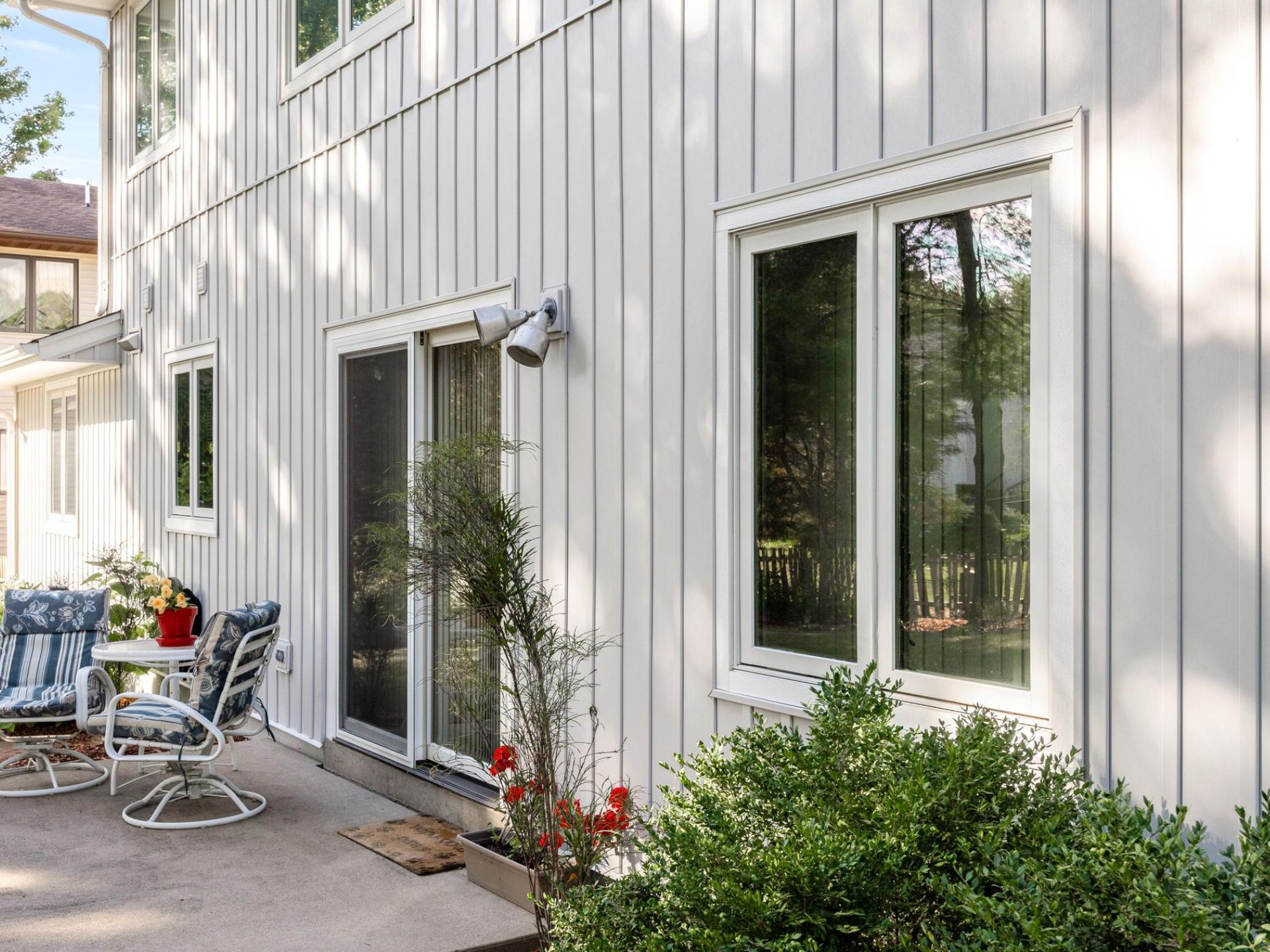
Are small cracks or gaps in my siding a big deal?
Yes. Even small cracks, gaps, or loose panels in your siding can let water slip behind the surface, where it can reach the sheathing, insulation, and framing. Because water moves through tiny openings by capillary action, a crack that looks purely cosmetic today can lead to hidden rot and mold long before you ever notice a problem inside your home.
Why Your Siding Is The First Line Of Defense
Siding is designed to shed the bulk of the water that hits your home, but it works as part of a system. Behind the visible panels sits a weather-resistant barrier, flashing around openings, and sealant at the seams. When all of that is intact, incidental moisture drains away and dries out. When one piece of that system fails, water has a path to the materials you can’t see.
The Small Stuff That Lets Water Into Siding
The openings that cause trouble usually start small. Common culprits include:
- Hairline cracks and splits in panels, especially on walls that get strong sun exposure
- Gaps where panels meet, or where siding meets trim, windows, and doors
- Sealant that has shrunk, cracked, or pulled away over the years
- Loose or missing panels after a storm or high winds
Our freeze-thaw cycles here in Eastern Iowa make this worse. Water works its way into a small crack, freezes, expands, and widens the opening a little more each time. What started as a cosmetic hairline can slowly become an actual entry point.
Warning Signs That Water Is Already Getting Behind The Siding
Because the real damage happens out of sight, you often have to watch for the clues:
- Panels that warp, buckle, bulge, or pull away from the wall
- Peeling or bubbling paint on the exterior
- Dark streaks, staining, or discoloration
- Bubbling paint or peeling wallpaper on the interior walls
- A persistent musty smell inside, which can signal mold behind the wall
To Repair Or Replace Your Siding?
If the damage is isolated, like a few cracked panels near a downspout or a section of failed sealant, a targeted repair is often the right call, provided a matching material is available. But if you’re seeing cracks and gaps across multiple areas, repeatedly re-sealing the same spots, or spotting signs of moisture inside, it’s worth having the wall system evaluated. Widespread issues usually point to siding that’s reaching the end of its useful life, and repeated patch jobs can end up costing more than a proper replacement.
StraightTALK Remodeling Tip
Walk your home’s exterior each spring and fall, and again after any big storm. A ten-minute look for cracks, gaps, and loose panels can catch a moisture problem while it’s still a sealant-tube fix instead of a rebuild.
How can I tell if I have a hidden water leak in my kitchen or bathroom?
Hidden leaks don’t usually announce themselves with an obvious puddle. The early clues are subtle: an unexplained jump in your water bill, a musty smell, soft or discolored flooring, warped baseboards, or the faint sound of running water when nothing is turned on. In kitchens and bathrooms, dishwashers, tubs, and under-sink connections are the most common sources.
Water is sneaky. It travels along framing and subfloor, so the spot where you finally see damage may be several feet from where the leak actually started. That’s exactly why these leaks do so much damage before anyone notices.
The Dishwasher Nobody Checks
A dishwasher can drip for months before a drop ever reaches the visible floor. It sits tucked under the counter, boxed in by cabinets and a kick plate, so a slow leak tends to run down behind that kick plate and soak into the subfloor and the backs of neighboring cabinets. By the time you see standing water, the cabinet base is often already soft.
The good news is that a quick check takes about ten minutes. Pop off the kick plate at the bottom of the dishwasher, shine a flashlight underneath, and look for staining, dampness, or a chalky residue along the subfloor and supply lines. Run your hand along the base of the cabinet next door and feel for soft spots or swelling. It’s worth doing a couple of times a year.
Tubs, Showers, And Bathroom Floors
Bathrooms hide leaks well too. Watch for a floor that feels soft or spongy underfoot, tiles that have come loose, or grout that’s cracking. A toilet that rocks slightly can mean a worn wax ring letting water seep out at the base. And if you have a bathroom above a finished space, a brown or copper-colored stain on the ceiling below is a clear signal that water is getting somewhere it shouldn’t.
The Early Leakage Signs That Show Up Almost Anywhere
Some leak clues aren’t tied to one fixture. Keep an eye out for:
- A water bill that climbs without a change in your habits
- A musty or earthy smell that never quite goes away
- Bubbling or peeling paint near plumbing areas
- Warped baseboards or cupping wood floors
- Running-water sounds when everything is off, often noticeable at night
Why Waiting Makes It So Much Worse
This is where a small leak turns into a big problem. Trapped moisture is exactly the environment mold needs, and it moves fast. The EPA notes that wet building materials should be dried within 24 to 48 hours to avoid mold growth. Beyond the health and structural concerns, there’s an insurance angle worth knowing: sudden, accidental leaks are often covered, while slow, ongoing leaks that a homeowner could have caught are frequently denied as maintenance issues. Catching it early protects both your home and your options.
StraightTALK Remodeling Tip
Trust the subtle stuff. A musty smell, a soft spot in the floor, or a mysteriously high water bill is usually the house telling you something before the damage is visible. The sooner you investigate, the smaller the repair stays.

Why does waiting to fix a small home problem end up costing more?
Because water and time compound on each other. A cracked seal line, a failing window seal, or a slow drip behind a cabinet starts as a quick, affordable fix. Left alone, moisture spreads into materials you can’t see, and what could have been a simple repair becomes a demolition-and-rebuild job. As a rule, the longer a small issue sits, the larger the eventual invoice.
We’ve watched this pattern play out enough times to say it plainly: small problems almost never stay small in a four-season climate.
Small Problems Don’t Stay Small
Think about how each of the issues above tends to progress. A failed window seal isn’t just a foggy pane, it’s a window slowly losing efficiency and, eventually, a candidate for replacement. A hairline crack in siding is a doorway for moisture that can rot the sheathing behind it. A slow dishwasher drip can eventually ruin a subfloor and a run of cabinets. In every case, the cheap moment to act is at the very beginning, before the water reaches the expensive materials.
Don’t Forget The Details
A lot of what protects a home is unglamorous. A bead of sealant around a window. A worn weatherstrip. A single loose siding panel. These are the details that are easiest to skip and easiest to forget, and they’re often the exact points where water finds its way in. Staying on top of the small maintenance items is genuinely one of the cheapest forms of home protection there is.
Repair Now Versus Replace Later
There’s a real difference between catching something early and catching it late. Early, and you’re usually looking at a repair: reseal, swap a panel, replace a glass unit. Late, and you’re often replacing the failed component and repairing the hidden damage it caused underneath, which is two projects instead of one.
When Replacement Is Actually The Smart Move
None of this means repair is always the answer. If a system is aging out, if you’re fixing the same spot over and over, or if moisture has already affected multiple areas, replacement is frequently the better long-term value. The goal isn’t to patch forever. It’s to make the right call at the right time, and early awareness is what gives you the chance to choose.
StraightTALK Remodeling Tip
Ask yourself whether you’re solving a problem or just postponing it. If you’ve re-sealed, repainted, or patched the same spot more than once, the fix isn’t working, and it’s time to address the actual source.
How far in advance should I plan a home improvement project?
Earlier than you probably think. In Eastern Iowa, reputable contractors book out weeks or even months in advance, especially in spring and summer. If you notice a problem in late fall, you may not be able to get it addressed until the following spring. Planning ahead leaves room for consultation, design, materials, and scheduling, so the work happens on your timeline rather than the weather’s.
The November-To-March Reality
Windows are the classic example. Spot a failing window in November, and between the holidays, product lead times, and a full winter schedule, that replacement might realistically land in March. Materials often need to be ordered well ahead of installation, so the sooner you start the conversation, the sooner you’re actually comfortable again. Noticing an issue early gives you the option to get in line before the line gets long.
Spring And Summer Schedules Fill Fast
The same holds true for outdoor and exterior projects. Once the weather warms up, demand for deck upgrades, siding, sunrooms, and screen rooms climbs quickly, and quality contractors fill their calendars early in the season. Homeowners who start planning in late winter or early spring are the ones enjoying their finished projects by mid-summer. The ones who wait for the perfect weekend to call are often the ones waiting the longest.
How A Consultation Catches What You May Miss
Here’s an advantage of getting a professional set of eyes on your home a little earlier than you think you need to: we tend to notice the things you’ve stopped seeing. It’s common for us to be out for one reason, say a kitchen countertop consultation, and spot the early signs of a dishwasher leak or a soft patch of subfloor in the process. A conversation about one project frequently surfaces a smaller issue worth handling before it grows.
As an employee-owned company with a dedicated service department that operates separately from our installation crews, we’re set up to help with both the big remodels and the smaller fixes that keep a home in good shape. Occasionally we’ll bring in a trusted specialty partner for certain work, but the accountability for the project stays with us from start to finish.
StraightTALK Remodeling Tip
Don’t wait for a problem to become an emergency to make the call. A consultation is a low-pressure way to get ahead of both the issue and the calendar, and it’s a lot easier to plan a project than to scramble through one.
StraightTALK Wrap-Up
The homeowners who avoid the big, stressful surprises usually aren’t the ones with newer homes or bigger budgets. They’re the ones who pay attention to the small stuff.
A little fog between the window panes. A hairline crack in the siding. A musty smell under the sink. A calendar that’s about to work against you. None of these feel like a big deal in the moment, and that’s exactly why they’re worth watching. Caught early, they’re small, affordable fixes. Ignored, they’re the reason a simple repair turns into a project nobody planned for.
If you’ve noticed any of these signs around your home, the best time to look into them is now, while your options are still wide open. The team at Hometown Restyling works with homeowners throughout Eastern Iowa on everything from windows, siding, and doors to bathrooms, kitchens, decks, and sunrooms, and we’re always happy to take a look and help you sort out what needs attention now versus what can wait.
If you’d like to dig deeper into one of the most common areas homeowners ask about, take a look at What Every Homeowner Should Know About Replacing Doors and Windows in Eastern Iowa.
1. What does condensation on my windows mean, and should I be worried?
Condensation on your windows can mean three different things, depending on where it forms. Moisture on the inside of the glass usually points to high humidity inside your home. Moisture on the outside is typically just dew and nothing to worry about. But fog or moisture trapped between the panes means the window’s seal has failed, and that window is on borrowed time.
2. Are small cracks or gaps in my siding a big deal?
Yes. Even small cracks, gaps, or loose panels in your siding can let water slip behind the surface, where it can reach the sheathing, insulation, and framing. Because water moves through tiny openings by capillary action, a crack that looks purely cosmetic today can lead to hidden rot and mold long before you ever notice a problem inside your home.
3. How can I tell if I have a hidden water leak in my kitchen or bathroom?
Hidden leaks don’t usually announce themselves with an obvious puddle. The early clues are subtle: an unexplained jump in your water bill, a musty smell, soft or discolored flooring, warped baseboards, or the faint sound of running water when nothing is turned on. In kitchens and bathrooms, dishwashers, tubs, and under-sink connections are the most common sources.
4. Why does waiting to fix a small home problem end up costing more?
Because water and time compound on each other. A cracked seal line, a failing window seal, or a slow drip behind a cabinet starts as a quick, affordable fix. Left alone, moisture spreads into materials you can’t see, and what could have been a simple repair becomes a demolition-and-rebuild job. As a rule, the longer a small issue sits, the larger the eventual invoice.
5. How far in advance should I plan a home improvement project?
Earlier than you probably think. In Eastern Iowa, reputable contractors book out weeks or even months in advance, especially in spring and summer. If you notice a problem in late fall, you may not be able to get it addressed until the following spring. Planning ahead leaves room for consultation, design, materials, and scheduling, so the work happens on your timeline rather than the weather’s.