

When summer arrives in Eastern Iowa, your deck or patio should be one of the most enjoyable spaces in your home.
But remember the last time you stepped outside on a sunny July afternoon and immediately felt the heat radiating off every surface, or spent an evening swatting mosquitoes instead of relaxing, you know that an unprotected outdoor space has its limits.
There are more ways than ever to add shade, comfort, and usability to your deck or patio: standard pergolas and operable louvered pergolas to retractable screens, solid patio covers, and screened-in porches.
At Hometown Restyling, we work with homeowners throughout Cedar Rapids, Iowa City, and the surrounding Eastern Iowa communities who want to get more out of their outdoor living areas. The questions we hear most often are about figuring out which solution actually fits the way you live.
In this week’s StraightTALK, we’re answering five of the most common questions homeowners ask when exploring shade solutions for their deck or patio.
What’s the best way to add summer shade to my deck or patio?
The best way to add shade to your deck or patio depends on how much protection you want, how you plan to use the space, and whether you prefer an open-air feel or a more enclosed environment. Common options include standard pergolas, operable (louvered) pergolas, solid patio covers, retractable screens, and screened-in porches, each offering a different level of shade, weather protection, and comfort.
There’s no single “best” shade solution that works for every home. The right choice comes down to understanding what each option actually does, and what it doesn’t.
A Quick Overview of Your Shade Options
Here’s a general breakdown of the most popular shade structures homeowners in Eastern Iowa consider:
- Standard Pergolas provide partial, filtered shade through fixed rafters and slats. They add architectural interest but don’t block rain or provide full sun protection on their own.
- Operable (Louvered) Pergolas feature adjustable aluminum louvers that can be opened for full sunlight or closed to create a solid, weather-tight roof. Many are motorized and controlled with a remote.
- Patio Covers are solid-roof structures that provide consistent overhead protection from sun and rain, typically attached to the home.
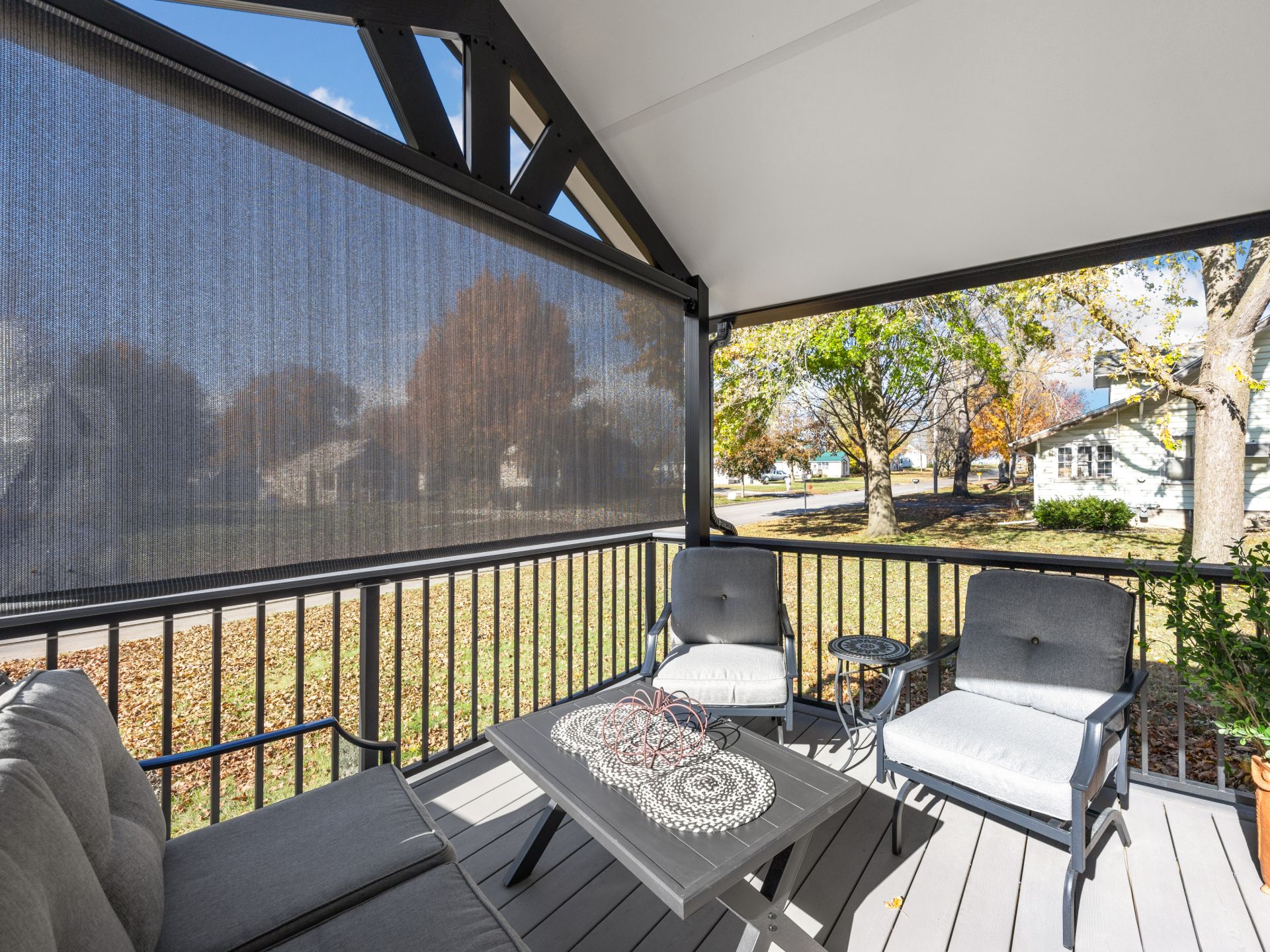
- Retractable or Pull-Down Screens can be added to pergolas, patio covers, or screened porches to block sun, wind, and insects on demand. They roll up and out of sight when not in use.
- Screened-In Porches are fully enclosed outdoor spaces with screens on all sides and a solid roof overhead, providing the most complete protection from insects, debris, and weather.
Why Understanding the Differences Matters
Many homeowners come to us knowing they want “something” over their deck but aren’t sure which direction to go.
If your main concern is afternoon sun, a patio cover or operable pergola might be the right fit. If bugs are driving you indoors every evening, a screened-in porch or retractable screen system could make a bigger difference than any overhead structure alone.
The best approach is to start by thinking about how you actually want to use the space, and then match the solution to that goal.
StraightTALK Remodeling Tip
Before choosing a shade structure, spend a few days paying attention to when and how you use (or avoid) your deck or patio. Note when the sun hits hardest, when the bugs come out, and what keeps you from spending more time outside. Those observations will help guide you toward the right solution far more than any product brochure.
What’s the difference between a standard pergola and an operable pergola?
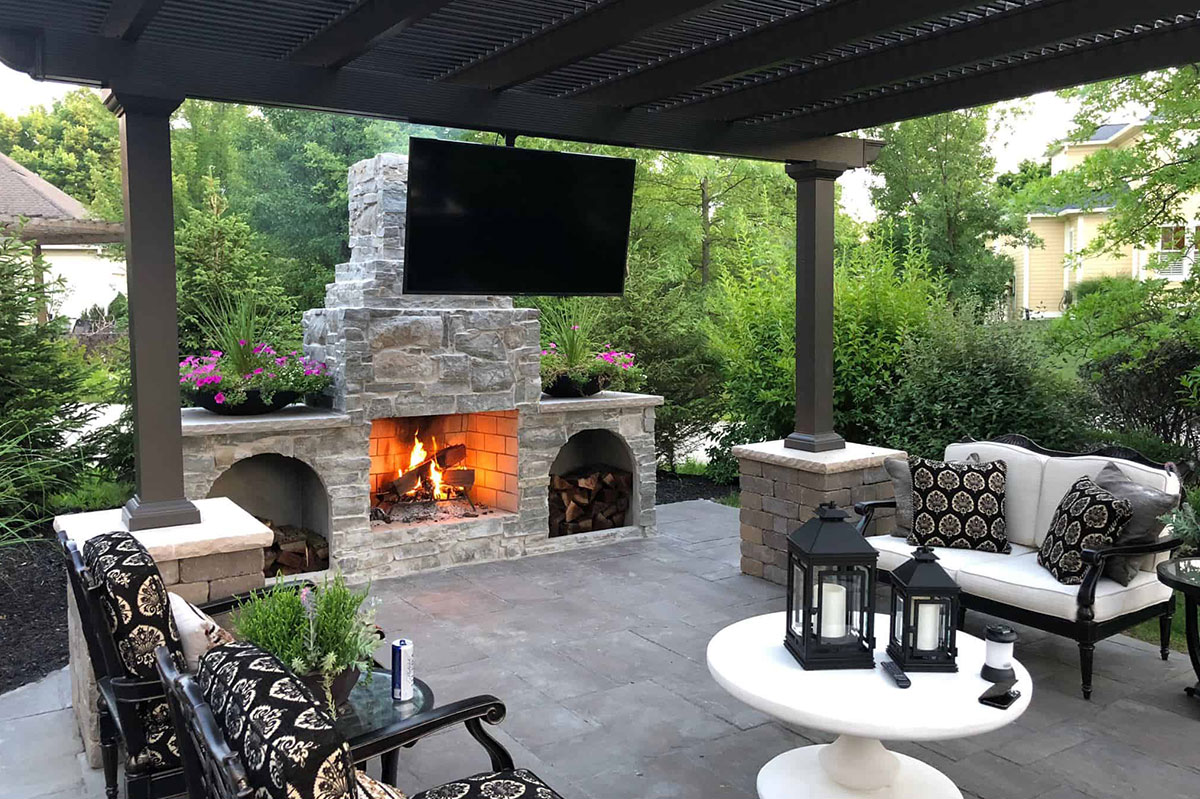
A standard pergola has a fixed, open-rafter roof that provides partial, filtered shade. An operable pergola (also called a louvered pergola) has adjustable aluminum louvers that rotate to give you full control over sunlight, shade, and rain protection, typically with the push of a button.
Both are popular outdoor structures, but they serve different purposes. Understanding the distinction can save you from investing in a shade solution that doesn’t actually fit your lifestyle.
Standard Pergolas: Partial Shade and Visual Appeal
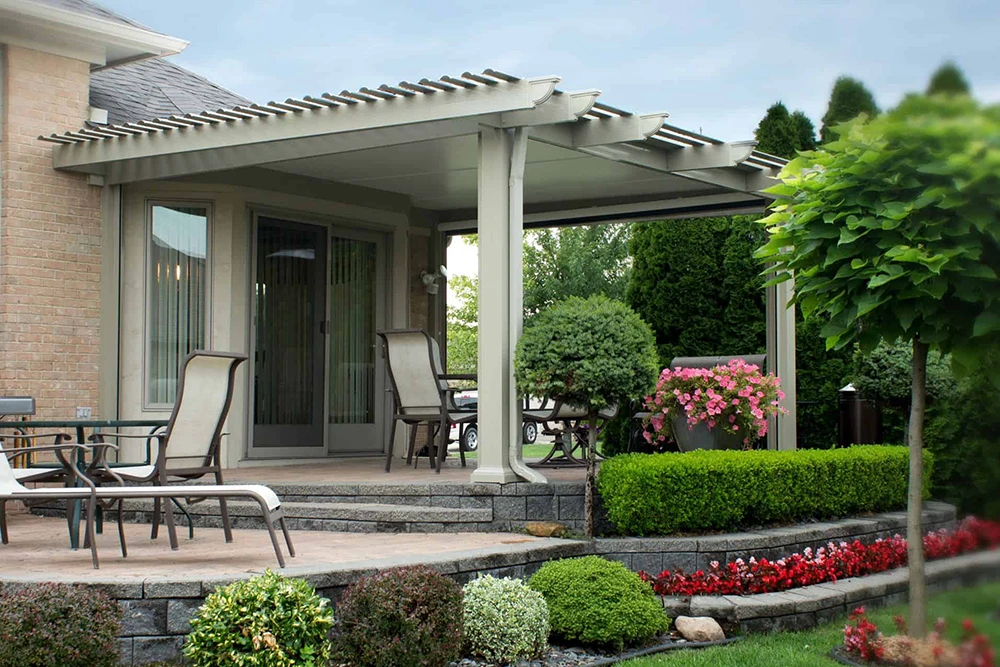
A standard pergola is an open-air structure with vertical posts supporting a series of fixed crossbeams or rafters. The gaps between the rafters allow sunlight to filter through, creating a pattern of light and shadow underneath.
Standard pergolas are often chosen for their visual appeal. They add architectural character to a deck or patio and can serve as a framework for climbing plants, string lights, or hanging decor. At Hometown Restyling, our pergolas are crafted from heavy-duty, fully extruded aluminum that requires no annual upkeep and won’t warp, peel, crack, or become infested with insects. They’re available as attached pergolas that extend your living space directly from your home or as detached (freestanding) pergolas that create shaded space elsewhere in your yard.
However, because the roof is open, a traditional pergola does not provide full shade all day, block rain, or offer protection from wind or insects. During peak afternoon hours, a standard pergola may provide only 30 to 50 percent shade coverage.
For homeowners who primarily want a decorative outdoor feature or a structure that defines a space without fully enclosing it, a standard pergola can be a great choice. But if meaningful sun and rain protection are the goal, a standard pergola on its own may fall short.
Operable Pergolas: Full Control Over Sun, Shade, and Rain
An operable pergola takes the basic pergola concept and adds motorized, adjustable louvers in place of fixed rafters.
At Hometown Restyling, our operable pergolas are constructed from heavy-gauge extruded aluminum, with extruded louvers designed with a return lip to better channel the flow of rainwater and prevent post-rain dripping. The motorized roof panels open and close with the touch of a button, so on hot, sunny days or when sunny days unexpectedly become rainy, you can continue enjoying your time outdoors. To ensure a clean, streamlined appearance, the motor’s power cable is routed through an electrical raceway.
This means an operable pergola can function as an open-air pergola on a beautiful day and a solid patio cover when the weather turns, all without leaving your chair.
Key features of Hometown Restyling’s operable pergola systems include adjustable louvers that tilt to any angle between open and closed, motorized operation via a built-in motor with a hidden power cable, extruded aluminum construction that requires no annual maintenance, and compatibility with accessories like LED lighting, ceiling fans, and retractable screens.
Which One Is Right for Your Outdoor Space?
If you want a structure that adds character to your deck and you’re okay with partial shade, a standard pergola is a great fit.
If you want a shade structure that adapts to changing weather throughout the day and the seasons, an operable pergola offers more versatility.
Can retractable or pull-down screens make my outdoor space more usable?
Yes. Retractable screens can significantly improve the usability of a deck, patio, or covered outdoor space by providing on-demand protection from sun, insects, wind, and light rain, all while preserving your view and the open-air feel when they’re retracted.
Retractable screens are one of the most versatile (and often overlooked) upgrades homeowners can add to an outdoor living space. They roll up into a compact housing when not in use and deploy downward when you need protection. Many homeowners don’t realize these systems exist, but once they see them in action, they often wonder how they went without them.
How Retractable Screens Work
Retractable screen systems are typically mounted to the underside of a pergola, patio cover, porch roof, or even your garage door. When deployed, the screen rolls down along a guided track to cover the open sides of the structure. When retracted, it rolls back into a slim housing that blends with the structure’s design.
There are two main types: manual systems operated by a pull bar or crank, and motorized systems that deploy with a remote control.
Types of Screen Mesh: Insect Screens vs. Solar Shade Screens
Not all retractable screens use the same mesh, and the type of mesh you choose will depend on what you’re trying to accomplish.
- Insect mesh is a fine-weave screen designed primarily to keep mosquitoes, flies, and other bugs out of your outdoor space. It allows maximum airflow and visibility while creating a barrier against pests. This is a popular choice for homeowners in Eastern Iowa who love spending summer evenings outdoors but don’t love the bugs that come with it.
- Solar shade mesh is designed to block a percentage of the sun’s UV rays and reduce heat and glare. Depending on opacity, solar screens can block 65 to 95 percent of the sun’s energy while still allowing you to see through the mesh. These are ideal for west- and south-facing spaces that receive intense afternoon sun.
Where Pull-Down Screens Work Best
Pull-down (or retractable) screens are most effective when paired with an existing overhead structure, such as a pergola, patio cover, garage door, or screened porch. They’re especially useful for homeowners who want the flexibility to go from a fully open outdoor space to a protected environment and back again, depending on the weather or time of day.
StraightTALK Remodeling Tip
If bugs are your biggest outdoor frustration, don’t assume you need to build a fully screened-in porch. Retractable insect screens can be added to an existing pergola or patio cover to create a bug-free zone when you need it, while still giving you the option to open everything up on a nice day.
What’s the difference between a patio cover and a screened-in porch?
A patio cover is a solid-roof structure that provides overhead shade and rain protection while leaving the sides open. A screened-in porch is a fully enclosed outdoor space with screens on all sides and a roof overhead, protecting from insects, debris, and weather while still allowing airflow and natural light.
Both options extend the usability of your outdoor space, but they create very different environments. Understanding those differences can help you invest in the option that actually matches how you want to live outdoors.
Patio Covers: Overhead Protection with an Open Feel
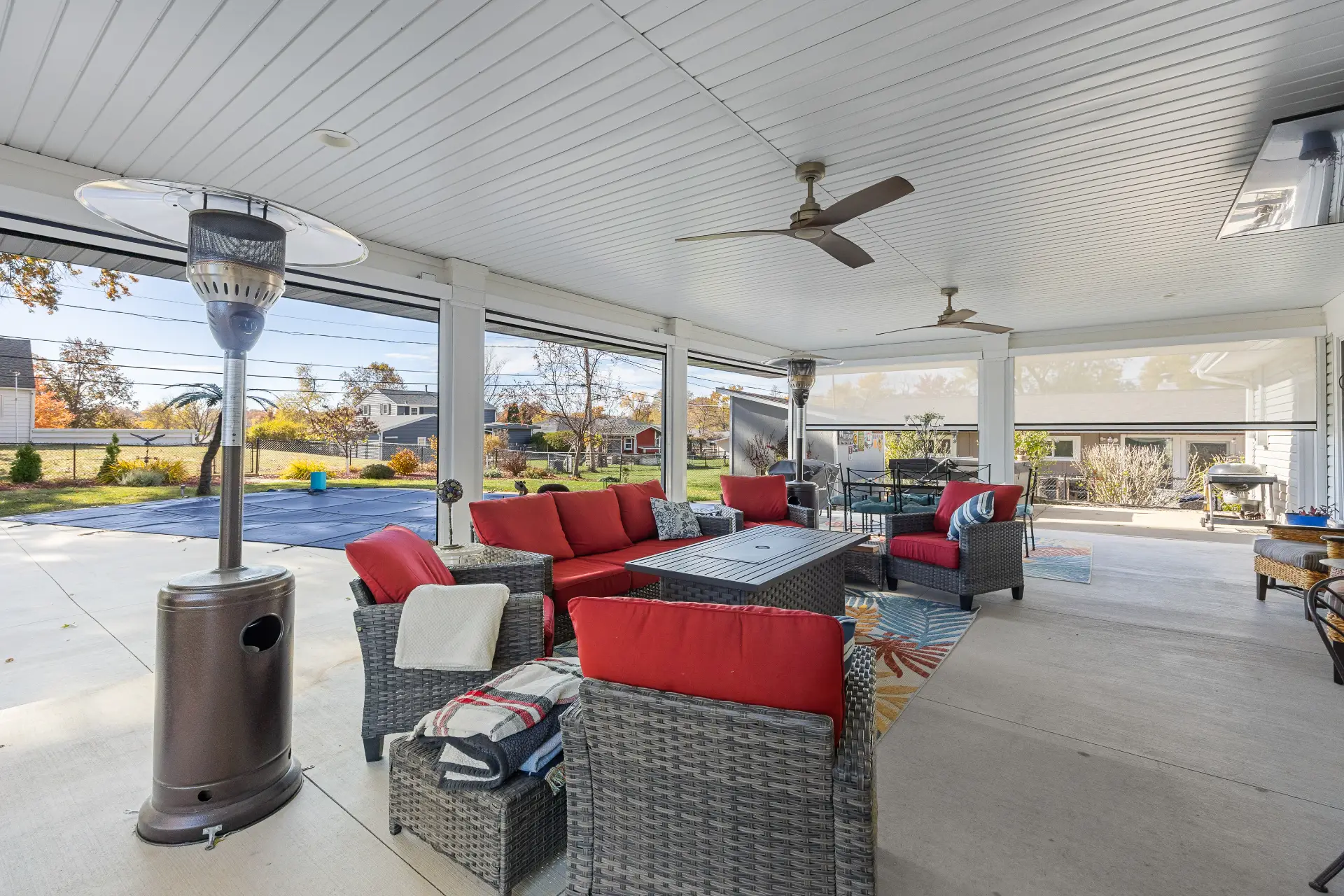
A patio cover is essentially a solid roof that extends over your deck or patio, typically attached to your home’s exterior wall. It provides consistent shade and keeps rain from falling on the space below. At Hometown Restyling, our solid-style patio covers are designed to protect your deck, BBQ area, or other outdoor area, so you can enjoy them even when the sun is blazing or rain is headed your way.
Patio covers are popular because they maintain an open-air feel. You’re protected from the sun and rain overhead, but the sides remain open to breezes, views, and easy access to the yard. This makes them ideal for outdoor cooking, casual entertaining, and everyday relaxation.
Because patio covers are open-sided, they do not provide protection from insects or wind-driven rain.
Screened-In Porches: Full Enclosure with Fresh Air
A screened-in porch goes a step further by enclosing the entire space with screen mesh instead of solid walls. This creates a room-like environment that keeps bugs, debris, and critters out while still allowing fresh air to circulate.
For many homeowners in Eastern Iowa, the biggest advantage is simple: you can enjoy a summer evening outside without mosquitoes. That alone is often the deciding factor.
Key Differences to Consider
- Openness vs. Enclosure: A patio cover keeps the space open and accessible. A screened-in porch creates a more defined, room-like environment. If you value easy flow between indoors and outdoors, a patio cover may feel more natural. If you want a protected retreat, a screened-in porch delivers that.
- Bug Protection: This is one of the clearest dividing lines. A patio cover offers no protection from insects. A screened-in porch does a much better job of keeping them out. If bugs are a major issue, and in much of Eastern Iowa, they are, this is worth serious consideration.
- Weather Protection: A patio cover handles sun and overhead rain. A screened-in porch handles sun, rain, and insects.
The Middle Ground: Patio Covers with Retractable Screens
You don’t always have to choose one or the other. Some homeowners opt for a patio cover with retractable screens, giving them open-air shade most of the time and the ability to drop the screens when bugs appear or the sun gets intense. This hybrid approach is becoming increasingly popular for homeowners who want flexibility without full enclosure.
StraightTALK Remodeling Tip
Think about what’s actually keeping you from spending more time outside. If it’s the sun or rain, a patio cover may be all you need. If it’s the mosquitoes every evening from June through September, a screened-in porch (or a patio cover with retractable insect screens) is probably the better investment for your lifestyle.
How do I choose the right summer shade solution for my home?
The right shade solution depends on four key factors: how you plan to use the space, how much protection you need from sun, rain, and insects, whether you prefer an open or enclosed environment, and the existing structure of your deck or patio. Starting with your lifestyle, not the product, is the best way to make a decision you’ll be happy with for years.
You have great options to choose from: pergolas, patio covers, pull-down screens, and screened-in porches. But when you approach it from the standpoint of how you actually live, the right choice tends to become much clearer.
Start with How You Want to Use the Space
Before thinking about products, think about moments. Do you want a shaded area for grilling and outdoor dining? Quiet evenings reading without bugs? A space to entertain guests comfortably? Somewhere, the kids or pets can play with some protection?
The answers to these questions will naturally point you toward the right shade solution category.
Consider Your Sun Exposure
Not every deck or patio has the same sun exposure. A deck that faces west or south and receives direct afternoon sun will need more substantial shade protection than one naturally shielded by the home or trees.
For heavy sun exposure, operable pergolas or solid patio covers tend to provide the most meaningful relief. For spaces with only a few hours of direct sun, a standard pergola or retractable shade screen may be sufficient.
Think About Bugs
In much of Eastern Iowa, insects are a significant factor in outdoor comfort from late spring through early fall. If bugs regularly drive you indoors, any shade solution that doesn’t also address insect protection will leave a problem unsolved. This is where screened-in porches and retractable insect screens add the most value.
Evaluate What You Already Have
Your existing deck, patio, or outdoor structure plays a major role in what’s possible. If you already have a solid deck frame or patio slab, you may be able to add a pergola, patio cover, or screen system without major structural changes. If your deck needs repair or replacement, it may make sense to address both the structure and the shade solution at the same time.
A professional evaluation can help determine which shade options are feasible, especially for heavier structures, such as screened-in porches or large patio covers, that may require additional engineering or foundation work.
StraightTALK Remodeling Tip
The most common mistake homeowners make is choosing a shade solution based on how it looks rather than how it performs. A beautiful pergola that doesn’t actually block enough sun or a patio cover that doesn’t address your bug problem will end up being a space you still don’t use. Start with the problem you’re solving, then find the product that solves it.
StraightTALK Wrap-Up
Homeowners across Cedar Rapids, Iowa City, and the Eastern Iowa area are exploring a range of shade solutions, including standard pergolas for filtered shade, operable pergolas for adjustable sun and rain control, pull-down screens for on-demand bug and sun protection, solid patio covers for consistent overhead weather protection, and screened-in porches for fully enclosed, bug-free outdoor living.
Each option can dramatically improve how often you use your outdoor space and how much you enjoy it. The best approach is to start by thinking about how you want to live outside, and then choose the shade solution that makes that possible.
If you’re considering upgrading your deck or patio with a shade structure, the team at Hometown Restyling would be happy to help you evaluate your options. We work with homeowners throughout Eastern Iowa to design pergolas, patio covers, screen systems, and outdoor living improvements that make outdoor spaces more comfortable, so you can enjoy more of our beautiful Eastern Iowa seasons.
If you’re ready to start planning, reach out to schedule a consultation and explore what’s possible for your home.
And if you’re looking for more ideas on making the most of your outdoor space, be sure to check out: 5 Ways to Make the Most of Your Deck This Summer.