

Most homeowners know to ask the basics before hiring a remodeling contractor.
How much is this going to cost? How long will the project take? What brands do you carry? Those are reasonable starting points. But they’re also the questions every contractor is prepared to answer, and the ones that tell you the minimum about whether you’re making the right hire.
The questions that reveal how a company is built, who owns it, whether they’ll be around in five years, and what happens the moment something goes wrong on your job site, almost never get asked. Most homeowners simply don’t know to ask these questions.
At Hometown Restyling, we’ve been working with homeowners across Eastern Iowa since 1986. And in that time, we’ve heard a lot of questions. These five aren’t often among them. But they should be.
This StraightTALK answers the questions that you should be asking.
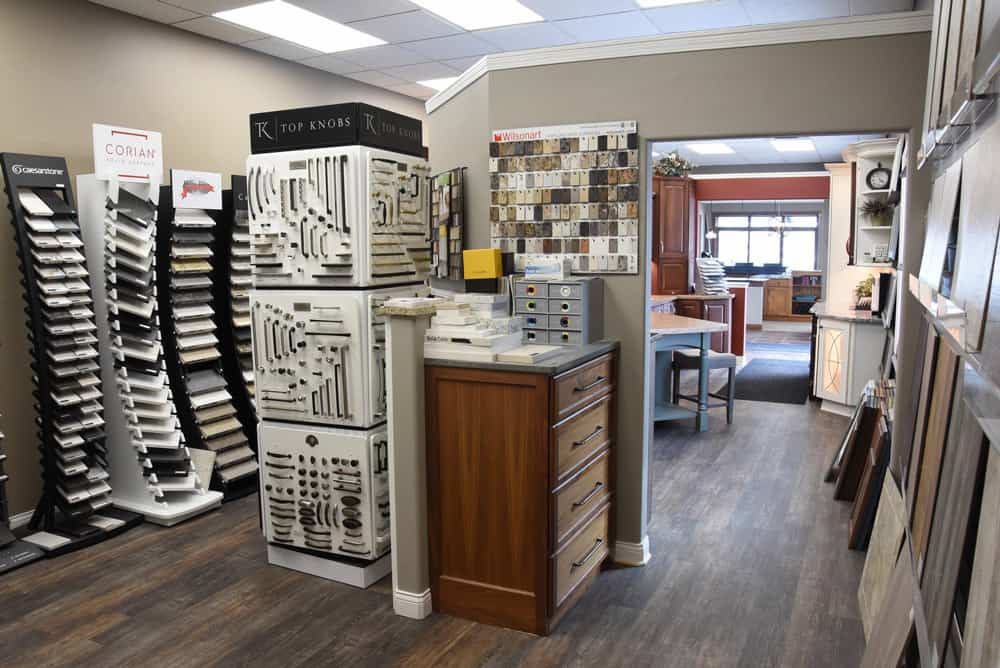
1. Do you have a physical facility: a showroom, warehouse, or both?
A remodeling contractor with a permanent physical facility has made a real investment in the community they serve. It signals financial stability, local commitment, and the operational infrastructure needed to support your project before, during, and after installation.
This question seldom gets asked because most homeowners assume the answer. They find a contractor online, get a quote at the kitchen table, and take for granted that there’s a real operation behind the website. Some remodeling companies operate with a smaller mobile setup rather than a permanent showroom or warehouse. There’s nothing inherently wrong with a lean operation, but it raises questions worth asking: Where do you go when you need to see products in person? Who are you actually dealing with? And will this company be around in five years to honor the warranty?
A physical showroom and warehouse tell a different story. It means the company has invested in serving the community long-term. It means you can walk in, see materials and products firsthand, and talk to someone face-to-face. It means there’s a real address behind the relationship.
For Eastern Iowa homeowners, this also matters practically. Our climate puts real stress on the products installed in your home. When a question comes up about your windows, siding, or doors a year or two after installation, you want a local company with a physical presence, not just a remote or online-only presence.
A contractor with roots in the community has more at stake in keeping you happy. Their reputation lives here. Their business is here. That’s a very different accountability structure from that of a company with no physical footprint and no reason to stay.
StraightTALK Remodeling Tip
Before you sign anything, ask for a contractor’s physical address. Then look it up. A real showroom or warehouse is a sign of a company that is committed to the community.
2. How much experience does your company have, and how do you handle newer installers?
When evaluating a contractor’s experience, two questions matter: how long the company has been operating and what systems it has in place to maintain quality regardless of who’s on the crew. A reputable contractor will pair new installers with experienced veterans, conduct regular quality inspections, and back every job with consistent standards.
The first part of this question is the one homeowners do ask. “How long have you been in business?” is a decent starting point. But it may not be the question that reveals whether your specific project will be done well.
The more revealing question may be: What happens when a newer installer is on my job?
Every company, no matter how established, brings on new employees. New hires are a sign of growth, which is a good sign. The difference between contractors often comes down to whether they have a system that ensures quality regardless of who shows up at your door.
What “company experience” actually means
A company that has been operating for decades has built up institutional knowledge. And it’s not just in one person’s head, but in the processes, training, and standards that get passed on and refined over time. They’ve seen the failures that come from cutting corners. They’ve developed quality control practices because they’ve developed quality control practices over years of experience.
At Hometown Restyling, that institutional knowledge has been building since 1986. Thousands of projects across Eastern Iowa have shaped the way we train, inspect, and stand behind our work.
What happens with newer installers
Due to growth, we are often hiring and training new employees. Here’s what that looks like in practice: newer team members work alongside experienced crew members, not independently. Team leaders review work before a job is considered complete. Quality control is a function of the company’s systems. And the warranty behind every project is backed by Hometown Restyling as a company, not by the individual who happened to be on your job that week.
That kind of accountability structure is worth asking about, with any contractor you’re considering.
3. What happens if something goes wrong during or after the project?
A contractor worth hiring will carry general liability insurance and workers’ compensation coverage for everyone on your job site, and will back their work with a clear warranty process supported by a dedicated service team. It’s about what actually happens when you call with a problem six months after the project is complete.
Most homeowners ask plenty of questions before a project starts. Very few think to ask what the experience looks like after the last installer leaves. That’s often where the real differences between contractors show up.
During the project: who’s covered, and who’s responsible
A legitimate remodeling contractor carries two types of coverage that protect you during the job.
- General liability insurance covers damage to your property during a project.
- Workers’ compensation insurance is the one most homeowners don’t think about until something goes wrong. If a worker is injured on your property and the contractor doesn’t carry proper workers’ comp coverage, the liability can fall back on your homeowner’s insurance policy.
Here’s where the subcontractor variable matters. Some contractors use subcontractors heavily. When those subcontractors are classified as independent contractors rather than employees, they may not be covered under the general contractor’s workers’ comp policy. If something happens at your job site involving an subcontractor, it’s important to understand how coverage and responsibility are handled.
The question to ask directly: Does your workers’ compensation coverage extend to all workers on my project, including any subcontractors?
A contractor using employee labor rather than subs closes this gap, because every worker on your job site is covered under the same policy, full stop.
At Hometown Restyling, the majority of our installation work is performed by our own employees. Occasionally, for specialty work, we’ll bring in a subcontractor. But here’s what doesn’t change regardless: if Hometown Restyling’s name is on the project, Hometown Restyling is responsible for it. The accountability stays with us.
After the project: what does warranty service actually look like?
Every reputable contractor offers some form of warranty. But a warranty is only as good as the process behind it. The right follow-up questions are: Who do you call? How quickly do they respond? And is the person handling your service call the same installer who did the original work, or is there a dedicated team whose entire job is to take care of you after the project is complete?
When a contractor relies on the original installation crew to handle warranty calls, service becomes a scheduling problem. A dedicated service department changes that dynamic entirely. At Hometown Restyling, warranty and post-installation service are handled by a dedicated team. That team’s job is to be responsive, to show up when they say they will, and to resolve issues. It’s a structure built specifically around the customer experience after the sale.
When you’re comparing contractors, ask this directly: Do you have a dedicated service department, or do warranty calls go back to the installation crew? That answer tells you something important about how much they’ve invested in the long-term relationship with you as a customer, versus just getting the job done and moving on.
StraightTALK Remodeling Tip
Ask two questions, not one. First: “Does your workers’ comp coverage include all workers on my project, including subcontractors?” Second: “Do you have a dedicated service department for warranty and post-installation issues, or does that go back to the install crew?” The answers to both will tell you more about a contractor’s accountability structure than almost anything else you can ask.
4. Who actually owns this company?
Ownership structure directly affects how a remodeling company operates, makes decisions, and stands behind its work. A locally owned or employee-owned company is accountable to the community it serves. A company backed by outside investors or a private equity firm is ultimately accountable to financial returns and non-operating stakeholders, which can shape everything from hiring decisions and quality standards to whether the company still exists when it’s time to honor your warranty.
This is the most important question on this list. And almost no one asks it.
Over the last decade, private equity firms have acquired hundreds of regional home improvement companies across the country, rolling them into large national platforms. From the outside, these companies often look the same after an acquisition: same brand, same showroom, sometimes even the same salespeople. But the ownership structure, and the priorities that come with it, can change fundamentally.
What private equity ownership means in practice?
Private equity-backed companies are typically built around a specific investment cycle: acquire regional companies, grow revenue quickly, then sell the combined platform at a profit. That model can work in some industries. In residential remodeling, where quality depends on local expertise, skilled labor, and long-term customer relationships, the track record is more complicated.
When outside investors control a remodeling company, a few things tend to shift. Decision-making moves away from local leadership. Growth targets and debt obligations can take priority over customer experience. And when the investment cycle ends (when the PE firm exits or restructures), the company may be sold again, downsized, or closed.
A real-world example homeowners should know about
In late 2025, Renovo Home Partners (one of the largest private equity-backed home improvement roll-ups in the country) filed for Chapter 7 bankruptcy and abruptly shut down. At its peak, Renovo had over 19 regional brands and thousands of employees. Customers who had paid deposits were left without a contractor and with no clear path to recover their money.
Renovo’s collapse was attributed to the challenges of integrating multiple acquisitions, a softening remodeling market, and the heavy debt load that PE-backed rapid expansion requires. As an industry analysis from the NARI North East Wisconsin chapter noted, the fundamental problem was structural: a business model designed around financial engineering, rapid scaling, and quick returns doesn’t map well onto an industry built on craftsmanship, trust, and long-term relationships.
Why employee ownership is different
A company owned by its employees operates under a fundamentally different set of priorities. When the people doing the work have a direct stake in the company’s long-term success, the incentives align in a way that outside ownership can’t replicate. Quality matters more. Customer relationships matter more. The company’s reputation in the community matters more because it’s also the employees’ reputation.
Research supports this. A 2024 study, cited by Mathematica, found that employee-owned firms consistently receive higher performance ratings and show stronger long-term survival rates than comparable non-employee-owned firms. They’re built to last, not to be sold.
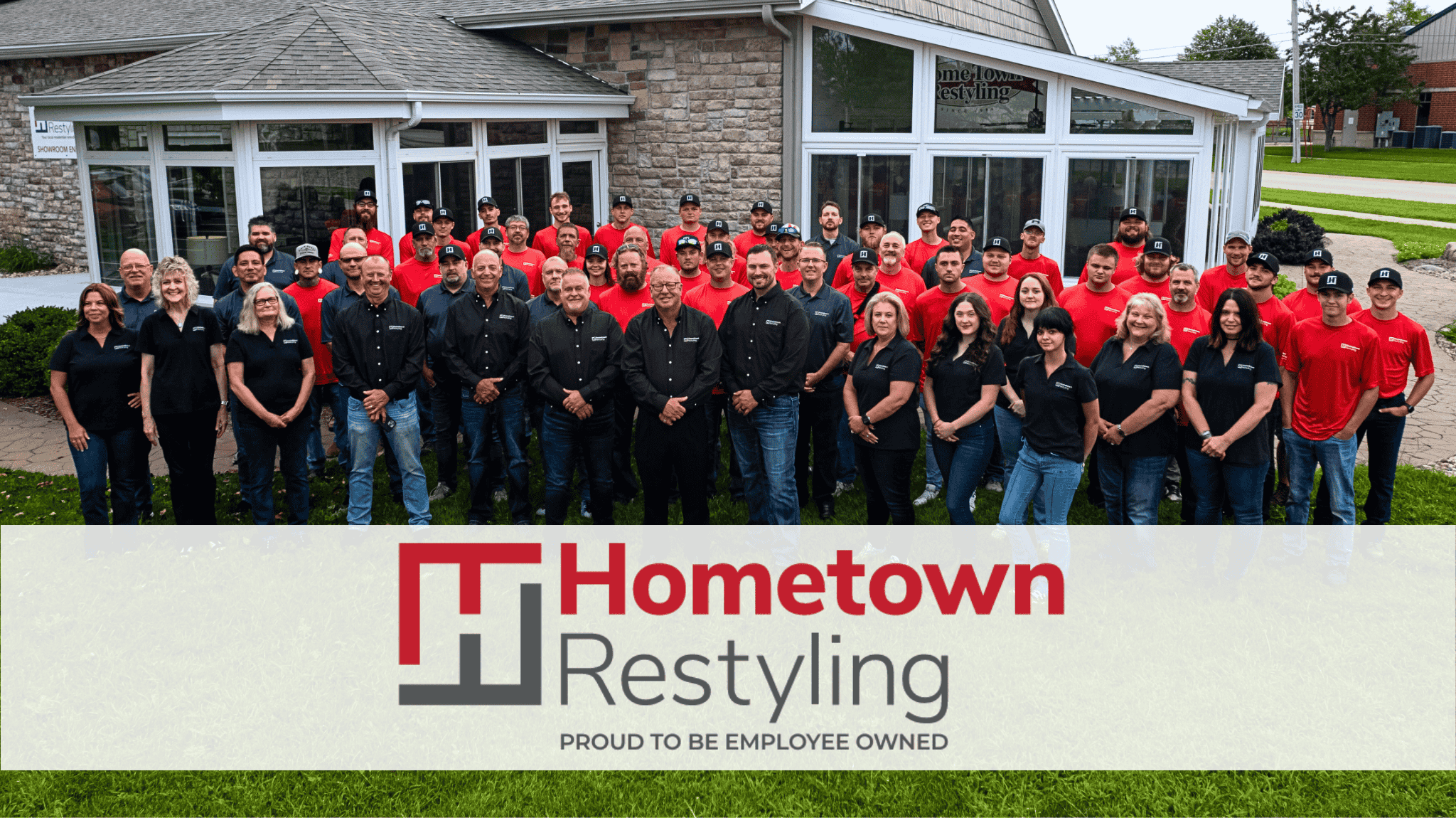
Hometown Restyling is employee-owned. The people who work here have a stake in what happens here. That alignment between what’s good for our team and what’s good for our customers is the foundation of how we operate.
StraightTALK Remodeling Tip
Before hiring any remodeling company, take two minutes to search “[Company name] ownership” or “[Company name] private equity.” It’s a quick check that could tell you a great deal about whose interests the company is really built around, and whether they’ll be there to honor their warranty years from now.
5. Do you use department-specific installers, or does the same crew handle everything?
The best remodeling contractors use installers who specialize in specific product categories, like windows, doors, siding, or roofing, rather than rotating generalist crews across whatever job is on the schedule. Specialization produces better craftsmanship, fewer callbacks, and more consistent results because the installer has performed that specific type of work hundreds or thousands of times and knows exactly what good looks like.
Why specialization matters in residential remodeling
The argument for department-specific installers is the same reason you’d want a cardiologist rather than a general practitioner performing a procedure on your heart. Repetition builds precision. A window installer who has performed the same process hundreds of times has developed an eye for the details: the failure points, the proper sealing techniques, the ways a product can be installed to pass a quick visual check but fail over time.
That depth of knowledge doesn’t come from cross-training. It comes from doing one thing repeatedly to a high standard over the years.
What specialization looks like in practice
Department-specific installers bring several concrete advantages to your project:
- They’ve seen the edge cases and know how to handle them. The unusual framing conditions and the weatherproofing details vary by product.
- Installs are more precise because the process is second nature, not something being recalled from a training session.
- The likelihood of callbacks is lower because the work is done right the first time.
- When a warranty question does come up, a specialist can diagnose the issue quickly because they understand the product inside and out.
At Hometown Restyling, our window installers install windows. Our siding crew installs siding. That specialization is a direct result of the employee model. We’re able to build that kind of depth because we invest in people long-term.
StraightTALK Wrap-Up
Here’s the truth about choosing a remodeling contractor: most companies will answer the questions you ask. The problem is that sometimes homeowners aren’t asking the deep ones.
Before you sign a contract with any contractor, take a few minutes to ask these five questions:
- Do you have a physical showroom or warehouse? You’re looking for real roots, not just a website.
- How do you handle quality control with newer installers? You’re looking for a system.
- What happens if something goes wrong during or after the project? You’re looking for proper insurance coverage that includes all workers on-site and a dedicated service department.
- Who owns this company? You’re looking for local accountability and a company that’s built to stay.
- Do your installers specialize by department? You’re looking for depth of expertise and craftsmanship.
The contractors willing to answer these questions clearly and confidently are almost always the ones worth hiring.
At Hometown Restyling, we’ve been answering these questions since 1986. If you’re starting a remodeling project in Eastern Iowa and want to know where we stand on any of them, we’ll give you straight answers. And if you’d like to read more about choosing a great contractor, check out: How to Choose a Remodeling Contractor in Eastern Iowa.
1. Do You Have a Physical Facility: a Showroom, Warehouse, or Both?
A remodeling contractor with a permanent physical facility has made a real investment in the community they serve. It signals financial stability, local commitment, and the operational infrastructure needed to support your project before, during, and after installation.
2. How Much Experience Does Your Company Have, and How Do You Handle Newer Installers?
When evaluating a contractor’s experience, two questions matter: how long the company has been operating and what systems it has in place to maintain quality regardless of who’s on the crew. A reputable contractor will pair new installers with experienced veterans, conduct regular quality inspections, and back every job with consistent standards.
3. What Happens If Something Goes Wrong During or After the Project?
A contractor worth hiring will carry general liability insurance and workers’ compensation coverage for everyone on your job site, and will back their work with a clear warranty process supported by a dedicated service team. It’s about what actually happens when you call with a problem six months after the project is complete.
4. Who Actually Owns This Company?
Ownership structure directly affects how a remodeling company operates, makes decisions, and stands behind its work. A locally owned or employee-owned company is accountable to the community it serves. A company backed by outside investors or a private equity firm is ultimately accountable to financial returns and non-operating stakeholders, which can shape everything from hiring decisions and quality standards to whether the company still exists when it’s time to honor your warranty.
5. Do You Use Department-Specific Installers or Does the Same Crew Handle Everything?
The best remodeling contractors use installers who specialize in specific product categories, like windows, doors, siding, or roofing, rather than rotating generalist crews across whatever job is on the schedule. Specialization produces better craftsmanship, fewer callbacks, and more consistent results because the installer has performed that specific type of work hundreds or thousands of times and knows exactly what good looks like.