

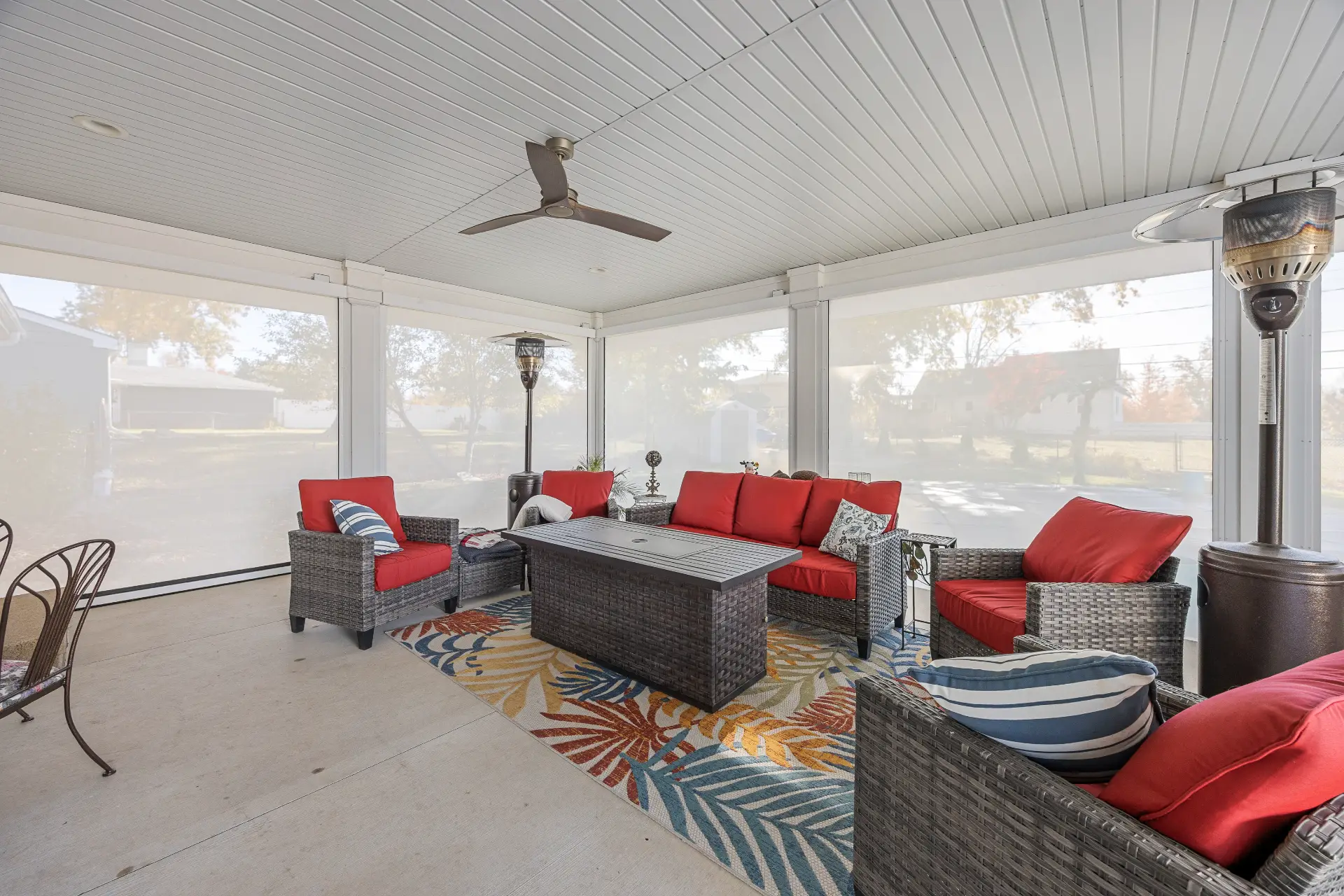
You spent good money making your backyard a place you actually want to be. Then August shows up in Eastern Iowa, and by 2 o’clock in the afternoon your deck feels like the inside of a parked car. So you go in, crank the air conditioning, and your outdoor space sits empty during the exact months you built it for.
This is not another article about interior energy efficiency. This is about staying comfortable outside, without retreating inside. The key is figuring out why your patio gets so hot in the first place, and then addressing it directly.
At Hometown Restyling, we talk with homeowners across Cedar Rapids, Iowa City, Marion, North Liberty, and the surrounding communities who love their outdoor spaces but can only use them in the early morning or after sunset. The fix usually comes down to two things working together: overhead shade from a patio cover, often with a ceiling fan, and pull-down screens that block the sun a cover cannot reach.
In this week’s StraightTALK, we’re answering five questions homeowners ask when they want to enjoy the outdoors without surrendering to the heat.
Why does my patio feel so much hotter than the actual outdoor temperature?
Your patio feels hotter than the forecast because a weather thermometer measures air temperature, while your patio sits in direct sunlight and absorbs radiant heat from surfaces like decking, concrete, and siding. That radiant load, not the air temperature, is what makes an unshaded patio feel like a furnace on a sunny afternoon.
If it seems like your patio runs ten or fifteen degrees hotter than what your weather app says, you are not imagining it. There is a real reason for the gap.
The Forecast Measures Shade, Your Patio Does Not
Official weather readings come from thermometers housed in shaded, well-ventilated enclosures, specifically so direct sun does not inflate the number. Your patio has no such protection. It sits out in the open, soaking up everything the sun throws at it. So the forecast and your lived experience are measuring two different things.
Radiant Heat Is The Real Culprit
The heat you feel outside comes from two sources: the temperature of the air, and radiant heat, which is the energy that travels directly from the sun and from hot surfaces to your body. On a clear afternoon, that radiant load can dwarf the air temperature. It is the difference between 90 degrees in the shade feeling manageable and 90 degrees in full sun feeling brutal. The thermometer reads the same. Your body does not.
Your Surfaces Are Working Against You
Concrete, pavers, brick, and dark composite or wood decking all absorb solar energy throughout the day and radiate it right back at you. A concrete slab or dark deck board baking in direct sun can get shockingly hot to the touch, and it keeps releasing that stored heat into the evening, long after the sun drops. Dark-colored surfaces and siding make it feel even worse, which is why a patio tucked against a dark wall can feel like a heat trap.
Which Direction Your Patio Faces Matters
Sun exposure is not equal across every yard. A west-facing patio takes the full force of the low, intense afternoon sun, exactly when you are most likely to want to use it. South-facing spaces get sun most of the day. Add in the humidity that Eastern Iowa summers are famous for, which slows how fast your body can cool itself, and you have a space that is tough to enjoy without help.
StraightTALK Remodeling Tip
Before you spend a dollar on a solution, figure out where and when your space gets hottest. Stand out there at 3 or 4 in the afternoon and notice which direction the sun is coming from and which surfaces are radiating heat. That single observation tells you whether you need overhead shade, side protection, or both.
Does adding shade actually lower the temperature, or does it just block the sun?
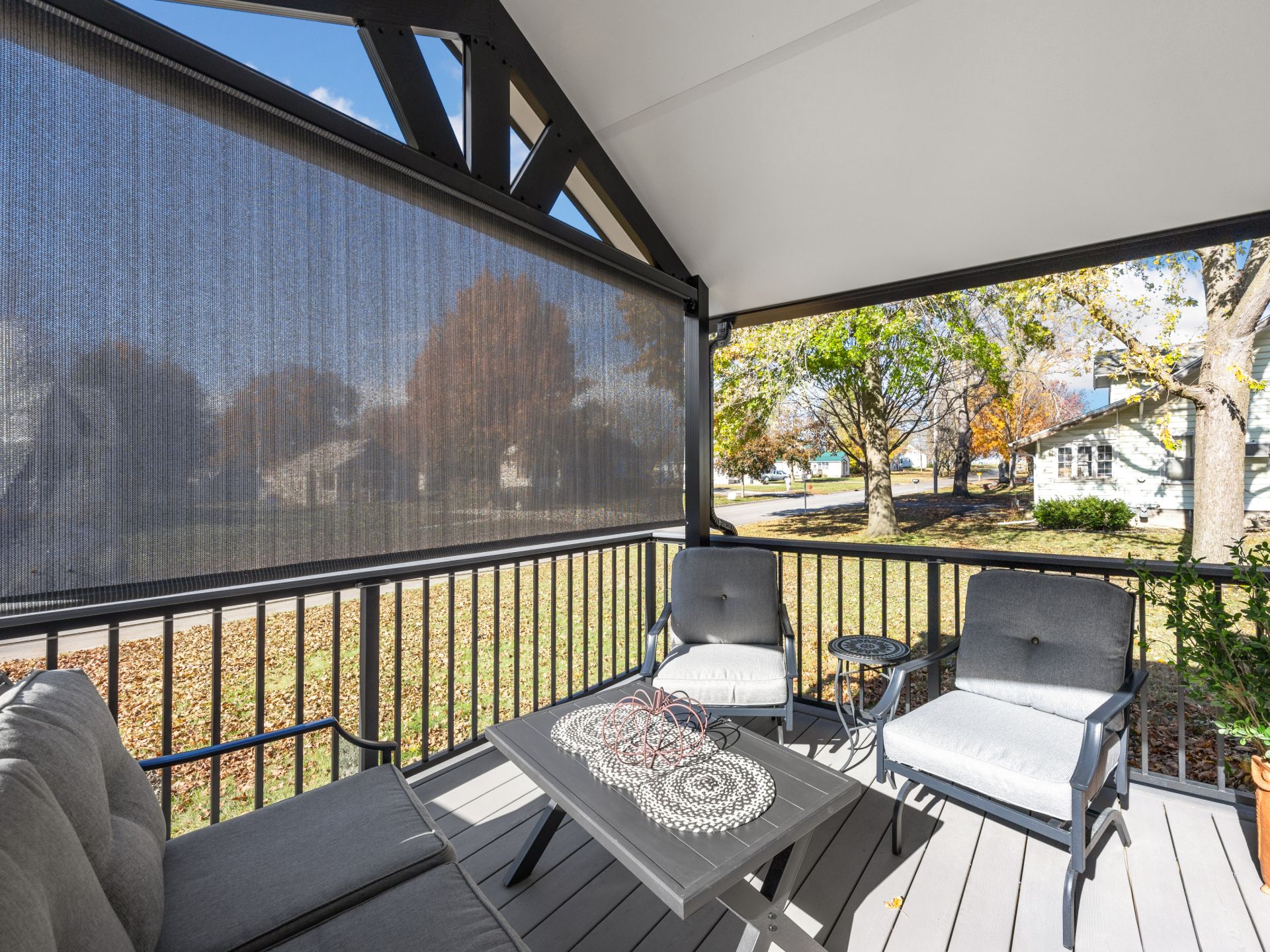
Shade will not change the air temperature much, but it makes a dramatic difference in comfort. By blocking direct sunlight and keeping your deck and surrounding surfaces from heating up, overhead shade sharply reduces the radiant heat your body absorbs. That is why a shaded patio can feel far cooler than a sunny one at the very same temperature.
What Shade Actually Does, And Does Not Do
Shade is not an air conditioner. It will not meaningfully drop the ambient air temperature the way your HVAC system cools a room. What it does is far more useful outdoors: it removes the single biggest heat source, direct sun, and it keeps your deck, concrete, and furniture from turning into radiators. Block the sun, and those surfaces stay far cooler, which means they stop dumping stored heat back at you. The result is a space that feels significantly cooler even though the thermometer barely moves.
Overhead Shade Options
A patio umbrella covers a small footprint and constantly needs repositioning. For consistent, all-afternoon relief, a permanent overhead structure does far more. The two that provide meaningful, dependable shade are solid patio covers and operable louvered pergolas.
A solid patio cover gives you a real roof over the space, steady shade and rain protection over your deck, grilling area, or seating. An operable pergola uses motorized aluminum louvers you can tilt open for sun or close for shade and weather protection, so you control how much sun reaches the space at any moment. Both are built from heavy-duty extruded aluminum that requires no annual upkeep and will not warp, peel, or crack. A standard, fixed-rafter pergola looks great but only offers partial, filtered shade, so it is a weaker choice if staying cool is your main goal. We break down all of those differences in our summer shade comparison guide.
Why Permanent Shade Solutions Win
The real advantage of a fixed cover is that it protects your surfaces all day, every day. Your deck never gets the chance to bake, so the space starts cooler and stays cooler. That is something a portable umbrella simply cannot do.
StraightTALK Remodeling Tip
If your patio surfaces are already hot to the touch by midday, prioritize consistent overhead shade over spot solutions. Keeping the sun off your deck and concrete in the first place does more for all-day comfort than shading one chair at a time.
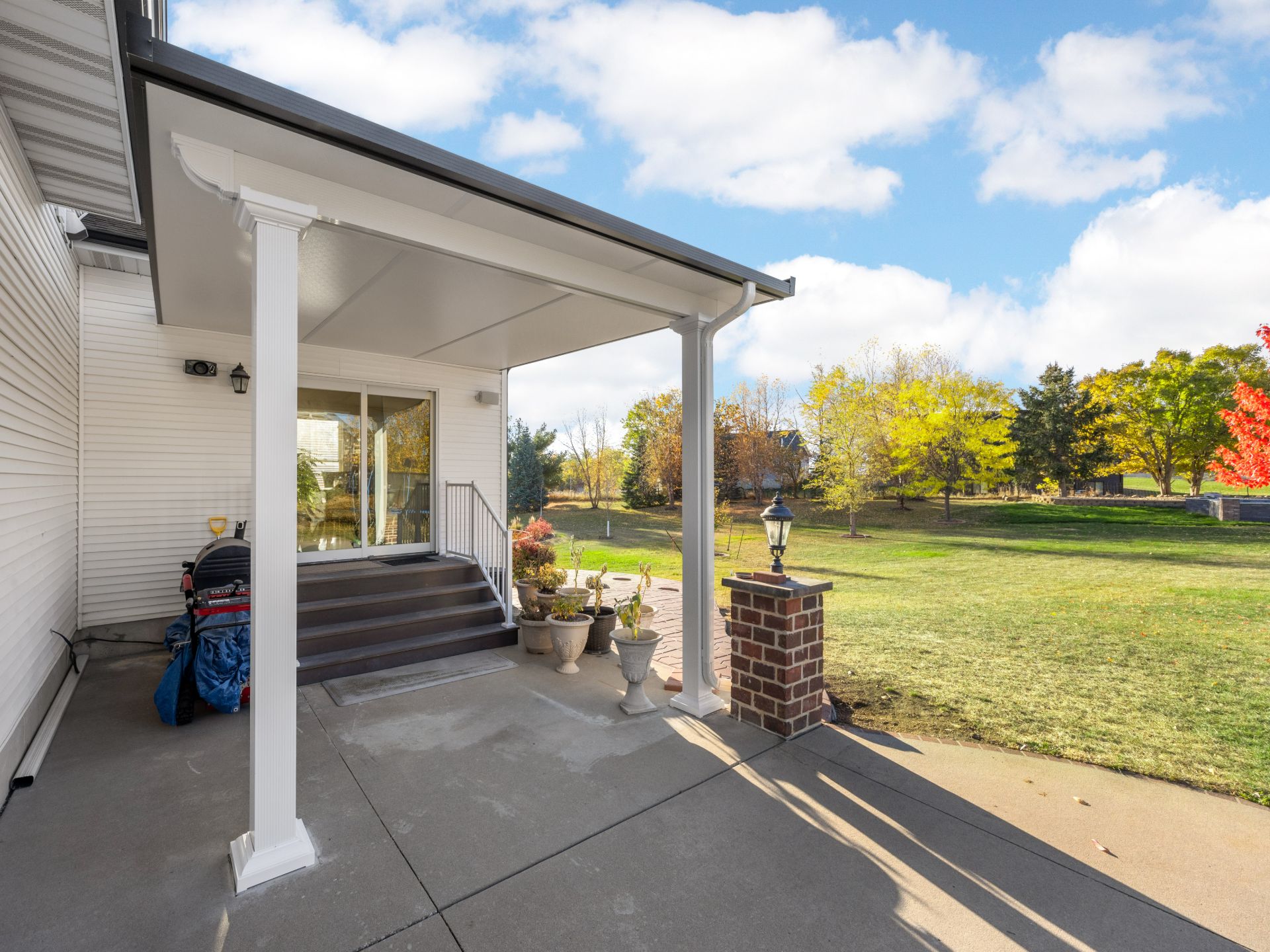
Can a patio cover with a ceiling fan actually keep me cool outside?
Yes. A ceiling fan will not lower the air temperature, but moving air speeds up how quickly sweat evaporates from your skin, which makes you feel several degrees cooler. Pair a fan with the shade of a patio cover, and you get the biggest comfort gain of all: no radiant heat pouring down from above, and a steady breeze moving across you below.
Shade and airflow solve two different halves of the comfort problem, which is why they work so well together.
How A Fan Actually Cools You
A fan does not cool the air, it cools you. When air moves across your skin, it accelerates evaporation, and evaporation carries heat away from your body. That is the breeze-on-a-hot-day effect. The important catch: a fan running in direct sunlight mostly just pushes hot air around. It needs shade to do its best work, because once the radiant heat from overhead is gone, that moving air can finally make a noticeable difference.
Patio Covers Are Built To Hold A Fan, And More
This is where a solid overhead structure earns its keep. A patio cover or operable pergola gives you a sturdy, permanent place to mount an outdoor-rated ceiling fan directly over your seating area. Because these structures are engineered as real roofs, they can also support LED lighting, outdoor speakers, and even a TV, turning a hot slab into a genuine outdoor room. On our operable pergolas, the motor’s power cable is even routed through a hidden raceway for a clean look, and the same structures are designed to accept accessories like fans and lighting from the start.
The One-Two Punch Against Eastern Iowa Heat
Overhead shade takes away the radiant heat baking down on you. The fan handles the still, muggy air that Eastern Iowa summers deliver in abundance. Neither one fully solves the problem alone, but together they let you sit comfortably on an afternoon that would otherwise send you inside.
StraightTALK Remodeling Tip
If you are already planning a patio cover, have the wiring for a ceiling fan and lighting run during installation rather than adding it later. It is far cleaner and more cost-effective to plan the electrical while the structure is going up, and you will get an outdoor-rated fan sized properly for the space.
Do pull-down shade screens really make a covered patio cooler?
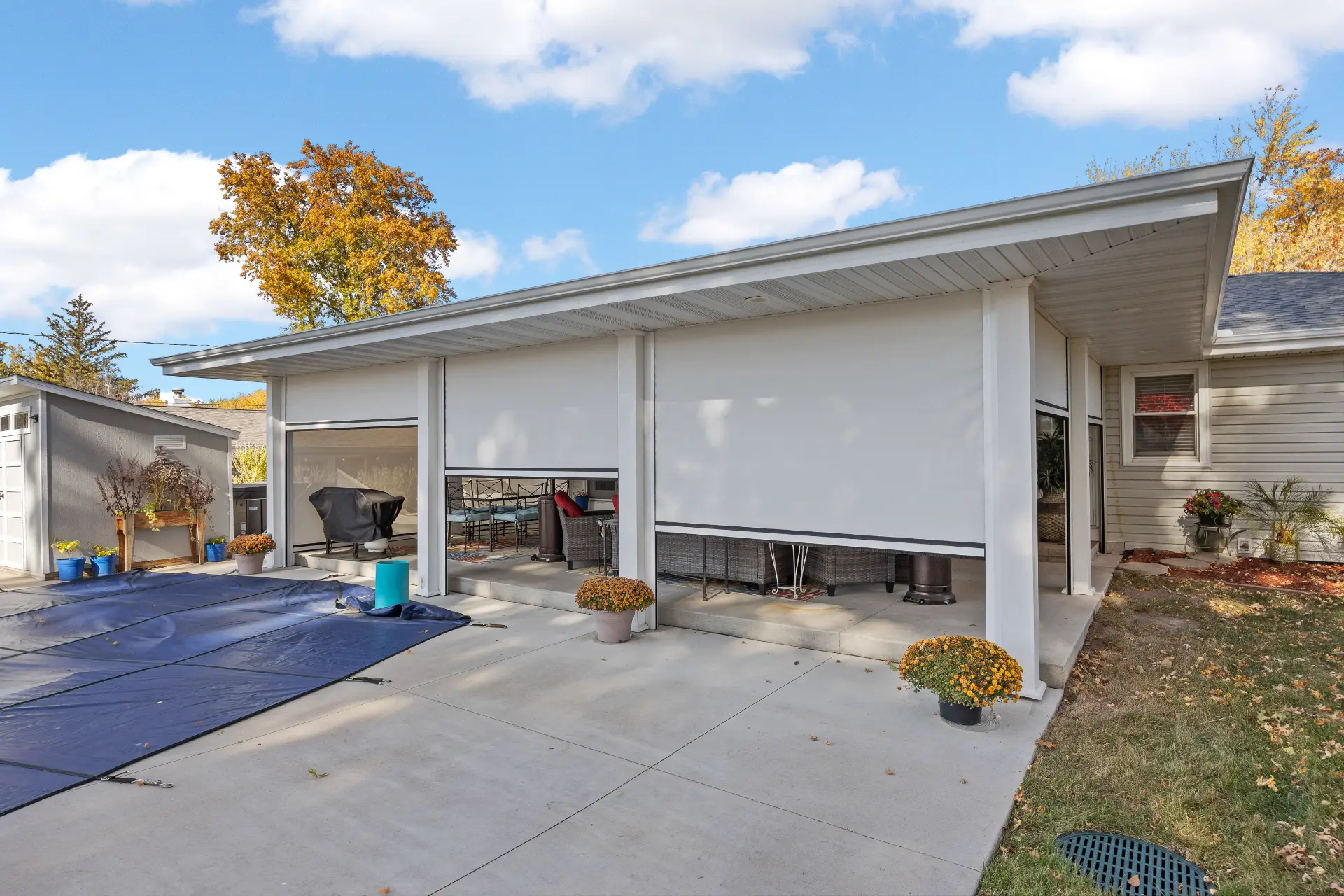
Yes. An overhead cover blocks the high midday sun, but the low afternoon sun still slips in from the side, right into your eyes and onto your skin. Pull-down solar shade screens close off that open side and block a large share of the sun’s UV rays and radiant heat, so a covered patio, porch, or garage stays noticeably cooler and far less glaring.
The Side-Sun Problem A Patio Cover Can’t Fully Solve
At midday the sun is high, and an overhead roof shades you perfectly. But as the afternoon wears on, the sun drops toward the western horizon and comes in almost horizontally, underneath the cover and straight at you. No overhead structure can stop light coming in sideways. That is exactly the gap pull-down screens are made to fill. They drop down along the open side to block that low, punishing sun on demand, then roll back up out of sight when you do not need them.
Solar Shade Screens Versus Insect Screens
Pull-down screens come in two main mesh types. Solar shade screens use a denser weave designed to block UV rays, heat, and glare, available in options that block up to 95 percent of the sun’s UV while still letting you see out. Insect mesh, by contrast, is a fine, open weave built to keep mosquitoes and flies out while maximizing airflow. If your goal is a cooler, less glaring space, the solar shade screen is the one doing the heavy lifting. If bugs are your main frustration, insect mesh is the answer, and many homeowners end up wanting both.
Manual shade screens or motorized pull-down screens?
Hometown Restyling installs both manual and motorized pull-down screens. Manual systems use a simple, reliable spring-assisted pull bar. Motorized systems operate by remote control, with an optional smartphone app and an automatic obstruction stop for safety, which is especially handy for large or frequently used openings. They work on covered patios, porches, pergolas, and one of our most popular applications, garages. With the screen down and the garage door up, a hot garage becomes a shaded, comfortable summer hangout.
Built For Eastern Iowa Weather
The screens we install are Stoett retractable systems, made in the USA with high-grade aluminum frames that resist corrosion and heavy-duty mesh that resists tearing, punctures, and mildew. The side retention system carries a wind safety rating of up to 30 miles per hour, and we recommend retracting screens ahead of severe weather. In most cases, screens can be added to a patio cover or pergola you already own, so this is often an upgrade rather than a full rebuild.
StraightTALK Remodeling Tip
If afternoon glare and heat are your specific complaint, focus solar shade screens on the sun-facing side, usually the west, rather than screening the entire structure. You will block the worst of the low sun while keeping the open, airy feel on the other sides.
What’s the best way to keep my outdoor space cool on the hottest Eastern Iowa days?
The most comfortable outdoor spaces layer solutions instead of leaning on just one. Combine overhead shade from a patio cover or operable pergola, airflow from a ceiling fan, and pull-down solar screens on the sun-facing side. Add lighter surfaces, and you can enjoy your patio even on the hottest, muggiest Eastern Iowa afternoons.
There is no single product that solves outdoor heat by itself. The spaces homeowners actually use all summer tend to stack a few solutions that each cover another one’s blind spot.
Build Shade In Layers
Think of it as three layers working together. Overhead shade removes the radiant heat coming down. A ceiling fan moves the still, humid air across your skin. Pull-down solar screens block the low sun coming in sideways. Overhead shade cannot stop side sun, a fan cannot fix radiant heat, and screens do not help the air sit still, but together they close every gap.
Work With Your Space
A few choices amplify everything above. Choose lighter-colored decking and furniture when you can, since dark surfaces absorb and radiate more heat. Move the grill and other heat sources away from where you sit. And pay attention to timing, because a west-facing space is toughest from mid-afternoon on, which is precisely when screens and a fan earn their keep.
What Shade Screens And Patio Covers Cost And Where To Start
Pricing depends on the size of your space, which structures you choose, and whether you are building new or adding to what you have, so it is best handled with a look at your actual setup. You can get a sense of the range in our guide to the cost of patio covers and pull-down screens. From there, a consultation is the fastest way to a real plan. Our team will evaluate your space, note your sun exposure, and recommend the combination that fits how you live outdoors. You can schedule a free quote whenever you are ready.
StraightTALK Remodeling Tip
Start with your single biggest offender. If it is the overhead sun, lead with a cover. If it is blinding afternoon glare, lead with solar screens. If the air just sits heavy and still, start with a fan under the existing shade. Solve the worst problem first, then layer the rest as your budget allows.
StraightTALK Wrap-Up
Staying cool outside is not about one magic product. It is about understanding that radiant heat, hot surfaces, low afternoon sun, and still air are four separate problems, and matching each one to the right solution.
For homeowners across Cedar Rapids, Iowa City, Marion, North Liberty, Coralville, Waterloo, Cedar Falls, and the Quad Cities, that usually looks like a patio cover or operable pergola for consistent overhead shade, a ceiling fan for airflow, and pull-down solar screens to stop the sun a cover cannot reach. Layered together, they turn a space you avoid by mid-afternoon into one you actually use from morning through evening.
If you are ready to reclaim your outdoor space this summer, the team at Hometown Restyling would be glad to help you figure out the right combination for your home. We have been serving Eastern Iowa homeowners since 1986, and we design outdoor living spaces built for the way our seasons actually behave. For more ideas on getting the most from your home inside and out, take a look at our roundup of Eastern Iowa remodeling upgrades, and if you are still weighing which shade structure fits you best, our summer shade comparison guide walks through every option side by side.
1. Why does my patio feel so much hotter than the actual outdoor temperature?
Your patio feels hotter than the forecast because a weather thermometer measures air temperature, while your patio sits in direct sunlight and absorbs radiant heat from surfaces like decking, concrete, and siding. That radiant load, not the air temperature, is what makes an unshaded patio feel like a furnace on a sunny afternoon.
2. Does adding shade actually lower the temperature, or does it just block the sun?
Shade will not change the air temperature much, but it makes a dramatic difference in comfort. By blocking direct sunlight and keeping your deck and surrounding surfaces from heating up, overhead shade sharply reduces the radiant heat your body absorbs. That is why a shaded patio can feel far cooler than a sunny one at the very same temperature.
3. Can a patio cover with a ceiling fan actually keep me cool outside?
Yes. A ceiling fan will not lower the air temperature, but moving air speeds up how quickly sweat evaporates from your skin, which makes you feel several degrees cooler. Pair a fan with the shade of a patio cover, and you get the biggest comfort gain of all: no radiant heat pouring down from above, and a steady breeze moving across you below.
4. Do pull-down shade screens really make a covered patio cooler?
Yes. An overhead cover blocks the high midday sun, but the low afternoon sun still slips in from the side, right into your eyes and onto your skin. Pull-down solar shade screens close off that open side and block a large share of the sun’s UV rays and radiant heat, so a covered patio, porch, or garage stays noticeably cooler and far less glaring.
5. What’s the best way to keep my outdoor space cool on the hottest Eastern Iowa days?
The most comfortable outdoor spaces layer solutions instead of leaning on just one. Combine overhead shade from a patio cover or operable pergola, airflow from a ceiling fan, and pull-down solar screens on the sun-facing side. Add lighter surfaces, and you can enjoy your patio even on the hottest, muggiest Eastern Iowa afternoons.