

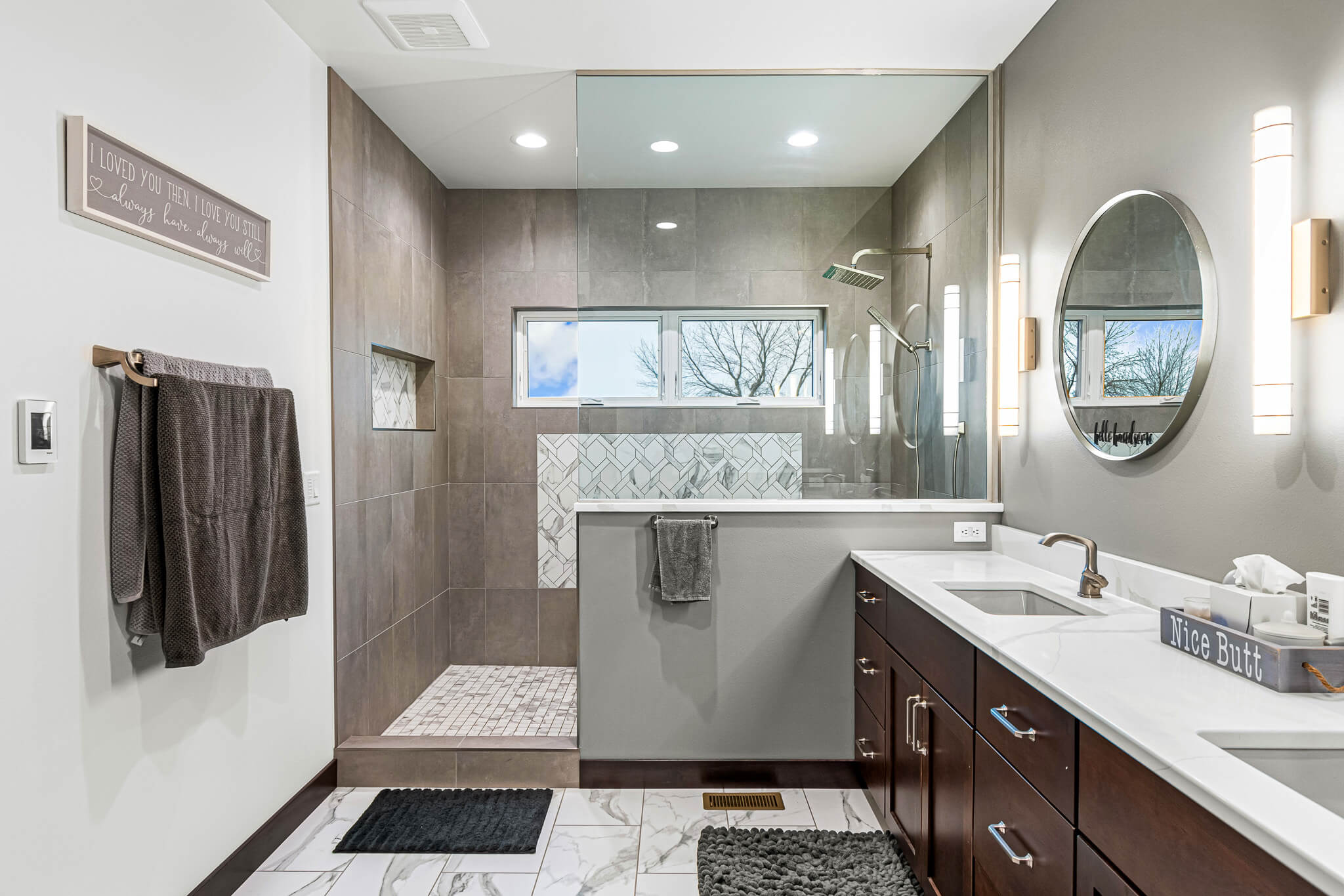
Maybe your “full” bathroom is really a half bath with big dreams.
Maybe the bathtub in your primary bathroom has been used exactly twice since you moved in.
Or maybe your hall bath has a layout that’s been bugging you for years, and every morning feels like going through a corn maze.
If any of that sounds familiar, you’re not alone. Many homes across Cedar Rapids, Iowa City, and Eastern Iowa were built between the 1950s and 1990s, well before walk-in showers, double vanities, and spa-like bathrooms were the vibe. Half baths, unfinished basements, and cramped hall baths are everywhere. The good news? We have tons of ideas and experience with bathroom transformations: turning bathrooms into something that works much better for the way your family lives today.
In this week’s StraightTALK, we’re answering five questions: how to tell whether your bathroom needs a refresh, remodel, or full renovation; whether you can add a shower where there isn’t one; whether removing a tub will hurt your home’s value; how to make a small bathroom feel bigger; and which upgrades make the biggest difference for the money.
How do I know if my bathroom needs a refresh, a remodel, or a full renovation?
A bathroom refresh updates surfaces like paint, lighting, and fixtures without changing the layout. A remodel replaces major elements such as the shower, vanity, or flooring. A full renovation takes the room down to the studs to fix layout, plumbing, or structural problems. The right choice depends on whether your bathroom looks dated, works poorly, or both.
Here’s the truth: a lot of homeowners start with the wrong question. They ask “How much should I spend?” when the better question is “What’s actually wrong with my bathroom?” Once you know that, the right level of project usually becomes pretty clear.
When a Bathroom Refresh Is Enough
Your bathroom works just fine. It just looks tired. The shower doesn’t leak, the layout makes sense, and the floor feels solid. You’re mostly frustrated by a dated vanity light, builder-grade mirror, or a paint color that was very popular in 2005.
A refresh might include new paint, lighting, mirrors, hardware, and faucets, and maybe a new vanity. It’s the quickest way to make a bathroom feel new again.
When It’s Time for a Bathroom Remodel
Things are starting to wear out, not just look old. Maybe there’s grout you can’t get clean no matter how hard you scrub, sealant that keeps peeling, a cracked or stained shower surround, or storage that doesn’t hold your stuff conveniently.
This is where a bathroom remodel starts to make sense. For many homeowners, that means replacing the shower or tub with a custom-fit Bath Planet system, either on its own or alongside a new vanity, flooring, and lighting.
When You Need a Full Bathroom Renovation
The problem isn’t the finishes. It’s the room itself. The layout fights you every day. Soft spots in the floor or signs of water damage. The toilet is squeezed into a corner, the door hits the vanity, or you need the bathroom to work for aging in place.
A full renovation gives you a clean slate to fix layout, plumbing, and structural issues. Our custom bathroom remodel process guide walks through how that works, including whether walls and plumbing can be moved.
Not Sure Where Your Bathroom Lands?
That’s completely normal, and it’s exactly what a consultation is for. We’ll look at your bathroom with you, talk through what’s bothering you, and give you a straight answer about which path makes sense. If you’re curious how far in advance to plan for each option, our article on bathroom remodel pricing and scheduling breaks down the lead time for each.
StraightTALK Remodeling Tip
Make a quick list of the three things that bug you most about your bathroom. If all three are about looks, a refresh is probably enough. If even one is about water, safety, or layout, plan for a remodel or renovation. Fixing looks on top of a functional problem just means paying twice.
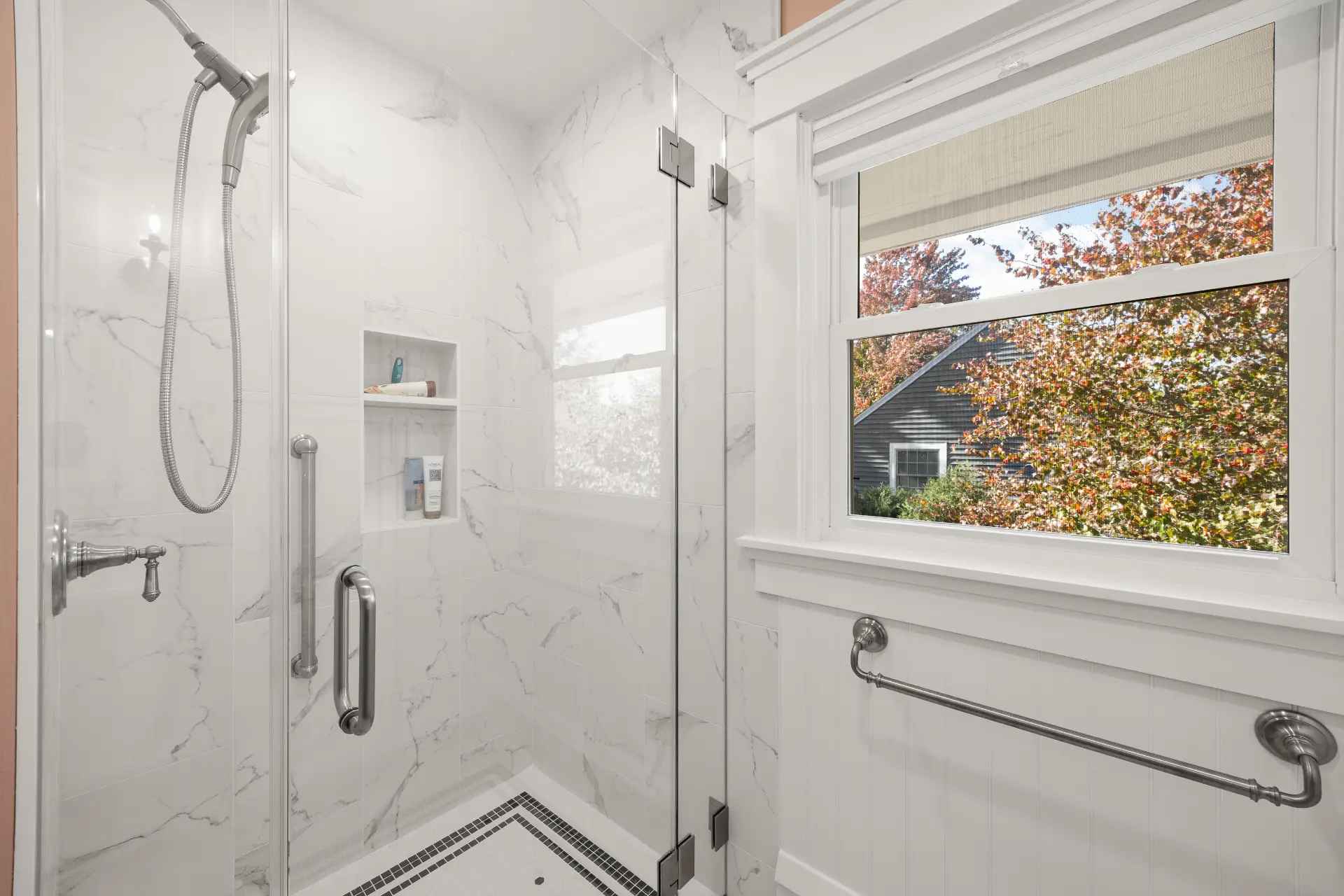
Can you add a shower where there isn’t one currently?
In many homes, yes. Common projects include converting a half bath to a full bath or adding a shower to a basement bathroom. It depends on available space, access to drain and water lines, venting, and ventilation. Basement showers may also need a pump to move water up to the sewer line.
This is one of our favorite questions, because adding a shower can completely change how your day-to-day living in your home feels. Think about the difference an extra shower makes on a busy school morning, when guests stay for the holidays, or when your teenager decides the upstairs bathroom is now their personal GRWM skincare routine space.
What Makes it Possible to Add a Shower?
Every home is different, but here’s what we look at first:
- Space: Is there enough room for a comfortable shower, plus clearance for the toilet, vanity, and door?
- Drainage: Can a shower drain connect to your existing plumbing with the proper slope?
- Venting: Plumbing fixtures need a vent to drain properly, so we look at where your vent stack runs.
- Water supply: Can hot and cold lines reach the new shower, and can your water heater keep up with another shower?
- Ventilation: A new shower needs a good exhaust fan to handle the extra moisture.
Converting a Half Bath to a Full Bath
This is one of the most common ways to add a shower. Many Eastern Iowa homes have a half bath (just a toilet and sink) on the main floor or near a bedroom, and turning it into a full bath can be a game-changer.
The biggest question is space. Sometimes a half bath is large enough on its own. Other times, we can borrow a little room from an adjacent closet or hallway. Corner or neo-angle showers can also work well in tighter spaces. Our guide to custom tile vs. acrylic showers covers shower layouts that make the most of small footprints.
Adding a Shower to a Basement Bathroom
Basement bathrooms come with a unique challenge: gravity. If your basement sits below your home’s main sewer line, water from a new shower can’t simply drain downhill. That’s where a sewage ejector pump (or a similar pump system) comes in to move water up and out.
Adding a basement shower may also involve cutting into the concrete floor to run drain lines. It’s often doable, but it takes careful planning. And because Iowa basements tend to hold onto humidity, good ventilation is a must. It’s one reason we’re big fans of humidity-sensing exhaust fans, which we talked about in our bathroom trends guide.
Turning a Closet or Unused Space Into a Bathroom
Sometimes the best spot for a new shower isn’t in a bathroom at all. A large closet, an unused corner, or an oversized laundry area can occasionally be converted, especially if it’s near existing plumbing. When a project becomes a brand-new bathroom, costs look different than a standard remodel. Our article on bathroom remodel costs in Eastern Iowa explains what a bathroom addition typically involves.
Don’t Forget Permits
Adding a shower means new plumbing, and that almost always means permits and inspections. In Cedar Rapids, for example, plumbing and electrical changes typically require separate trade permits. We handle this as part of the bathroom remodeling process, so you don’t have to figure it out on your own.
StraightTALK Definitions
- Sewage ejector pump: A pump installed in a sealed basin that collects wastewater from fixtures below the sewer line and pumps it up to the main line.
- Vent stack: A vertical pipe that lets air into your plumbing system so drains flow freely and sewer gases stay out of your home.
- Drain slope: The gentle downward angle a drain pipe needs so water flows away on its own.
StraightTALK Remodeling Tip
Before you fall in love with a shower layout, find out where your main drain and vent stack are. Those two things shape what’s possible, and what it costs, more than almost anything else. We’ll locate them during your consultation so your plan starts on solid ground.
Will changing my tub to a walk-in shower lower my home value?
Converting a tub to a walk-in shower usually won’t hurt your home’s value as long as your home still has at least one bathtub. Many buyers, especially families with young children, expect a tub somewhere in the house. Converting the primary bathroom tub while keeping one in a hall bath often gives you the best of both worlds.
We hear this question almost every time someone asks about a tub-to-shower conversion. And we love that homeowners think about it, because it’s exactly the right question to ask.
The “Keep at Least One Tub” Rule
Here’s the rule of thumb we share with homeowners: try to keep at least one bathtub somewhere in the house. In family-friendly communities like ours, many buyers are young families who want a tub for bath time. If your home has no tub at all, some of those buyers may move on to the next listing.
The good news? If your home has more than one bathroom, you can usually do both. Turn the tub in your primary bathroom into the walk-in shower you’ve always wanted, and keep a tub/shower combo in the hall bath for kids, guests, and future buyers.
When Converting Your Only Tub Can Still Make Sense
Rules of thumb aren’t rules. Converting your only tub can absolutely be the right call when:
- You’re planning to stay in your home for the long haul
- Stepping over a tub wall has become a safety concern
- You’re planning to age in place
- Your home is more likely to appeal to downsizers or empty nesters than young families.
Your daily safety and comfort matter more than a hypothetical buyer years from now.
Think About Who’s Likely to Buy Your Home
A three-bedroom home near an elementary school in Marion will probably attract different buyers than a one-level ranch in a quiet neighborhood popular with retirees. Your home’s size, location, and bedroom count all play a role. If you’re planning to sell in the next few years, it can be worth asking a local real estate agent what buyers in your area expect.
For a closer look at how bathroom transformations affect resale, check out the home value section of our bathroom remodel costs guide.
Other Options to Consider
If you’re torn, there are middle-ground choices. A new tub/shower combo gives you an easier-to-clean, updated bathroom while keeping the tub. And if you already know you want a shower, our tub-to-shower conversion projects show what’s possible, including a Cedar Rapids family who turned an unused whirlpool tub into a beautiful walk-in shower.

How can I make a small bathroom feel bigger without adding square footage?
To make a small bathroom feel bigger, focus on light, sightlines, and floor space. Clear glass shower enclosures, floating or wall-mounted vanities, large-format tile, light colors, good lighting, and recessed storage all help. Removing an unused tub or reworking a cramped layout can make an even bigger difference without adding square footage.
Small bathrooms are everywhere in Eastern Iowa, and honestly, they can be some of the most fun rooms to design. When every inch counts, smart choices make a huge difference.
Let the Eye Travel
Anything that stops your eye makes a room feel smaller. A shower curtain or frosted glass door cuts your bathroom in half visually. Clear glass lets you see all the way to the back wall, which instantly makes the space feel larger. Running the same floor tile into the shower (when the design allows) creates the same effect underfoot.
Show More Floor
A floating or wall-mounted vanity lets you see the floor underneath, and seeing more floor tricks your brain into reading the room as bigger. It’s one of the simplest and most effective small bathroom ideas out there, and it makes cleaning the floor easier, too.
Fewer Lines, Lighter Colors
Large-format tile means fewer grout lines, which makes walls and floors feel more open. Pair it with light, warm neutrals, like the off-whites and soft sages that are so popular right now, and your small bathroom will feel airy instead of boxed in.
Store It in the Wall
In a small bathroom, every item sitting out on the counter makes the room feel more crowded. Recessed medicine cabinets and built-in shower niches give your stuff a home without taking up an inch of floor space. (We’re big niche fans. We shared some tips for getting them right in our Mother’s Day upgrades article.)
Rethink What’s Taking Up Space in Your Bathroom
Sometimes the biggest win comes from changing the layout itself:
- Remove an unused tub. A walk-in shower in the same footprint often feels much more open.
- Swap the swing door for a pocket door. No more door hitting the vanity.
- Right-size the vanity. A slightly narrower or shallower vanity can free up valuable walking room.
StraightTALK Remodeling Tip
Stand in your bathroom doorway and notice where your eye stops first. Whatever blocks it, whether that’s a shower curtain, a bulky vanity, or a dark accent wall, is usually the first thing worth changing. It’s a simple trick our designers use all the time.
Which bathroom upgrades make the biggest difference for the money?
The upgrades that make the biggest everyday difference are usually a new shower or tub, better lighting, a vanity with smarter storage, a quality exhaust fan, and updated fixtures. These are the parts of the bathroom you touch every day. Focusing on them, rather than on trendy extras, gives you the most noticeable improvement for your budget Not to mention these are the things that will make the biggest difference in your own daily satisfaction with your bathroom.
When we talk about “value,” we’re not only talking about resale. We’re talking about how much better your bathroom feels to use every single morning. Here’s where your money tends to go the furthest.
The Shower or Tub
Your shower is the hardest-working part of your bathroom, so it’s usually the upgrade you’ll notice most. A custom-fit Bath Planet shower or tub can be installed in as little as a day or two, while a custom tile shower creates a true statement piece. Our Bath Planet cost guide breaks down what shower and tub upgrades typically cost.
Bathroom Lighting
Good lighting changes everything. Swapping a single overhead fixture for layered lighting, with task lighting at the mirror and softer ambient light, makes getting ready easier and the whole room more welcoming. And consider dimmer switches to ease into your early morning wake-up routine.
A Bathroom Vanity That Actually Holds Your Stuff
If your counter is always cluttered, the problem usually isn’t you. It’s your vanity. A new vanity with drawers and organizers sized for the way you really use it can make a surprisingly big difference in how calm your bathroom feels.
Bathroom Ventilation
It’s not glamorous, but a quality exhaust fan protects everything else you’ve invested in, from your vanity to your paint to the drywall behind your shower. In humid Iowa summers (or wet Iowa springs and autumns), it’s worth every penny.
Bathroom Fixtures You Touch Every Day
Faucets, showerheads, and a handheld shower wand are relatively affordable upgrades that you’ll use constantly. A rainfall showerhead paired with a handheld on a slide bar is one of the upgrades homeowners tell us they’re most glad they chose.
A Little Bathroom Future-Proofing
If you’re opening up walls anyway, adding blocking for future grab bars costs very little now and saves a lot later. Even if you don’t need them today, you’ll be glad they’re an easy add down the road.
StraightTALK Remodeling Tip
Spend where you touch, save where you look. Put your budget toward the things you use every day, like the shower, vanity, and lighting, and save on decor and accents that are easy to update later.
StraightTALK Wrap-Up
A bathroom transformation doesn’t have to mean starting from scratch, but it does mean starting with the right questions:
- Refresh, remodel, or renovate? Let what’s wrong with your bathroom guide the size of your project.
- Adding a shower where there isn’t one is often possible, whether it’s a half bath conversion or a basement bathroom, with the right plan for drains, venting, and ventilation.
- Removing a tub usually won’t hurt resale as long as the house still has one bathtub.
- Small bathrooms can feel much bigger with clear glass, floating vanities, lighter colors, and smarter layouts.
- The best upgrades for the money are the ones you touch every day.
At Hometown Restyling, we’ve been helping homeowners across Cedar Rapids, Iowa City, Marion, North Liberty, and all of Eastern Iowa transform their bathrooms since 1986. Whether you’re dreaming about a brand-new shower in your half bath or finally saying goodbye to a tub nobody uses, we’ll give you straight answers about what’s possible in your home.
Ready to see what your bathroom could become? Schedule a free consultation and let’s talk it through.
1. How do I know if my bathroom needs a refresh, a remodel, or a full renovation?
A bathroom refresh updates surfaces like paint, lighting, and fixtures without changing the layout. A remodel replaces major elements such as the shower, vanity, or flooring. A full renovation takes the room down to the studs to fix layout, plumbing, or structural problems. The right choice depends on whether your bathroom looks dated, works poorly, or both.
2. Can you add a shower where there isn’t one currently?
In many homes, yes. Common projects include converting a half bath to a full bath or adding a shower to a basement bathroom. It depends on available space, access to drain and water lines, venting, and ventilation. Basement showers may also need a pump to move water up to the sewer line.
3. Will changing my tub to a walk-in shower lower my home value?
Converting a tub to a walk-in shower usually won’t hurt your home’s value as long as your home still has at least one bathtub. Many buyers, especially families with young children, expect a tub somewhere in the house. Converting the primary bathroom tub while keeping one in a hall bath often gives you the best of both worlds.
4. How can I make a small bathroom feel bigger without adding square footage?
To make a small bathroom feel bigger, focus on light, sightlines, and floor space. Clear glass shower enclosures, floating or wall-mounted vanities, large-format tile, light colors, good lighting, and recessed storage all help. Removing an unused tub or reworking a cramped layout can make an even bigger difference without adding square footage.
5. Which bathroom upgrades make the biggest difference for the money?
The upgrades that make the biggest everyday difference are usually a new shower or tub, better lighting, a vanity with smarter storage, a quality exhaust fan, and updated fixtures. These are the parts of the bathroom you touch every day. Focusing on them, rather than on trendy extras, gives you the most noticeable improvement for your budget, not to mention these are the things that will make the biggest difference in your own daily satisfaction with your bathroom.