

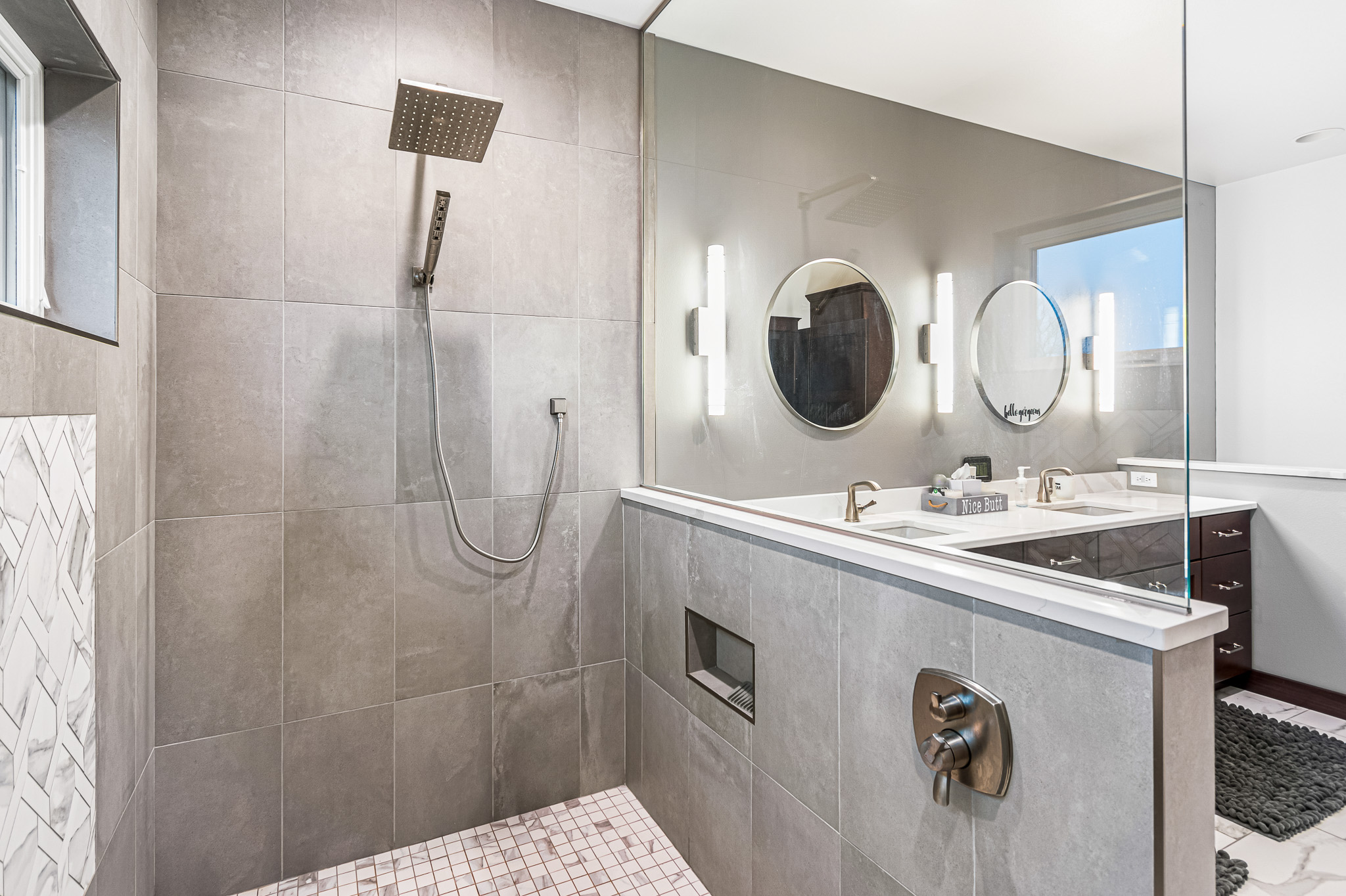
There’s an old saying that April showers bring May flowers. But for a lot of Eastern Iowa homeowners, spring is the season when a different kind of shower starts coming up in conversation. The one at home. The one that’s been looking a little tired for a few years now. The one that was supposed to get updated “eventually.”
A shower remodel is one of the highest-impact projects a homeowner can tackle. Most people think “bathroom remodel” means one thing: a long, dusty, expensive project that puts your bathroom out of commission for weeks. That’s one option. But it’s not the only one.
At Hometown Restyling, we install showers in two very different ways: as fully custom tile builds and as high-quality acrylic shower systems. The right choice depends on your space, budget, timeline, and how long you plan to be in your home.
This article is about sharing ideas and showing you what’s possible. The real design moves, project takeaways, and features that are turning everyday bathrooms into everyday escapes for homeowners across Eastern Iowa.
Two Paths to a Better Shower: Custom Tile vs. Acrylic Shower
Before we get into the ideas, it helps to understand the two paths because they solve different problems and offer different experiences.
Custom Tile Shower
A custom tile shower is built on-site, one tile at a time. Any size, any shape, any pattern. Materials may include porcelain, ceramic, natural stone, mosaic, or a combination. It’s the most customizable option available, and when it’s done well, it can be stunning. It’s also the more significant project. A typical custom tile shower takes one to two weeks to install, plus the grout cure time (roughly 48 to 72 hours after grouting, when the grout must fully harden before the shower can be sealed and used). A custom tile shower as part of a larger bathroom remodel generally runs $20,000 to $40,000 or more, depending on scope, materials, and whether other parts of the bathroom are being updated at the same time.
Acrylic Shower System
An acrylic shower system is a made-to-measure, non-porous shower (meaning the surface doesn’t absorb water, which makes it resistant to mold and mildew). The panels are fabricated off-site to your exact bathroom dimensions and installed in one to two days. At Hometown, we install acrylic systems through our partner Bath Planet, which manufactures panels that resist mold, mildew, cracking, and fading. Acrylic systems typically range from $7,000 to $18,000 installed, depending on size, features, and configuration. For a full breakdown of acrylic system costs, see our recent article on Bath Planet bathroom costs in Eastern Iowa.
Neither path is “better.” They solve different problems:
- Choose custom tile when you’re doing a full bathroom remodel, you want a one-of-a-kind look, you’re planning to stay in your home long-term, or the shower is a statement piece in a primary suite.
- Choose an acrylic system when you want a beautiful result without the multi-week construction, you value low maintenance (no grout to scrub), your budget has a ceiling, or you need your bathroom back in service quickly.
For most Eastern Iowa homeowners seeking a shower-focused upgrade, an acrylic system delivers the best value, the fastest turnaround, and the lowest long-term maintenance. For a primary bathroom where the shower is the centerpiece of the room, custom tile often earns its premium. Our job is to help you pick the right path for your home.
Project Spotlight: The Whirlpool Nobody Used
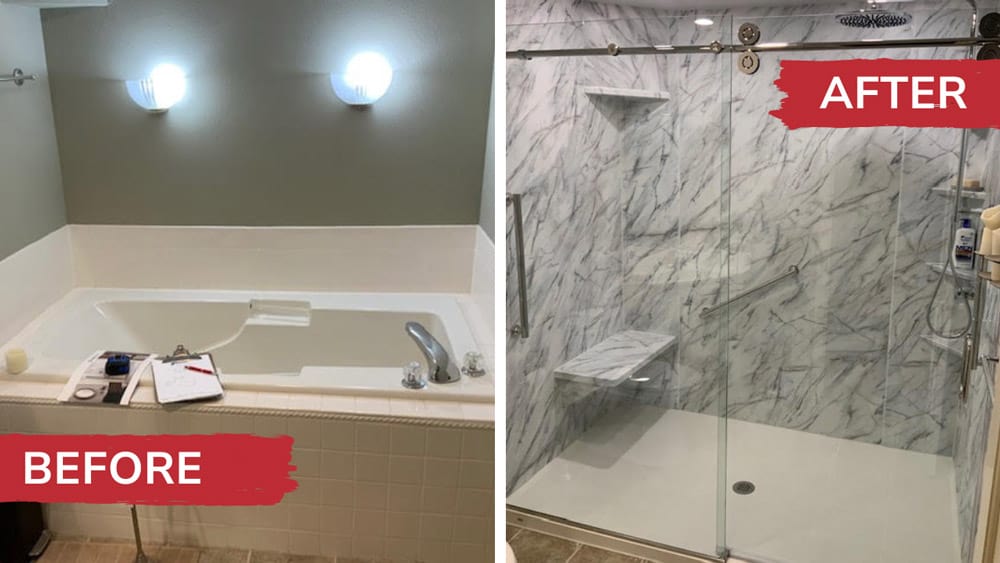
A few years back, a family in Cedar Rapids reached out about their basement bathroom. Like many Eastern Iowa homes built in the 1980s, it had an enormous whirlpool tub. Four feet wide, six feet long, and nobody in the family actually used it. It was a pain to clean, took up a huge amount of space, and, when they hosted overnight guests, left the basement without a usable shower.
The design idea we brought to the table was what made this project so interesting. . Rather than recommending a full custom remodel, we converted the unused whirlpool footprint into a custom-fitted acrylic walk-in shower. The finished design included a natural granite/quartz panel pattern, a barn-style roller glass door, a built-in bench, a rainfall showerhead, grab bars, and a textured non-slip floor base. Two days of installation. No tile. No grout. No weeks of construction dust.
The takeaway wasn’t about the specific products. It was about understanding : the best shower upgrade starts with recognizing which part of your bathroom isn’t working for you anymore. A big, pretty tub you never use isn’t earning its square footage. A shower you actually enjoy using every day is.
You can read more about that project here.
Walk-In Shower Ideas Transforming Eastern Iowa Bathrooms
Whether you’re headed down the custom tile path or the acrylic system path, most of the great design moves work for either. Here are the ideas we’re seeing transform bathrooms across Cedar Rapids, Iowa City, and the surrounding communities.
1. The rainfall-plus-handheld combo
A fixed rainfall showerhead overhead for the spa moment. A handheld on a slide bar (a vertical bar mounted on the wall that lets you adjust the handheld’s height) for rinsing, cleaning the shower, bathing kids, or rinsing the dog. It’s the single upgrade homeowners mention most often as “the thing I’m most glad we did.” Works in any shower, any size.
2. The built-in niche (done right)
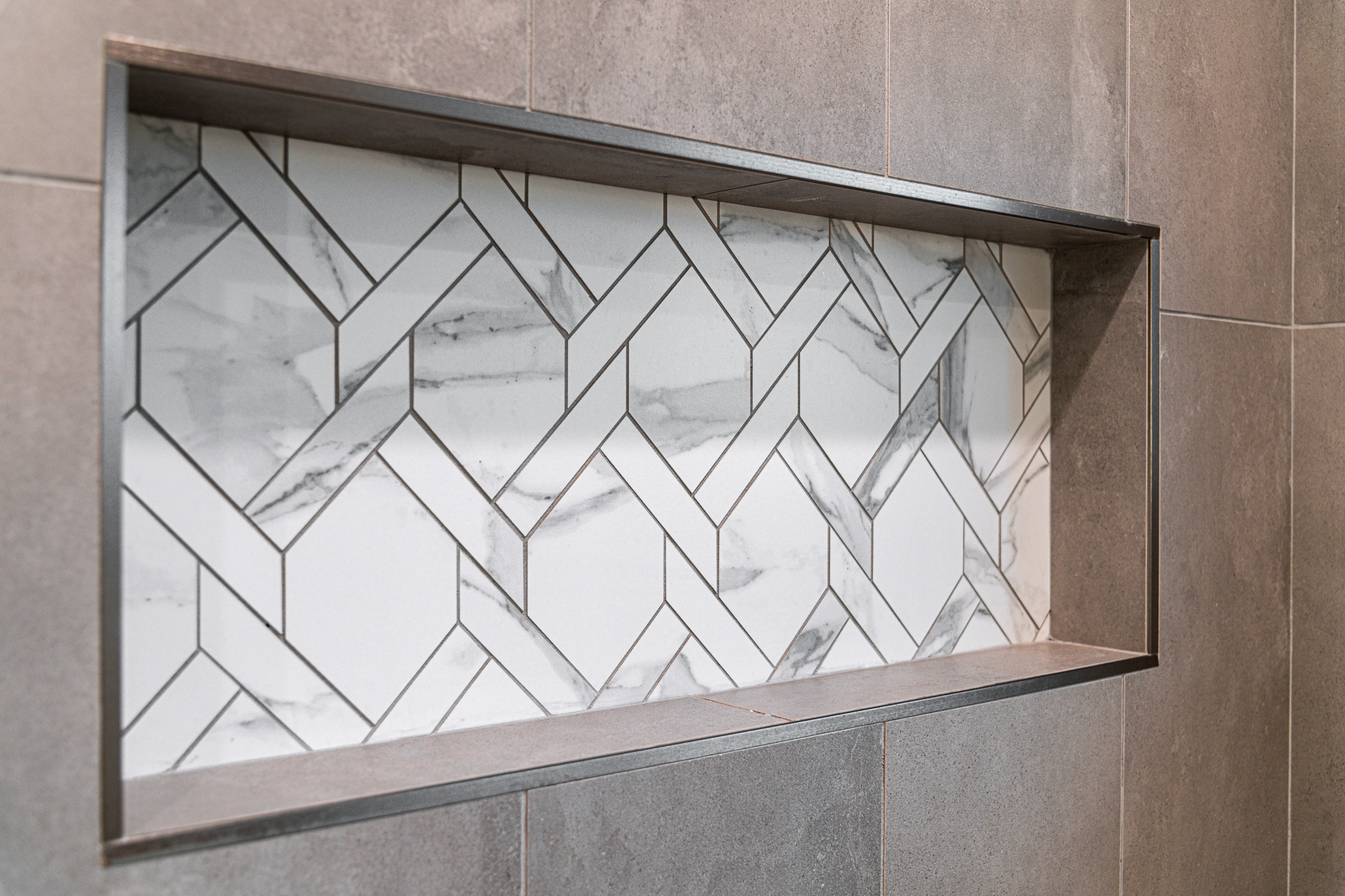
A niche is a recessed shelf built into the shower wall for shampoo and soap. The difference between a forgettable niche and a great one is scale and placement. A full-width niche reads as intentional and custom. Positioning it off the direct water stream keeps bottles cleaner. In a tile shower, a contrasting accent tile in the niche is one of the highest-impact design moves. Acrylic systems offer built-in shelving options with a similar clean look.
3. The bench that earns its keep
Benches aren’t just for accessibility. A built-in bench is a shaving leg rest, a place to set a coffee mug while you wake up, a grandparent-friendly feature, and a design element that makes the shower feel like a room rather than a stall. Fold-down options keep smaller showers usable. Built-in tile or acrylic benches in larger showers turn them into proper retreats.
4. Glass that disappears
A frameless glass enclosure (a shower door and panels made from thick tempered glass with minimal visible metal hardware) is the single biggest “wow” factor for the dollar in a shower remodel. It makes the shower look custom, makes the whole bathroom feel bigger, and stays cleaner than framed sliding doors over time. For homeowners who want the clean look without the top-end price, a semi-frameless option (framed along the top and sides, frameless glass on the door itself) delivers most of the aesthetic at a lower cost.
5. The low-barrier or barrier-free entry
A barrier-free shower (one with a zero threshold, where the shower floor is flush with the bathroom floor) is both architectural and accessible. A low-barrier shower (with a small curb, typically half an inch or less) accomplishes most of the same goal with slightly easier waterproofing. Either is one of the smartest decisions that homeowners over 50 can make while their bathroom is being updated. Hometown has a certified Aging in Place specialist who designs these to be beautiful first, accessible always.
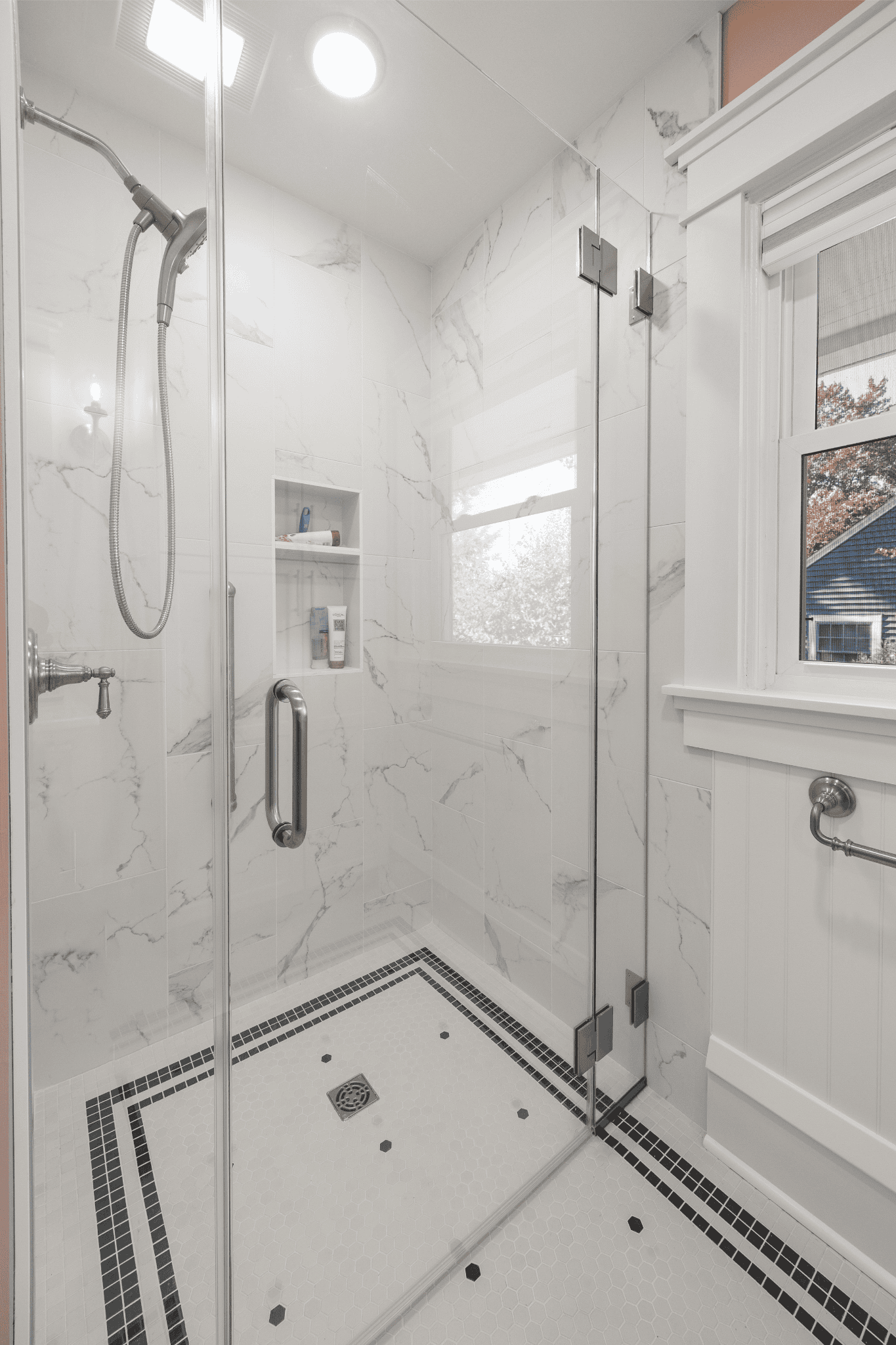
6. Tile patterns that change how a room feels
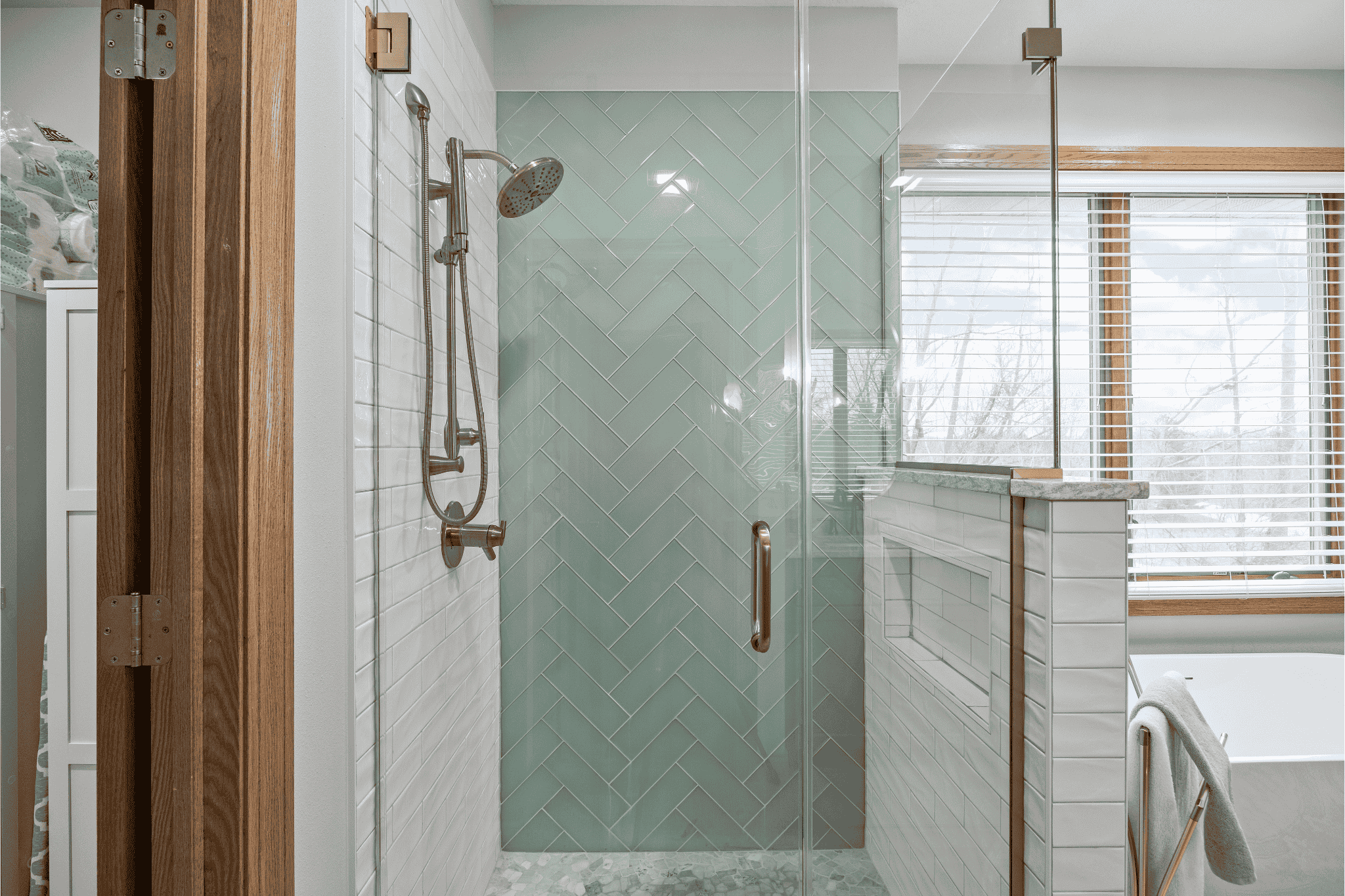
In a custom tile shower, the pattern choice changes everything. Vertical subway tile stacks raise the ceiling. Large-format porcelain tiles (typically 12 by 24 inches or larger) reduce grout lines and cleaning. A single accent wall, whether natural stone, mosaic, or a bold patterned tile, anchors the space without overwhelming it.
7. Lighting inside the shower
A wet-rated recessed light (a fixture rated by the manufacturer for use in showers and other wet environments) transforms the space, especially when paired with a glass enclosure.
8. Color beyond white
The default assumption that a shower has to be white is gone. Acrylic systems now come in slate, sand, charcoal, and veined stone looks that hold up beautifully over time. Custom tile opens the door even wider, with warm grays, soft greens, and natural stone tones all showing up in recent projects. A non-white shower typically ages better and hides water spots between cleanings.
Getting Your Shower Configuration Right
Aesthetics matter. So does the spatial decision underneath them: the layout that determines how the shower actually works day to day.
Footprint-matching vs. going bigger
Keeping the new shower within the existing footprint is the fastest and most affordable route. It’s also the right call for many homeowners. Expanding the footprint opens up more design options but adds subfloor work, new framing, and additional waterproofing, each of which increases cost and time.
Corner, alcove, or walk-in wet room
Corner showers shine in small bathrooms where every inch matters. Alcove showers (tucked between two walls with the third side as glass) are the most common layout and work well for most tub-replacement scenarios. Wet rooms, where the entire bathroom is waterproofed, and the shower isn’t fully enclosed, are the statement option for primary suite remodels. They take more planning and more waterproofing, but the payoff is dramatic.
The door decision
Sliding doors save space in small rooms. Pivot doors (single doors that swing open on a hinge) are the classic choice. Barn-style roller doors are on-trend and visually striking. And for walk-in wet rooms, no door at all, just an open entry, is the most dramatic option. The door is a major part of the finished shower’s look and feel.
The Eastern Iowa Reality Check
A lot of the homes we work in across Eastern Iowa were built between 1950 and 1990. So, we know what to look for. Hidden water damage behind old tub surrounds is common. Non-standard bathroom dimensions are common. Quirky layouts that don’t match any standard template are very common. A good contractor works with what’s actually there.
Iowa summers bring humidity, which matters more than people realize. That’s one of the reasons the non-porous surface of an acrylic system holds up so well here: there’s no grout for moisture to find. In a custom tile shower, proper waterproofing and quality grout sealing (applying a protective liquid sealant to the grout lines, typically once a year) are what separate a shower that looks beautiful for 20 years from one that needs attention in five.
This is where a good in-home consultation earns its value. We measure, look for issues the previous homeowner may not have mentioned, walk you through options for your specific space, and give you a recommendation based on your unique home and lifestyle.
Ready to Think About Your Shower
A shower remodel is one of the best home investments you can make for how the space looks and feels every day. Whether the right answer for your home is a fully custom tile shower that becomes the centerpiece of a new primary suite, or an acrylic system installed in a day or two that gives you back a bathroom you actually enjoy using, the path starts the same way: with a conversation.
Hometown Restyling has been guiding Eastern Iowa homeowners through these decisions since 1986, and as an employee-owned company, the people walking through your bathroom are the same people whose names are on the business. We install both custom tile showers and acrylic shower systems, and we’ll be straight with you about which one makes sense for your home, your budget, and how long you’re planning to stay.
When you’re ready, schedule a free in-home quote and get a clear look at your options and an honest recommendation.